Federal Court Strikes Down Education Department Directive Used to Cut Teacher Preparation Grants

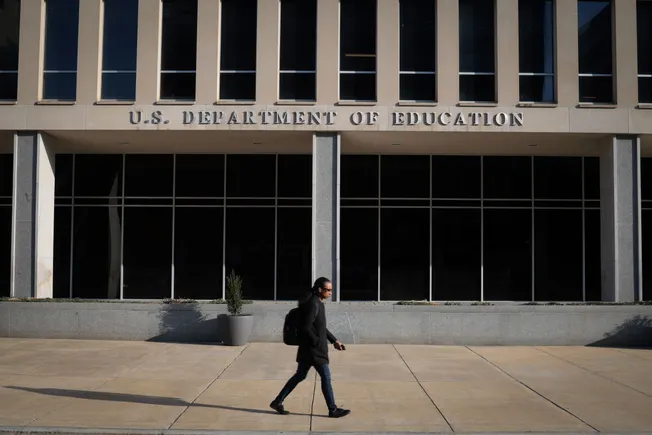
A federal judge has invalidated a sweeping Department of Education directive that served as the legal justification for abruptly terminating millions of dollars in federal teacher training grants earlier this year. In a ruling issued by the U.S. District Court for the District of Massachusetts, the court determined that the directive—titled “Eliminating Discrimination and Fraud in Department Grant Awards”—was arbitrary, capricious, and a direct violation of the Administrative Procedure Act.
The judicial decision marks a significant setback for the administration’s broader efforts to curb diversity, equity, and inclusion initiatives across federally funded educational programs. It also delivers a vital legal victory to a coalition of state attorneys general who argued that the abrupt cancellation of crucial educator preparation funding disrupted academic pipelines, harmed local communities, and undermined efforts to combat ongoing nationwide teacher shortages.
Origins of the Dispute and the Feb. 5 Directive
The legal battle stems from a policy directive enacted by the Department of Education on February 5, 2025. The administrative order instructed agency personnel to meticulously review all newly awarded and previously distributed grant programs to ensure that federal taxpayer dollars were not supporting what the administration characterized as discriminatory practices under the banner of diversity, equity, and inclusion (DEI).
According to the text of the February directive, the department asserted that illegal DEI policies and related institutional practices frequently violated both the explicit letter and the underlying intent of federal civil rights laws. Furthermore, the agency argued that such initiatives conflicted directly with its core policy priorities of emphasizing academic merit, institutional fairness, and overall excellence in education.
Agency officials acted swiftly upon the enactment of the directive. Just twelve days later, on February 17, 2025, the Department of Education officially announced sweeping cuts to major federal programs, specifically targeting the Teacher Quality Partnership (TQP) and the Supporting Effective Educator Development (SEED) grant programs. The sudden termination targeted ongoing initiatives that funded professional development workshops aimed at identifying and dismantling racial bias, alongside programs requiring educators to assume personal and institutional responsibility for addressing systemic educational inequities.
The Court’s Findings and Reasoning
In his detailed ruling, the presiding judge dismantled the administration’s justification for the sweeping cancellations, highlighting the glaring procedural flaws and the absence of reasoned administrative decision-making.
“The Department’s hasty implementation of the Directive over less than two weeks, the magnitude of the effects of the termination, as well as the lack of evidence of reasoned decisionmaking in the Administrative Record leave serious doubts as to the Department’s choice to adopt the Directive,” the court stated in its September order.
The judge emphasized that federal agencies are bound by statutory obligations under the Administrative Procedure Act, which requires regulators to provide thorough, evidence-based rationales before enacting disruptive policy changes that impact millions of dollars in established public investments. The court found that the Education Department failed to meet this legal threshold, rushing the directive’s rollout without adequately weighing the profound consequences of defunding long-standing, federally approved educational initiatives in the middle of active grant cycles.
State-Level Impacts and the Multi-State Lawsuit
The swift cancellation of the TQP and SEED grants sent immediate shockwaves through school districts and university preparation programs nationwide. In response to the funding freezes, a coalition of attorneys general from eight states—including California, Colorado, Illinois, Maryland, Massachusetts, New Jersey, New York, and Wisconsin—filed a comprehensive federal lawsuit against the Department of Education, challenging the legality of the grant terminations.
The financial and operational toll was felt most acutely in states with extensive public education networks. California Attorney General Rob Bonta revealed that his state alone faced the sudden cancellation of at least $148 million in vital teacher training grant funds beginning in February 2025.
These impacted programs had been specifically designed to alleviate California’s persistent teacher shortage by fostering robust educator pipelines in vulnerable rural and urban communities. Additionally, many of the defunded initiatives focused heavily on recruiting and retaining educators for traditionally hard-to-staff disciplines, such as mathematics and the physical sciences, areas where public school districts have historically struggled to maintain a stable workforce. Empirical data from these programs had previously demonstrated a measurable positive impact on long-term teacher retention rates.
Reactions From State Leaders and Educational Advocacy Groups
The federal court’s decision was met with widespread praise from state officials and national educational organizations, who framed the ruling as a crucial defense of public education infrastructure.
“Since Day One, the Trump Administration has pursued an anti-education agenda, repeatedly attempting to slash funding to undermine teacher training, student mental health, classroom technology, and more. Once again, a court said no,” said California Attorney General Rob Bonta in a public statement following the ruling. “There is nothing more important than our students’ educational future—and their success relies on ensuring we’re continuing to train up the teachers of tomorrow.”
Cheryl Holcomb-McCoy, CEO and president of the American Association of Colleges for Teacher Education (AACTE), echoed these sentiments, emphasizing the catastrophic operational effects that sudden federal funding withdrawals inflict on higher education institutions and school districts.
The court’s order “affirms what AACTE and our partner organizations have consistently emphasized for the past two years: federal investment in educator preparation is essential to strengthening our nation’s teacher workforce and ensuring every student has access to a well-prepared teacher,” Holcomb-McCoy noted in a statement. “Withdrawing critical funding without warning and in the middle of a grant cycle causes immediate and lasting harm to institutions, communities, and students.”
The Department of Education’s Defense
Despite the adverse judicial ruling, the Department of Education has stood firm on its underlying policy philosophy regarding the appropriate scope of federal educational investments.
Education Department Press Secretary Savannah Newhouse defended the administration’s broader goals in a statement to the press, emphasizing a strict focus on traditional pedagogical competencies.
“Taxpayer dollars should support preparing teachers for meaningful student learning, expanding the pipeline of high-quality teachers, and retaining top talent—not funding divisive ideology or racial preferences,” Newhouse stated.
As of late September, the Department of Education had not yet formally announced whether it intended to appeal the Massachusetts District Court’s decision to a higher appellate court. Legal experts note that an appeal remains possible given the administration’s persistent focus on dismantling diversity, equity, and inclusion programs across the federal government.
Broader Implications for Federal Grants and Civil Rights Policy
The ruling carries significant implications well beyond the immediate future of the TQP and SEED grant programs. By underscoring the strict procedural boundaries imposed by the Administrative Procedure Act, the decision serves as a cautionary precedent for executive agencies seeking to overhaul established grant distribution criteria through rapid policy directives.
Furthermore, the case highlights an ongoing, high-stakes ideological clash over the definition of educational excellence and civil rights compliance. While the administration views diversity, equity, and inclusion initiatives as legally problematic frameworks that conflict with merit-based principles, educational institutions and state coalitions view these same programs as indispensable tools for addressing historical inequities and preparing teachers to serve diverse student populations in modern classrooms.
As the legal battles continue to unfold across the federal judiciary, colleges of education, school districts, and state agencies are monitoring the situation closely to determine how previously canceled funds will be restored and whether future administrative actions can successfully bypass the procedural hurdles highlighted by the court. For now, however, the judicial block on the February 5 directive provides a temporary yet vital shield for federal investments aimed at bolstering the nation’s educator pipeline.