WHO Director-General visits Jordan to recognize strong collaboration on health system delivery, emergency relief and advancing mental health

The healthcare landscape of the Middle East has long been defined by fragility, protracted conflicts, and the staggering strain of mass displacement. Against this complex backdrop, the World Health Organization (WHO) Director-General, Dr. Tedros Adhanom Ghebreyesus, successfully concluded the first day of a pivotal two-day State visit to the Hashemite Kingdom of Jordan. This high-profile diplomatic and humanitarian mission was designed to underscore the robust, enduring partnership between the global health agency and Amman. Discussions throughout the itinerary centered on advancing universal health coverage (UHC), fortifying primary healthcare systems, expanding mental health integration, and sustaining vital humanitarian health actions across the region.
The visit highlights Jordan’s unique dual role as both a stable bastion of public health innovation and a generous sanctuary for millions of displaced individuals. Despite possessing limited natural resources, the Jordanian government—under the stewardship of His Majesty King Abdullah II—has consistently prioritized humanitarian resilience. By examining Jordan’s strategic health initiatives, international stakeholders hope to glean valuable lessons in regional health security, refugee integration, and emergency medical logistics.
Royal Engagement and Strategic Health Priorities
A central pillar of Dr. Tedros’s itinerary was a high-level audience with His Majesty King Abdullah II. This significant meeting served to reinforce Jordan’s global standing as a visionary leader in elevating public health to a paramount national and international security priority. During their substantive discussions, Dr. Tedros and King Abdullah II examined critical avenues for strengthening national health systems, expanding equitable access to clinical care, and securing sustained international funding for emergency responses across the Middle East.
Particular emphasis was placed on the ongoing plight of the Palestinian population, specifically focusing on critically ill and injured patients evacuated from the Gaza Strip to Jordan for specialized medical treatment. Furthermore, the dialogue addressed the immense logistical and financial burdens shouldered by Jordan as it continues to host millions of refugees from neighboring conflict zones, primarily Syria and Gaza.
Expressing his profound gratitude, Dr. Tedros lauded the Jordanian monarch. “I wish to express my appreciation to His Majesty King Abdullah II for his commitment to advancing universal health coverage,” Dr. Tedros stated. “I also extend my thanks to His Majesty and the people of Jordan for their solidarity and generosity in providing health services to more than three million refugees, primarily from Gaza and Syria, who are living in the country.”
The WHO Director-General specifically highlighted the Kingdom’s visionary Medical Corridor initiative. Spearheaded by King Abdullah II, this critical lifeline facilitates the rapid transfer and treatment of ill and injured children out of war-torn Gaza, ensuring they receive life-saving interventions that are otherwise unavailable locally. “Jordan continues to show the world what it truly means to put health and humanity first,” Dr. Tedros added, praising the nation’s broader humanitarian leadership.
Firsthand Observations: Frontline Care for Evacuated Children
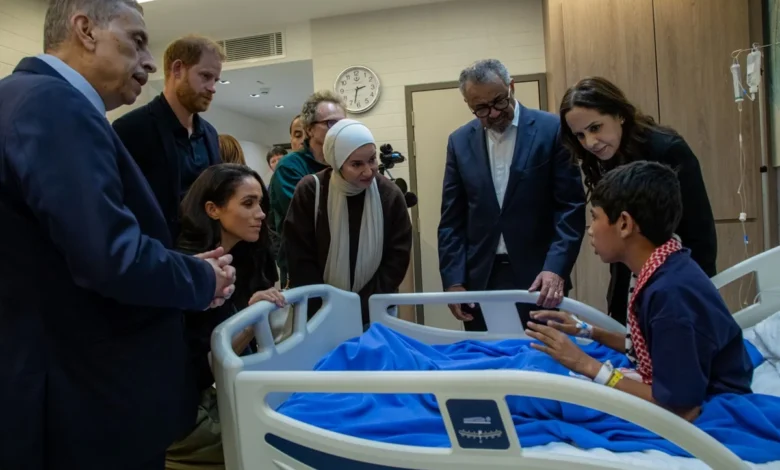
Moving from high-level diplomatic discussions to the realities of clinical care, Dr. Tedros spent a portion of the day touring a WHO-supported hospital in Amman dedicated to treating pediatric patients evacuated from Gaza. During the visit, the Director-General walked the hospital wards, interacting directly with young patients, their families, and the multidisciplinary teams of doctors, nurses, and allied health professionals.
These frontline health workers deliver intensive, life-saving therapies for severe blast injuries, pediatric cancers, and other complex medical conditions exacerbated by the collapse of Gaza’s healthcare infrastructure. Dr. Tedros’s inspection underscored the absolute necessity of maintaining the medical evacuation corridor through Jordan. It also served as a stark reminder of the urgent requirement for sustained, predictable international financial support to ensure that vulnerable children and other critical care patients can cross borders to access essential medical interventions.
Mobilizing International Support and Donor Partnerships
Recognizing that national resources alone cannot indefinitely sustain the massive influx of patients and refugees, Dr. Tedros convened a strategic high-level roundtable. The gathering brought together key health partners, donor government representatives, United Nations agencies, and prominent international philanthropic organizations.
The primary objective of the meeting was to address and align financing priorities for strengthening Jordan’s domestic health infrastructure while simultaneously underwriting ongoing humanitarian health actions. Discussions heavily emphasized the imperative to scale up mental health and psychosocial support services, not just for Jordanians, but explicitly tailored to the needs of countries hosting large, protracted refugee populations.
Participants engaged in robust debates regarding equitable resource allocation, transitional funding models, and burden-sharing mechanisms among wealthy donor nations. Dr. Tedros welcomed the strong collaboration and unwavering commitment demonstrated by the international partners, urging them to view investments in Jordan’s healthcare system as a strategic investment in broader regional stability and security.
Bilateral Dialogues on Primary Healthcare and Universal Coverage
Complementing the multilateral engagements, Dr. Tedros held extensive bilateral talks with Jordan’s Minister of Health. These discussions drilled down into the mechanics of domestic health system strengthening and the phased realization of universal health coverage.
Jordan has long earned global praise for its steadfast commitment to a robust primary healthcare (PHC) approach as the most cost-effective and equitable vehicle for achieving UHC. Notably, Jordan’s Ministry of Health has successfully integrated mental health services directly into routine primary care facilities. This integration ensures that citizens and residents can access psychiatric evaluations, counseling, and psychotropic medications seamlessly as part of standard clinical visits, thereby reducing social stigma and eliminating logistical barriers.
This progressive policy aligns closely with the objectives of the WHO Director-General’s Special Initiative for Mental Health, which provides technical assistance and strategic guidance to countries seeking to overhaul their mental health architectures. WHO officials reaffirmed their commitment to supporting Amman as it refines these integrated models, positioning Jordan as a regional laboratory for health system innovation.
High-Profile Advocacy: The Role of Archewell Philanthropies
Adding an unprecedented level of global visibility to the visit, Dr. Tedros was accompanied throughout several key engagements by Prince Harry, Duke of Sussex, and Meghan, Duchess of Sussex. Participating in their official capacities as co-founders of Archewell Philanthropies and long-standing global advocates for the World Health Organization, the couple utilized their platform to spotlight critical public health vulnerabilities.
Archewell Philanthropies has a documented history of supporting WHO-led initiatives, ranging from advocacy for equitable access to COVID-19 medical countermeasures to funding medical evacuation pathways and specialized mental health programs in crisis zones. During the Jordan visit, Prince Harry participated actively as an outspoken ally of WHO’s global mental health agenda. He emphasized the imperative of investing in psychological resilience across communities and emergency settings, drawing particular attention to the neglected mental health needs of men, adolescents, and children living through protracted conflicts.
Reflecting on the collaboration, Dr. Tedros remarked, “I want to thank our partners, including Prince Harry, Duke of Sussex and Meghan, Duchess of Sussex, whose commitment to mental health and humanitarian action has helped bring visibility, resources and hope to some of the world’s most vulnerable communities. Their collaboration is helping to advance WHO’s mission to ensure health for all.”
Echoing these sentiments, Prince Harry underscored the profound impression the visit left on him and the Duchess. “It is an honour to join the Director-General of the World Health Organization in Jordan, a country that is leading by example in compassion, resilience and innovation,” Prince Harry stated.
“Through our work with Archewell Philanthropies, my wife and I have seen first-hand the impact of WHO’s efforts to support mental health and deliver life-saving care in emergencies. We remain deeply committed to advancing awareness, reducing stigma and expanding access to mental health support for all those affected by conflict and crisis. Mental health is fundamental to recovery, dignity and long-term peace, and we are proud to stand with WHO and partners around the world to make it a global priority.”
A Comprehensive Second-Day Agenda
As the State visit transitions into its second and final day, Dr. Tedros’s schedule remains rigorous, reflecting the multifaceted nature of public health challenges in the Kingdom. The itinerary features a scheduled visit to Jordan’s National Center for Rehabilitation of Addicts. Supported technically and programmatically by the WHO, this specialized facility offers comprehensive, integrated medical, psychological, and social rehabilitation services for individuals struggling with substance use disorders, treating addiction through a compassionate, evidence-based public health lens rather than a punitive criminal justice framework.
Additionally, the Director-General is slated to meet with prominent community leaders and grassroots women’s organizations, including representatives from the Jordanian Hashemite Fund for Human Development (JOHUD). These grassroots engagements are designed to evaluate community-level health literacy, maternal and child health initiatives, and female empowerment programs that serve as the bedrock of local resilience.
The final leg of the tour will take Dr. Tedros to the renowned King Hussein Cancer Center (KHCC). There, he will hold high-level consultations with oncology specialists and health administrators to discuss cutting-edge advances in cancer diagnostics, therapeutic protocols, and regional research collaboration, exploring how specialized Jordanian institutions can extend advanced oncological care to patients from neighboring nations lacking similar infrastructural capacity.
Implications and Broader Regional Context
The two-day mission of the WHO Director-General to the Hashemite Kingdom of Jordan carries profound implications for international public health diplomacy. By bringing international attention to Jordan’s exemplary handling of large-scale refugee integration and medical evacuations, the visit serves as a timely reminder of the disproportionate burden borne by frontline host nations in the Middle East.
Furthermore, the emphasis placed on primary healthcare reform, mental health integration, and innovative public-private partnerships—exemplified by the involvement of Archewell Philanthropies—demonstrates a modern blueprint for crisis-response healthcare delivery. As geopolitical instability continues to threaten regional stability and displace millions, the collaborative frameworks forged and reinforced during this State visit provide a vital roadmap. They ensure that health remains a bridge for peace, human dignity, and universal access, even amid the deepest humanitarian crises.
The State visit will officially conclude following a series of debriefing sessions with international humanitarian partners and multilateral donors, cementing Jordan’s indisputable reputation as an indispensable regional hub for medical evacuation, emergency health response, and long-term health system resilience.