China Integrates Climate and Energy Targets Across Three-Quarters of Its 15th Five-Year Plans

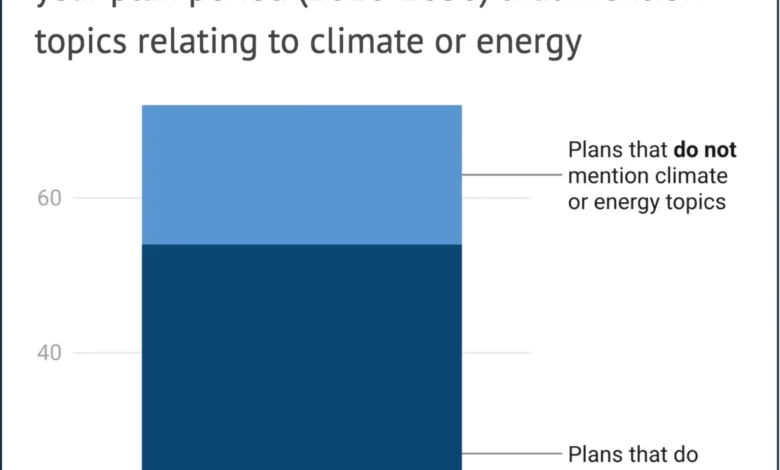
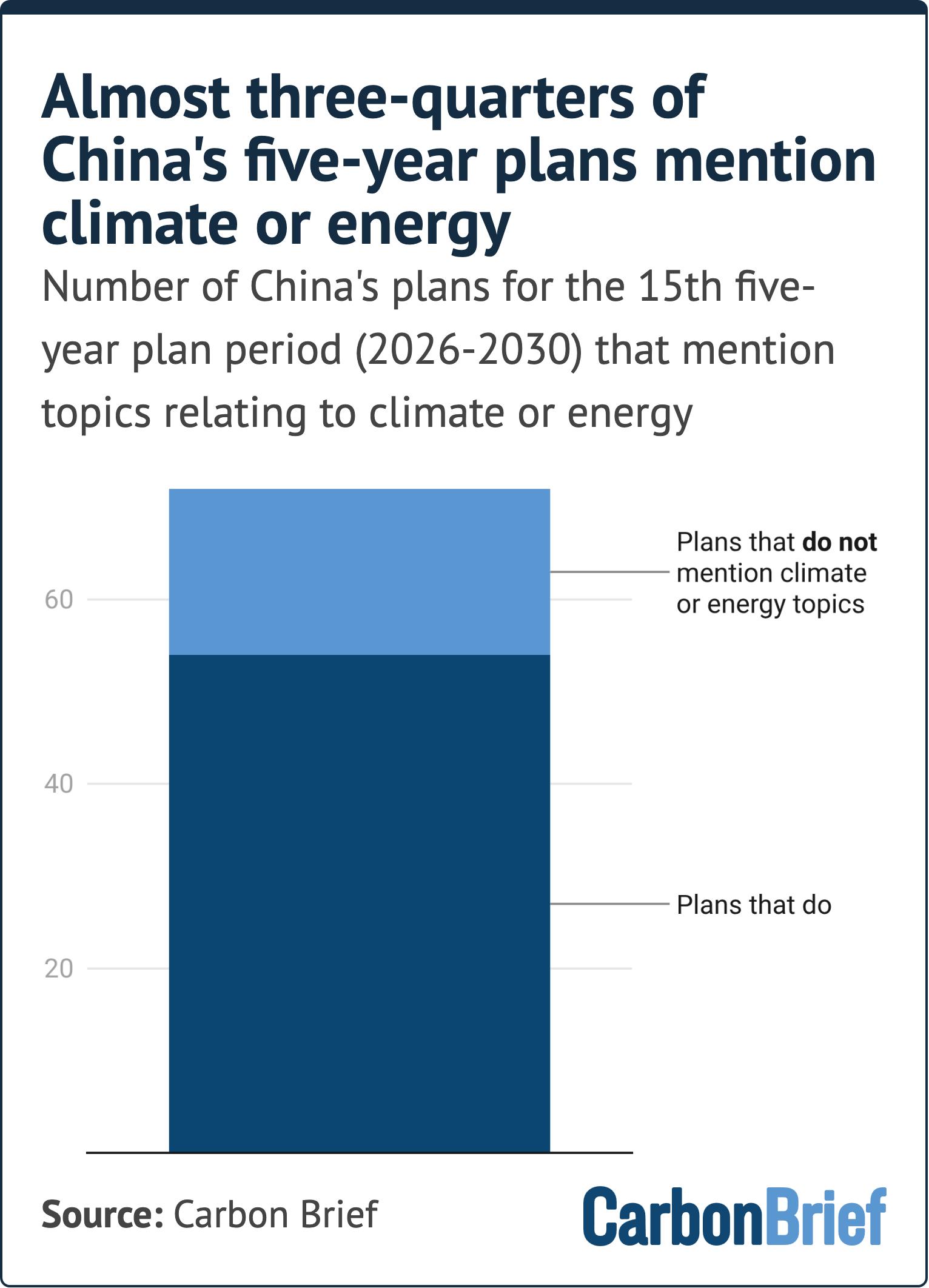
China’s administrative machinery is moving with unprecedented synchronization toward its climate goals, as revealed by a comprehensive analysis of the 15th Five-Year Plan (FYP) cycle. Out of 72 sector-specific and ministerial plans published by the central government for the 2026–2030 period, 54—or approximately 75%—explicitly incorporate policies, targets, or strategic mandates related to climate change and energy transition. This widespread integration underscores a systemic pivot within the world’s largest emitter to embed environmental sustainability into the bedrock of its broader socioeconomic governance.
The 15th FYP cycle is widely regarded by international observers and policy analysts as a critical juncture. As China approaches its self-imposed deadline to peak carbon dioxide emissions before 2030, these documents serve as the primary legal and operational instruments guiding the nation’s transition. By moving climate policy out of the silo of the Ministry of Ecology and Environment and into the portfolios of sectors ranging from agriculture and tourism to industrial manufacturing and digital infrastructure, Beijing is signaling that the green transition is now a horizontal mandate rather than a vertical objective.
The Evolution of China’s Five-Year Planning
To understand the weight of these findings, one must view the FYP process not merely as a series of documents, but as the governing philosophy of the Chinese state. Every five years, the central government in Beijing releases an overarching plan during the "Two Sessions" leadership meetings, which establishes the high-level economic and social trajectory for the nation. Following this, various ministries and commissions release a cascade of thematic plans that translate these high-level aspirations into granular, sector-specific directives.
The 15th FYP, covering the period from 2026 to 2030, was finalized in March 2026. It set the tone by emphasizing high-quality development, which, in the current policy lexicon, is inseparable from "green and low-carbon" growth. While the overarching plan provides the "what," the subsequent 72 plans provide the "how." For instance, while the central plan mandates a 17% reduction in carbon intensity—emissions per unit of GDP—the sector-specific plans provide the localized instructions for how the steel, coal, transport, and technology sectors will contribute to that collective goal.
Data Analysis: The Scope of Green Integration
The Carbon Brief analysis of these 72 plans reveals a deliberate, top-down strategy to ensure no major economic sector remains untouched by the energy transition. The plans can be categorized into four distinct tiers: core climate/energy strategies, sectoral industrial plans, secondary developmental plans, and peripheral socioeconomic strategies.
The "Core" plans—those issued by the National Development and Reform Commission (NDRC), the Ministry of Ecology and Environment (MEE), and the National Energy Administration (NEA)—form the backbone of the strategy. These documents dictate the pace of renewable energy expansion, the phase-down of coal-fired power capacity, and the development of "new-type" power systems designed to handle the intermittency of wind and solar.
However, the inclusion of climate targets in "peripheral" plans is perhaps more telling. For example, plans for urban renewal, the revitalization of traditional Chinese medicine, and even the development of the postal industry now include clauses on energy efficiency, carbon footprint reduction, and the adoption of "new energy vehicles" (NEVs). This suggests that the central government has mandated a "whole-of-government" approach to the 2030 peak.
Chronology of the 15th FYP Cycle
The rollout of these policies followed a disciplined timeline:
- March 2026: Publication of the overarching 15th Five-Year Plan, setting the strategic vision for the next half-decade.
- April–June 2026: Initial wave of core energy and ecological plans, establishing the quantitative "primary goals" for power generation, carbon intensity, and industrial emission standards.
- July–December 2026: Sectoral implementation plans, covering transportation, digital infrastructure, and manufacturing, which integrate the broad climate mandates into specific operational frameworks.
- Early 2027 to Present: Continued release of secondary and peripheral plans, ensuring that social sectors like health, education, and culture align with the national "Beautiful China" initiative.
Strategic Implications for Global Climate Targets
The integration of these targets carries significant weight for international climate diplomacy. By embedding these goals in statutory Five-Year Plans, the Chinese government is essentially making climate action a matter of administrative law. Regional and local officials are judged on their performance against these targets, creating a powerful incentive structure that transcends political rhetoric.
For example, the "New-type Power System" plan is not merely a technical document; it is a roadmap for redesigning the national grid to accommodate the massive influx of renewables. The "Green and Low-Carbon Industrial Development" plan serves as a blueprint for the "dual-carbon" goals, ensuring that industrial growth is decoupled from emissions.
International experts note that the 17% carbon intensity reduction target, while ambitious, is consistent with China’s commitment to the Paris Agreement. However, the true test will be the implementation phase. Unlike previous cycles, the current plans emphasize "coordinated transformation," suggesting that the government is focusing on the nexus between digitalization and greening—attempting to use advanced AI and data analytics to optimize energy consumption across the national economy.
Challenges and Future Outlook
Despite the clear strategic intent, the transition faces substantial headwinds. The "Coal Industry Development" plan, for instance, must balance the need for short-term energy security—given the volatility of global markets and the intermittency of renewables—with the long-term imperative to phase down coal. This creates a "dual-track" system where fossil fuel investment continues alongside massive renewable deployment.
Furthermore, the sheer volume of plans creates an administrative burden. The challenge for Beijing will be ensuring that these 54 climate-linked plans do not conflict with one another. Policy analysts point out that while the central government has issued a coherent vision, the decentralized nature of Chinese provincial governance often leads to varying levels of enforcement.
Nonetheless, the systematic inclusion of these goals indicates that the Chinese state has moved past the stage of debate regarding climate change. It is now in the stage of state-led execution. The 15th FYP cycle functions as a massive, synchronized effort to recalibrate the second-largest economy in the world toward a lower-carbon equilibrium.
Official Stance and Administrative Directives
In official documentation, the term "Beautiful China" appears frequently, serving as a shorthand for the government’s vision of a society where economic prosperity and environmental health are mutually reinforcing. The use of "primary goals" (Zhuyao Mubiao) in these plans elevates climate action to the same level of priority as GDP growth or social stability.
As the 15th FYP period progresses toward its 2030 endpoint, the international community will be closely watching these documents for evidence of success. If China’s historical record of achieving its five-year targets holds true, the systemic integration of these climate mandates suggests that the country is positioning itself to not only reach its peak emissions target but potentially accelerate the timeline through the sheer force of its centralized planning apparatus.
The 54 identified plans represent a shift in the gravity of Chinese economic policy. By treating climate change as a core component of sectors ranging from finance to agriculture, China is demonstrating that it views the energy transition as an opportunity for industrial upgrading and long-term economic resilience. As the implementation of these 72 plans continues, the global energy landscape will undoubtedly be reshaped by the ripple effects of these domestic directives.