Bipartisan Lawmakers Launch Aggressive Year-End Push to Pass Landmark Federal Film Incentive Legislation

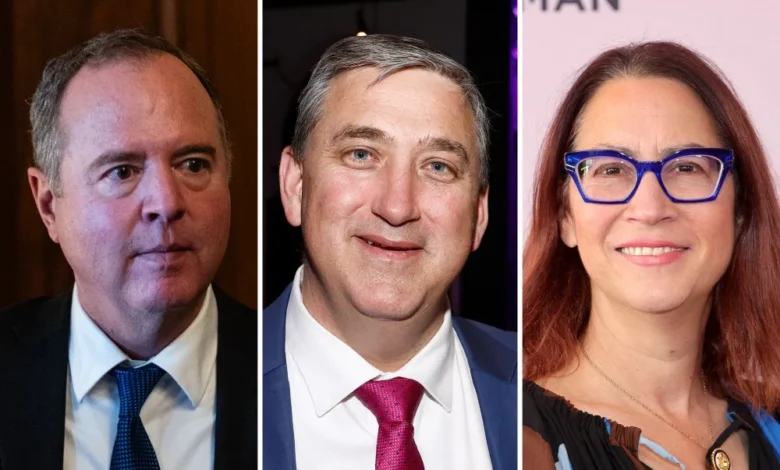
WASHINGTON — Capitalizing on a rare alignment of bicameral consensus and executive backing, a bipartisan coalition of lawmakers has introduced sweeping legislation to establish the first-ever federal tax incentive for the film and television industry. Proponents of the measure are wasting no time, launching an aggressive lobbying and legislative push to secure passage before the current congressional term concludes at the end of the year.
The ambitious legislative package, unveiled on Thursday by a diverse group of senators and representatives, proposes a federal tax credit ranging from 20% to 30% for qualifying film, television, animation, and reality programming. Crucially, the federal credit is designed to stack directly on top of existing state-level incentives without reducing the qualified spend calculation. If enacted, this compounding effect would instantly transform traditional entertainment hubs like California, New York, and Georgia—as well as emerging regional markets—into some of the most financially lucrative production locations in the global entertainment landscape.
With the House of Representatives currently out of session ahead of the November elections, supporters are already eyeing the upcoming post-election lame-duck session. During this period, lawmakers anticipate the consideration of a broader, must-pass tax package that could serve as the ideal legislative vehicle for the film incentive proposal.
The Strategic Urgency of a Lame-Duck Passage
Legislative windows in Washington are notoriously fleeting, and the architects of the federal film incentive bill are acutely aware that political landscapes can shift dramatically from one congressional term to the next.
"Windows of opportunity to pass legislation open and close very quickly," said Rep. Linda Sánchez, D-Calif., during a joint press conference on Thursday. "You have to really strike while the iron is hot."
This sentiment was echoed across party lines by Republican co-sponsors who view the current moment as an optimal convergence of political will. Rep. Nathaniel Moran, R-Texas, emphasized that the strategy is both realistic and necessary given the current political climate.
"When the right opportunity strikes, you’ve gotta jump at the opportunity," Moran said in an interview. "The stars have aligned where we have bicameral, bipartisan support, and we have a president who is very supportive of this."
Sen. Adam Schiff, D-Calif., another key Democratic sponsor of the legislation, reinforced the urgency of avoiding delays that could bleed the momentum into the next legislative calendar year.
"The iron is very hot right now," Schiff noted. "We’re all very focused on this, the president is focused on this. I wouldn’t want to see that bleed into next year."
Anatomy of the Proposed Federal Incentive
As currently drafted, the sweeping legislation covers a wide array of content creation formats, ensuring that the economic benefits reach far beyond traditional feature films and scripted television. Animation studios, unscripted reality programming, and the salaries of actors and other above-the-line talent are all included under the umbrella of the proposed credit.
Furthermore, the bill addresses the increasingly globalized nature of modern entertainment production by incorporating a specialized visual effects (VFX) and post-production credit. This specific provision is tailored to projects that may be physically filmed abroad—taking advantage of international locations or specialized foreign rebates—while ensuring that the complex, high-skill post-production and digital artistry work is completed domestically by American workers.
To secure broader geographic support and address domestic economic disparities, the bill incorporates targeted bonus incentives:
- Rural Opportunity Zones: Productions filming in designated rural areas, such as the district represented by Rep. Moran, will be eligible for an additional 5% bonus credit.
- Federal Disaster Zones: Acknowledging the crippling economic and infrastructure challenges following recent natural disasters, Los Angeles County qualifies for a 5% bonus for filming within its borders through January 2030, a provision directly influenced by last year’s devastating wildfires.
"It was important for me to have that in there," said Rep. Laura Friedman, D-Calif., highlighting the localized impact. "Film is very unique in terms of its ability to stand up a lot of jobs quickly."
The Mechanics of Stacking Credits
One of the most transformative aspects of the newly introduced bill is its policy on stacking. Historically, federal and state incentive programs have often featured clawbacks, caps, or reductions that limit how many subsidies a production can simultaneously claim.
Under the proposed framework, however, the federal incentive operates independently of state programs. State-based tax credits will remain separate and apart from the federal offering, allowing production companies to combine them without penalty. In states that already offer robust tax incentives—such as Georgia’s 30% credit or California’s newly expanded film tax credit program—the stacking mechanism could push total government-backed subsidies past the 50% threshold of qualified expenditures.
"We see this as an additional incentive for the companies to benefit from to stay here," Moran explained, addressing concerns regarding domestic production flight to international jurisdictions like the United Kingdom, Canada, and Australia, which offer aggressive national subsidies.
Economic Implications and Industry Challenges
While the enthusiasm among lawmakers and industry stakeholders is palpable, the legislation faces several procedural hurdles before it can be signed into law. Most notably, the bill has not yet received an official cost estimate—commonly referred to as a "score"—from the Congressional Budget Office (CBO).
Because a federal tax credit of this magnitude represents a significant reduction in federal revenue, finding acceptable legislative offsets, or "pay-fors," will be critical to securing the necessary votes from fiscal conservatives.
"There is a long way to go," Moran acknowledged when asked whether the bill is a final text or merely a starting point for negotiations. "One of the things that’s important is to get a score on the bill, to look for pay-fors that might offset any cost associated with the bill… Whether or not it changes a little bit or a lot will be determined by the feedback we get."
Rep. Friedman similarly tempered expectations, reminding stakeholders that the path from a newly introduced bill to public law is fraught with legislative maneuvering and potential compromises.
"There’s a lot that has to happen for that to be a reality," Friedman cautioned.
Broader Economic Impact on the Entertainment Sector
The push for a federal incentive comes at a critical juncture for the U.S. entertainment industry. In recent years, Hollywood and regional production centers across the United States have faced mounting economic pressures, including post-strike production contractions, rising labor costs, and aggressive competition from foreign governments offering national tax rebates that domestic U.S. productions could not access at the federal level.
Proponents argue that without a federal backstop, the United States risks losing its historic dominance in film and television production, along with thousands of union and non-union middle-class jobs spanning construction, transportation, catering, technology, and engineering.
By stabilizing the domestic production ecosystem, the legislation aims to keep runaway production localized, ensuring that the economic multipliers of a major Hollywood or streaming production—spending at local hotels, hardware stores, restaurants, and equipment rental houses—remain anchored in American communities.
Next Steps in the Legislative Timeline
As Congress enters the final weeks before the November recess, entertainment industry lobbyists, studio executives, and labor unions are mobilizing to build an unstoppable coalition of congressional support. The primary objective for the remainder of the autumn will be refining the bill’s language, securing a formal CBO score, and identifying viable budgetary offsets.
If the bipartisan coalition maintains its current cohesion and capitalizes on the anticipated tax vehicle during the lame-duck session, the United States could fundamentally reshape the economics of modern filmmaking by the close of the year. For now, however, lawmakers remain focused on the immediate task of navigating the complex legislative machinery of Capitol Hill while the political climate remains uniquely favorable.