US Renewable Energy Trends Show Resilience Despite Market Headwinds and Shifting Policy Landscape

The United States electrical grid is currently navigating a complex transitional period as it balances rising demand against a cooling rate of renewable energy expansion. According to the latest data from the Energy Information Administration (EIA) covering the first seven months of 2026, electricity demand has climbed by 2 percent compared to the same period in 2025. This growth, while steady, is notably slower than the 3 percent increase observed during the previous annual cycle, suggesting that energy efficiency measures and the proliferation of self-generating behind-the-meter resources are successfully tempering the surge in load that many experts previously attributed solely to the rapid growth of data centers and artificial intelligence infrastructure.
A Changing Demand Landscape
The discourse surrounding the American power grid has been dominated by concerns that the rise of energy-intensive data centers, coupled with the systemic electrification of the automotive and residential heating sectors, would trigger an uncontrollable spike in demand. However, the data for 2026 suggests a more nuanced reality. While demand is indeed rising, the rate of growth has moderated. Several factors contribute to this phenomenon. First, the widespread adoption of advanced heat pump technology and more efficient electric vehicles has been accompanied by significant improvements in building efficiency and grid-edge management.
Second, there is a growing trend of industrial and commercial entities—specifically massive data center operators—investing in independent power production. By installing onsite gas-powered generation or dedicated microgrids, these companies are effectively removing themselves from the primary grid load, thereby softening the impact on the national transmission system. This decentralization of power generation is a significant shift in how the US handles high-density energy requirements, essentially creating a bifurcated system where traditional grid reliance is supplemented by private energy solutions.
The Deceleration of Solar Expansion
Perhaps the most significant development in the 2026 energy report is the deceleration in the growth of solar power. For years, the industry enjoyed an explosive, exponential trajectory, often seeing year-over-year growth rates exceeding 30 percent. While solar remains the most cost-effective solution for meeting new capacity needs, the sheer scale of the existing installed base means that identical absolute increases now represent a smaller percentage of the total.
During the first seven months of 2025, the US added 48 terawatt-hours (TWh) of solar-generated electricity compared to the previous year. For the same timeframe in 2026, that increase slowed to 39 TWh. While a 22 percent growth rate remains impressive by any standard, it represents a meaningful departure from the aggressive pace the industry had set in previous years. Policy analysts point to a less favorable federal regulatory environment as a primary catalyst for this shift. The removal of specific renewable incentives and a general move toward prioritizing fossil fuel-based generation have created an atmosphere of uncertainty, causing developers to reassess their timelines and investment strategies.
Shifting Energy Mix and Coal’s Decline
Despite the cooling in solar growth, the transition toward a cleaner grid persists, largely driven by the continued decline of coal. Coal-fired generation dropped by more than 10 percent during the first seven months of 2026. This decline has created a "generation vacuum" that renewable sources have been largely successful in filling.
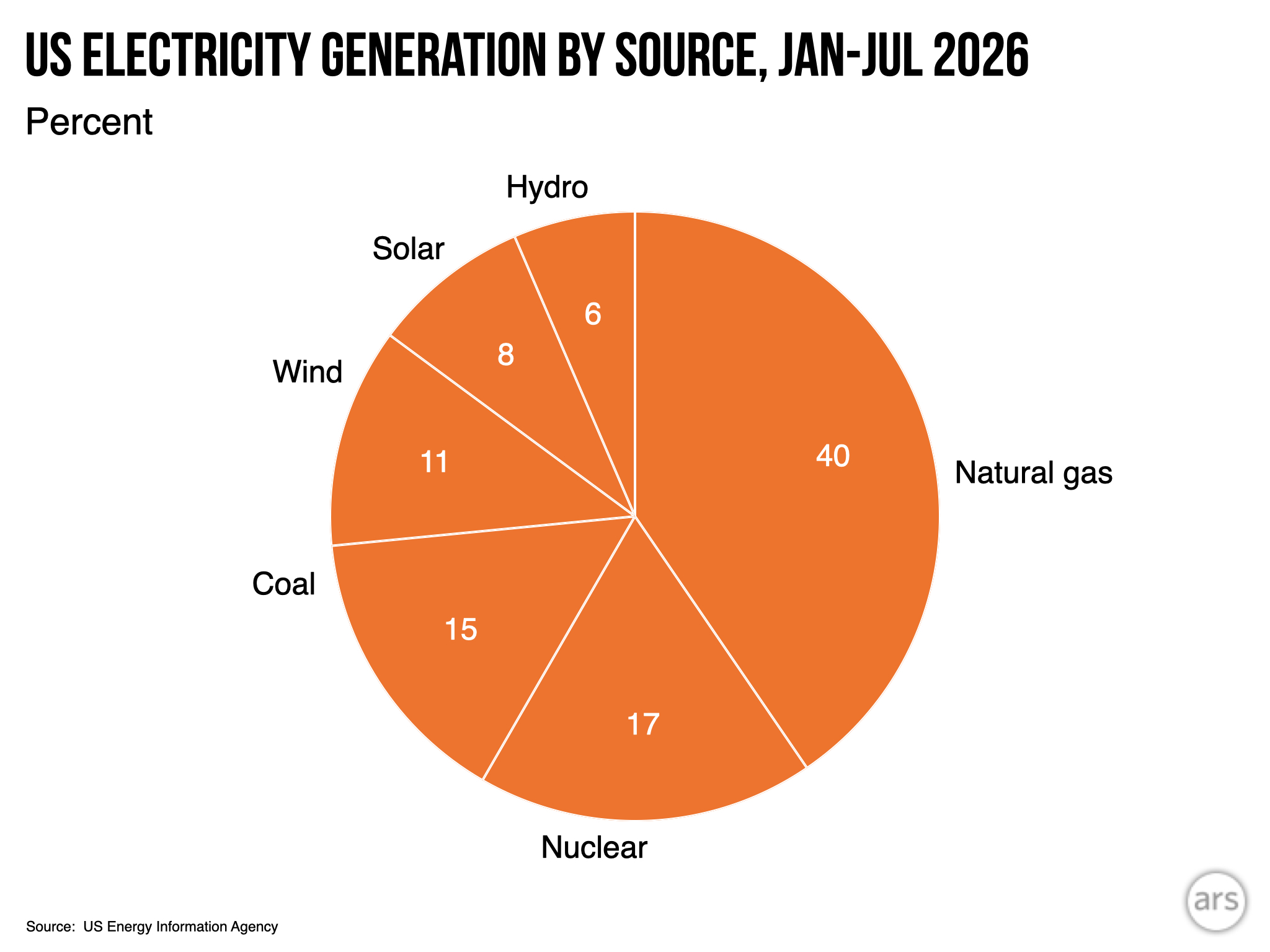
When observing the broader energy mix, wind and solar combined now account for 21 percent of total US electricity demand. The growth from these two sources reached 55 TWh through July 2026, effectively offsetting the 51 TWh increase in total grid demand. This indicates that, for the first time, the increase in American electricity consumption was entirely met by new renewable capacity, underscoring the vital role these technologies play in modernizing the grid without necessarily increasing carbon output. When hydroelectric power is factored into the calculation, renewables account for 27 percent of total demand. Including nuclear power, the total share of non-carbon-emitting sources reaches 45 percent, bringing the United States closer to international benchmarks, though it still lags behind the European Union’s 65 percent emissions-free generation profile.
Infrastructure and Future Outlook
The outlook for the remainder of 2026 and into 2027 is defined by a transition toward regional diversification and energy storage. A significant, albeit likely final, milestone for large-scale offshore wind is occurring this year, with two major projects coming online—including a massive 2.6-gigawatt installation off the coast of Virginia. Industry experts view these as "legacy" projects; due to current federal policies that have incentivized developers to abandon offshore leases, no similar large-scale projects are expected to reach completion until at least the 2030s.
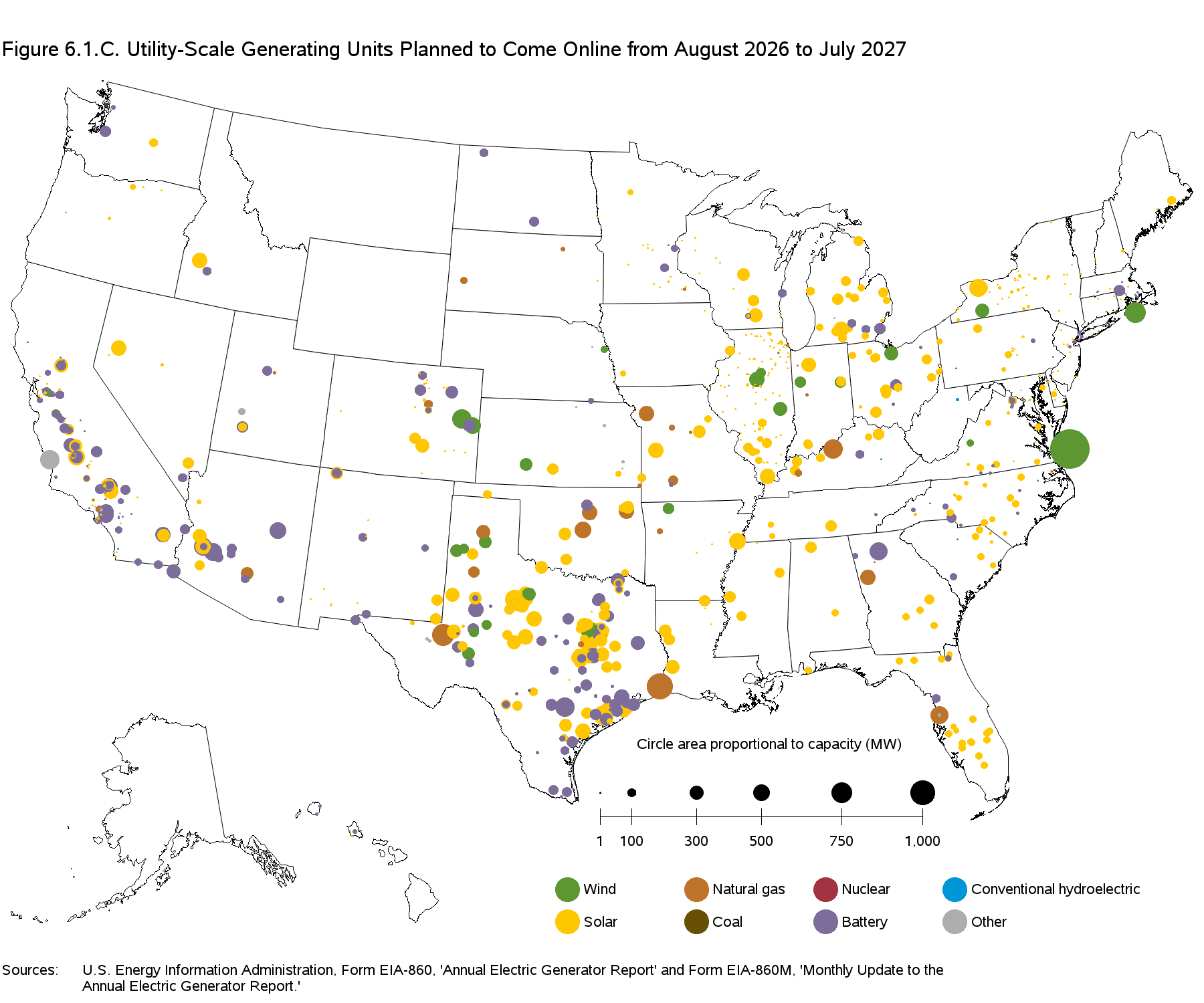
Conversely, onshore wind and utility-scale solar are seeing strong development in regions that were previously considered less viable. Projects in Michigan and Wisconsin highlight a geographical expansion of renewable infrastructure as the economics of these technologies improve. Furthermore, the integration of battery storage is no longer confined to the traditional hubs of California and Texas. New, substantial battery installations are currently appearing in Arizona, Colorado, and Georgia, signaling a maturation of the storage market that is essential for managing the intermittent nature of wind and solar.
Implications for Grid Stability
The absence of any new nuclear or coal plant developments—with the last coal plant having been completed 13 years ago—means that the grid’s future is almost entirely focused on natural gas as a bridge fuel and renewables as the primary growth engine. The "smattering" of new natural gas plants currently under construction, primarily in the Midwest and Texas, suggests a cautious approach by utilities. These plants are likely intended to provide firm, dispatchable capacity to ensure grid reliability as the share of intermittent renewables continues to climb.
From a regulatory perspective, the current administration’s focus on incentivizing fossil fuel infrastructure has created a complex interplay with market forces. While policy is undoubtedly influencing the speed of renewable deployment, the economic reality—where solar and wind are frequently the lowest-cost options—continues to drive development. However, the slowing of growth rates serves as a warning that policy-driven headwinds can significantly alter the trajectory of the energy transition, even when market economics remain favorable.

Analytical Summary of Trends
- Demand Management: Grid demand is growing at a sustainable 2 percent, likely due to efficiency gains and the shift toward private, onsite power generation by major industrial consumers.
- Renewable Resilience: While the explosive growth of solar has normalized, renewables continue to play a critical role, successfully meeting the entirety of new electricity demand in 2026.
- Regional Diversification: The geographic footprint of renewables and battery storage is expanding into the Midwest and the South, signaling that renewable viability is no longer limited to "sunny" or "windy" coastal states.
- Policy Impact: The federal shift away from renewables is creating a bottleneck for long-term projects, specifically in the offshore wind sector, which faces a multi-year hiatus following the completion of current projects.
- Infrastructure Evolution: The move toward grid-scale battery storage is perhaps the most important technical trend, as it provides the necessary stability to incorporate higher percentages of wind and solar into the existing national grid.
As the United States moves into the final quarter of 2026, the focus will remain on whether the grid can maintain this balance. The interplay between market-driven renewable adoption and government-directed policy shifts will be the defining theme for the energy sector in the coming years. For now, the grid appears capable of handling current growth, provided that investments in storage and transmission continue to keep pace with the changing nature of how electricity is both generated and consumed.