The landscape of American energy production is undergoing a complex evolution in 2026, defined by a persistent, albeit moderate, rise in electricity demand coupled with a notable shift in the growth trajectory of renewable energy sources. As the United States navigates an era of rapid technological advancement and grid-wide electrification, the interplay between utility-scale power generation and federal energy policy has come to the forefront of national discourse. Recent data from the Energy Information Administration (EIA) reveals that while renewable energy remains the primary engine for meeting new demand, the explosive, record-breaking pace of solar expansion observed in previous years is showing signs of cooling.
Grid Demand and the Electrification Transition
For the first seven months of 2026, the US electric grid experienced a 2 percent increase in total energy demand compared to the same period in 2025. This figure, while significant, suggests that the widely anticipated "apocalyptic" surge in demand—often attributed to the massive power requirements of hyperscale data centers and artificial intelligence infrastructure—is being partially mitigated. Several factors are at play: long-standing improvements in energy efficiency are continuing to suppress consumption, and an increasing number of large industrial users are opting for localized, behind-the-meter generation.
By generating power through private natural gas generators or dedicated off-grid renewable installations, these entities effectively bypass the public grid. Furthermore, the broad transition toward electrification—encompassing the rising adoption of electric vehicles (EVs) and high-efficiency residential heat pumps—is altering the load profile of the grid. Although demand is rising, it is doing so at a slower rate than the 3 percent year-over-year increase documented at this time last year. This moderated growth provides grid operators with more breathing room to manage the transition from carbon-heavy baseload generation to a more diversified, renewable-reliant portfolio.
The Deceleration of Solar Expansion
The most striking observation from the 2026 data is the shift in solar energy growth rates. For years, the solar sector maintained an astonishing momentum, often posting year-over-year growth exceeding 30 percent. However, the first seven months of 2026 show a marked decline in the velocity of this expansion. Through September 2025, the industry added 48 terawatt-hours (TWh) of generation; for the equivalent period in 2026, that figure dipped to 39 TWh.
While a 22 percent growth rate remains impressive by any standard, it represents a significant deceleration. Industry analysts suggest that this cooling is partly mathematical—as the total installed base grows, the same raw capacity addition represents a smaller percentage increase. However, political and economic headwinds cannot be ignored. The federal government’s current policy environment, characterized by a distinct hostility toward renewable subsidies and the removal of various tax incentives, has introduced significant uncertainty into the market. Developers are increasingly cautious, and the previously frictionless expansion of utility-scale solar projects is now facing regulatory and fiscal hurdles that were less prevalent in the early 2020s.
The Changing Composition of the Energy Mix
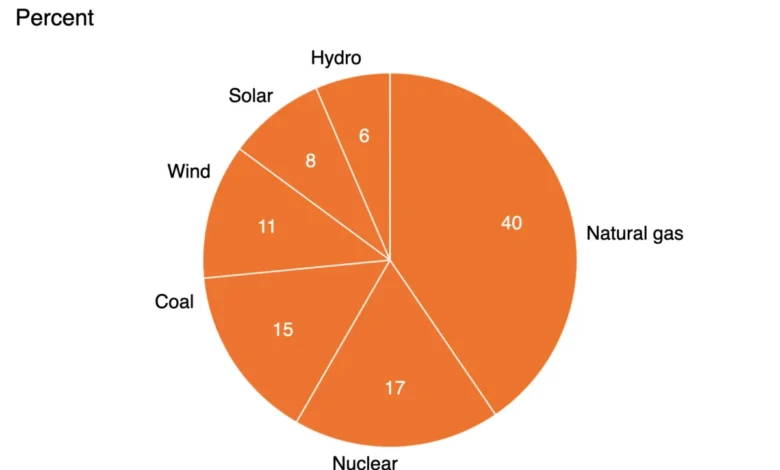
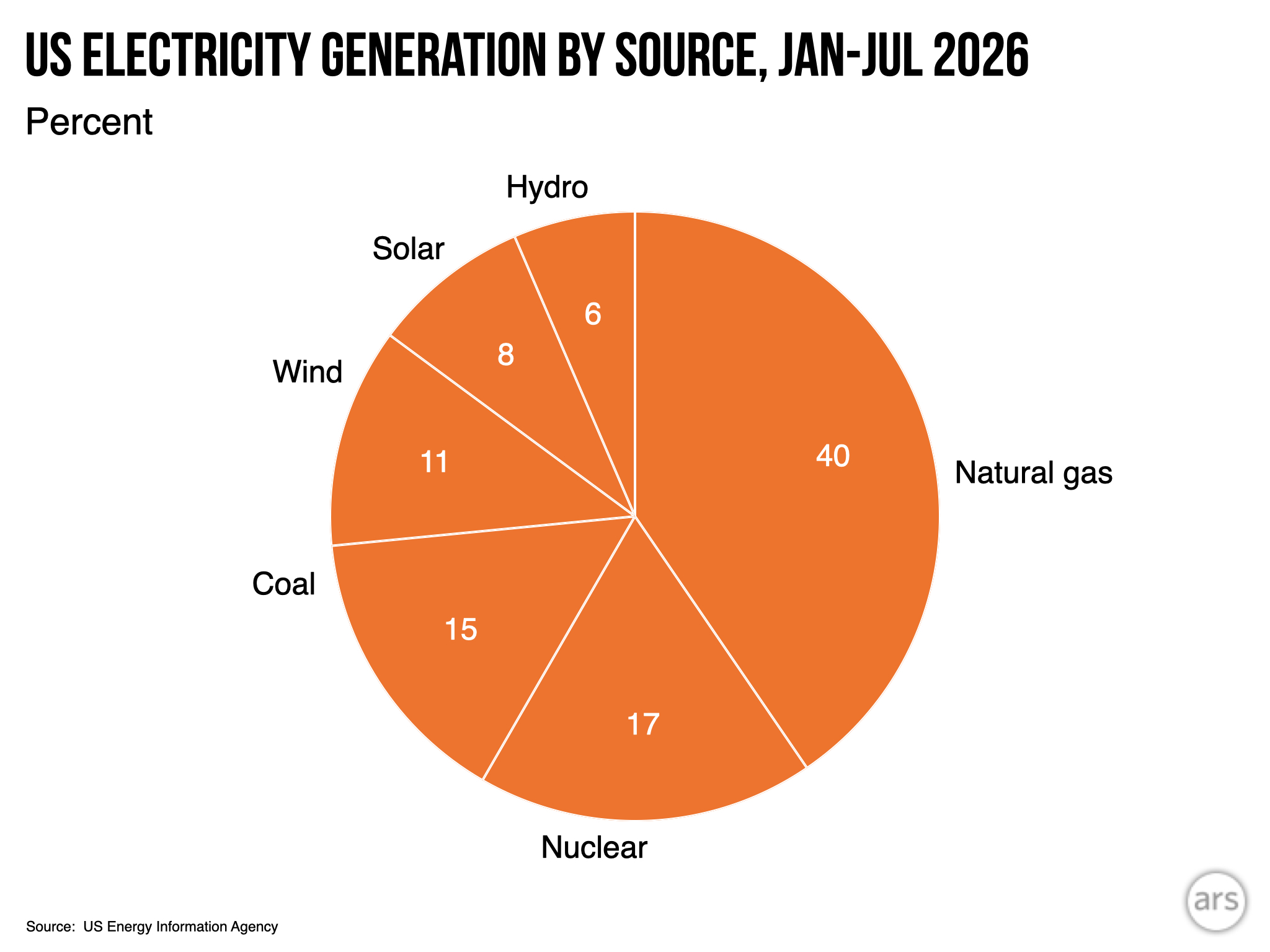
Despite the cooling in solar growth, renewables—led by wind and solar—now account for 21 percent of total US electricity demand. When combined with hydroelectric power, renewable sources cover 27 percent of the national load. When nuclear energy is factored in, the United States currently sources 45 percent of its electricity from non-carbon-emitting sources.
This progress is notable, especially when viewed against the backdrop of the declining coal sector. Over the first seven months of 2026, coal-fired generation dropped by more than 10 percent compared to the same period in 2025. This decline has allowed solar power to gain substantial ground; in fact, total solar generation reached 72 percent of the level of coal generation during this period. The trend is clear: the grid is actively rotating away from legacy fossil fuels, even if the transition is being managed under a more restrictive federal policy framework.
The Future of Offshore and Onshore Wind
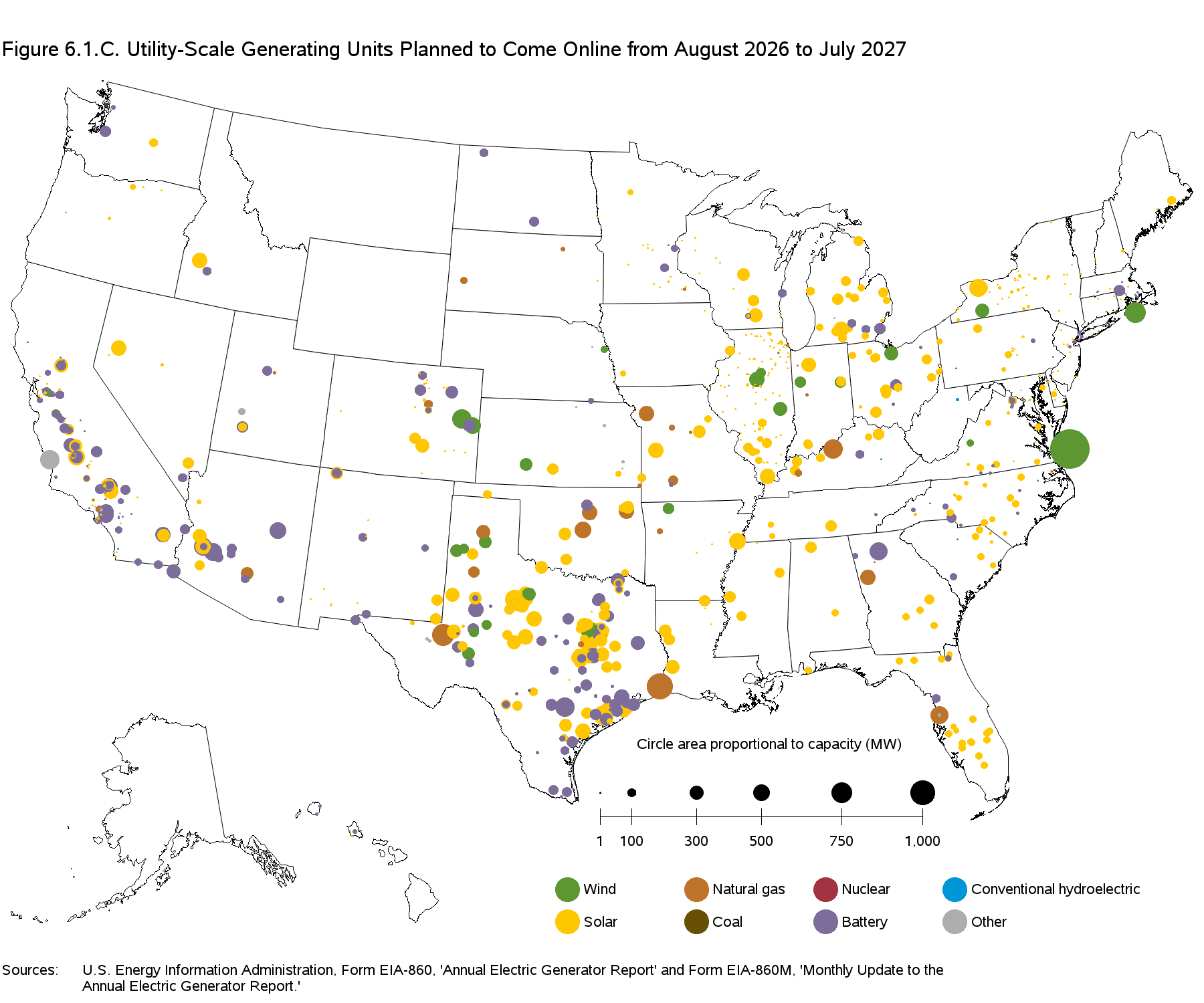
The immediate future of the US grid features a dichotomy between the final remnants of large-scale offshore wind development and the steady, continued growth of onshore capacity. Two major offshore wind projects, including a 2.6 GW installation off the coast of Virginia, are slated to come online later this year. These projects represent the tail end of a development cycle that began under more favorable federal conditions.
Recent policy decisions, including federal efforts to provide financial incentives for developers to abandon existing offshore leases, suggest that these will likely be the last major offshore wind projects completed for the remainder of the decade. Conversely, onshore wind development remains robust. The Midwest and the Great Plains continue to serve as the heartland of wind energy, with consistent investment in new turbines that leverage the high capacity factors of these regions.
Geographic Shifts and Battery Integration
A significant development in 2026 is the geographic diversification of renewable deployment. Solar development is no longer confined to the traditional "Sun Belt" states. Significant new solar facilities are now coming online in states like Michigan and Wisconsin—regions previously deemed economically unviable for large-scale solar due to climate and irradiance constraints.
Parallel to this, the deployment of battery energy storage systems (BESS) is undergoing a major expansion. Once limited to California and Texas, battery installations are appearing in Arizona, Colorado, and even the Southeast, with a major project expected in Georgia. This geographic spread is critical for grid stability, as it allows operators to manage the intermittent nature of solar and wind on a localized basis, reducing the strain on long-distance transmission infrastructure.
The Institutional Stance and Market Realities
The Energy Information Agency (EIA) remains the primary clearinghouse for these projections. Their latest reports indicate that while new natural gas plants are still being commissioned—primarily in Texas and the Midwest to provide firming capacity—there is a complete absence of new coal or nuclear project development. It has been 13 years since the last coal-fired power plant began operations in the United States, and the industry consensus is that the age of coal is effectively over, regardless of the political climate.
The implications for the American grid are profound. The current reliance on renewable growth to meet increased demand is working, as evidenced by the fact that the 55 TWh of growth in wind and solar generation through July 2026 entirely offset the 51 TWh increase in total grid demand. This "crossover" indicates that, at a national level, the system is capable of absorbing new demand through clean energy alone, provided the infrastructure is permitted and constructed.
Broader Economic and Global Implications
When compared to the European Union, which currently derives 30 percent of its electricity from wind and solar and 65 percent from emissions-free sources, the United States is operating on a different, yet parallel, trajectory. The EU’s reliance on carbon-neutral bioenergy and a mature nuclear fleet provides a different baseload structure, whereas the US is relying heavily on a mix of natural gas and rapidly expanding variable renewables.
The primary concern for policymakers and energy stakeholders moving forward is not the availability of technology, but the consistency of the regulatory environment. The removal of federal incentives has created a "wait-and-see" approach among some private investors, particularly in the offshore wind sector. As the US moves further into the second half of the decade, the ability to maintain the current pace of renewable integration—especially in the face of moderate but persistent demand growth—will depend heavily on state-level initiatives and the continued maturation of grid-scale battery storage.

In conclusion, while the explosive, record-shattering growth of the early 2020s has moderated, the fundamental shift in the US power sector continues. The grid is becoming cleaner, more decentralized, and increasingly reliant on storage technologies to manage the transition. Whether this transition maintains its momentum or faces further stagnation in the years ahead remains the central question for the American energy sector as it heads toward 2030.
Related posts: