NASA and Boeing Outline Starliner Return-to-Flight Roadmap with Two Additional Missions and Future Vulcan Rocket Certification

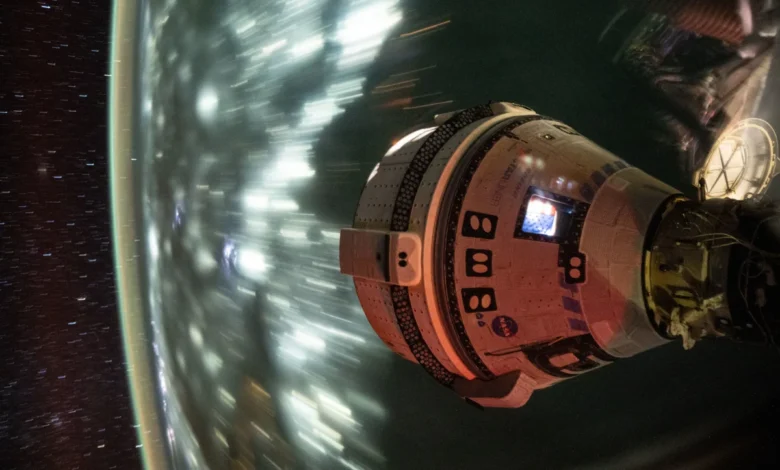
The landscape of American human spaceflight is undergoing a deliberate and calculated recalibration as federal space officials and aerospace contractors chart the future course of the Boeing Starliner spacecraft. During a joint media briefing on Monday, leadership from the National Aeronautics and Space Administration and Boeing Corporation detailed an updated strategic roadmap for the troubled commercial vehicle. The comprehensive update encompasses not only technical modifications stemming from past anomalies, but also an expansion of the vehicle’s flight manifest to include a fifth and sixth crew rotation mission to the International Space Station, as well as plans to transition the capsule to a new launch vehicle once the venerable Atlas V rocket is retired.
The announcements come at a pivotal juncture for NASA’s Commercial Crew Program, an initiative designed to foster commercial partnerships capable of providing reliable, redundant transportation to and from low Earth orbit. While the path forward requires rigorous testing, strict engineering oversight, and additional uncrewed validation flights, space agency officials expressed renewed confidence in the architecture of the program and the necessity of maintaining multiple distinct pathways to orbit.
The Strategic Imperative of Redundancy in Low Earth Orbit
Speaking to reporters, NASA Administrator Jared Isaacman framed the ongoing developments within the broader context of a resurgent global space economy.
"We are living through the most exciting era of space exploration since Apollo," Isaacman said during Monday’s briefing. "As this domain continues to open, there will be growing demand for launch vehicles, transfer stages, landers, and, of course, spacecraft that carry astronauts. NASA has been committed to having multiple crew transportation options since the beginning of the Commercial Crew Program. We have worked closely with Boeing to address the issues identified on previous Starliner flights, and we intend to see this vehicle return to flight in support of the International Space Station and future commercial destinations."
The underlying motivation for maintaining two separate commercial crew providers—SpaceX with its Crew Dragon spacecraft and Boeing with Starliner—is the mitigation of operational risk. Reliance on a single spacecraft provider leaves the nation’s human spaceflight infrastructure vulnerable to grounding in the event of an anomaly. Furthermore, as the International Space Station approaches its eventual retirement late in the next decade, a robust commercial crew capability is deemed essential for transitioning operations smoothly to privately owned and operated commercial space stations currently in development.
Anatomy of an Investigation: Unpacking the 2024 Crew Flight Test Anomalies
To understand the timeline and technical scope of Starliner’s upcoming missions, it is necessary to examine the events of 2024. During Starliner’s inaugural crewed flight test carrying NASA astronauts, the spacecraft experienced technical difficulties involving its service module reaction control system thrusters. Specifically, several thrusters operated outside of their engineering qualification parameters, leading to unexpected performance degradation and a loss of precise control capability.
In response to these telemetry deviations and performance issues, NASA and Boeing instituted a comprehensive review. In February, the agency publicly released the findings of the Program Investigation Team. The exhaustive report outlined a combination of programmatic and technical factors that contributed to the uncrewed return of the spacecraft at the conclusion of that mission.
The investigation identified a total of 61 specific recommendations aimed at ensuring future missions meet the stringent safety and reliability thresholds required for human spaceflight. Ground testing and complex thermal analyses subsequently revealed that the root cause of the thruster performance degradation was multifaceted. The issues stemmed from a combination of the harsh thermal environment encountered during orbital insertion and dock approach, interacting with specific structural features inherent to the service module design.
Chief among the mechanical concerns was the behavior of the thruster valve seals. Engineers discovered that poppet seal extrusion under certain thermal conditions could restrict propellant flow, thereby degrading thruster efficiency and performance.
Technical Modifications and Engineering Remediation
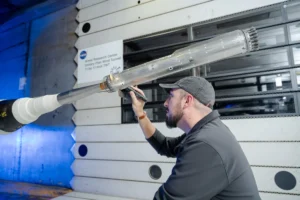
Armed with the data from the investigation, Boeing engineers have spent the intervening months implementing a series of targeted engineering fixes. The most prominent physical modification involves thermal adjustments applied directly to the spacecraft’s service module to shield sensitive components from extreme heat loads.
Additionally, NASA and Boeing have jointly decided to incorporate a redesigned thruster valve into the architecture. This new valve configuration is specifically engineered to prevent poppet seal extrusion, directly resolving the primary mechanical vulnerability observed during the 2024 flight test.
Beyond the propulsion system overhaul, Boeing is making several supplementary improvements across the spacecraft. These include the installation of entirely new crew module thrusters, upgraded battery systems designed to provide enhanced power margins during flight, and minor yet crucial modifications to the parachute recovery system. These combined upgrades are intended to bolster overall performance, enhance system reliability, and satisfy the rigorous criteria necessary for final system certification.
The Phased Return-to-Flight Chronology
The timeline for Starliner’s return to operational service is structured as a methodical, data-driven progression divided into distinct phases.
The immediate next milestone is an uncrewed flight designated as Starliner-1. Tentatively scheduled to lift off as early as December of this year or January 2027, this mission will serve primarily as an engineering evaluation flight. The primary objectives of Starliner-1 are to validate the newly implemented thermal environment modifications, gather empirical flight data to verify system qualification models, and identify any residual technical risks before human astronauts step back inside the cabin.
"We are starting with an uncrewed Starliner-1 mission to the International Space Station to validate the improvements made to the spacecraft and gather the flight data we need," Isaacman explained. "From there, we will use what we learn, continue implementing the corrective actions identified by our Program Investigation Team, and complete the testing and certification required for crewed flight. Our current plan is to return astronauts on Starliner-2 by 2028."
Dana Weigel, manager of NASA’s Low Earth Orbit Program, emphasized the vital nature of this upcoming uncrewed flight during her remarks to the press.
"Starliner’s next flight is a critical step on the path to achieving full system certification and ensuring a sustained human presence in low Earth orbit," Weigel stated. "With the safety of our space station crew and the public as our highest priority, we will test Starliner’s propulsion system through targeted demonstration objectives and disciplined operational controls. These steps are essential to validating Starliner’s thermal performance which is a key element for the certification."
Following the successful execution and data analysis of the Starliner-1 mission, Boeing will complete the remaining service module thruster valve design modifications. The Starliner-2 mission, carrying a flight crew back to the orbiting laboratory, is slated for launch by 2028, assuming all technical milestones are met without major schedule slippage.
Manifest Expansion and Launch Vehicle Evolution
In a clear sign of long-term commitment to the platform, NASA announced its intention to exercise contract options for a fifth and sixth crewed flight to and from the space station utilizing the Starliner spacecraft. These additional missions will extend the operational lifespan of the program well into the latter half of the decade, ensuring continuous logistical support for the orbital outpost.
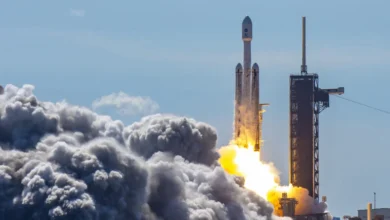
Simultaneously, NASA and Boeing are looking ahead to the eventual retirement of the United Launch Alliance Atlas V rocket, which has historically served as the primary launch vehicle for Starliner. To ensure the spacecraft’s long-term viability, NASA is working collaboratively with Boeing and United Launch Alliance to certify the next-generation Vulcan rocket for crew transportation.
The Vulcan certification process will run parallel to the Starliner return-to-flight schedule, eventually replacing the Atlas V and securing an American-made, heavy-lift capability capable of meeting the stringent human-rating standards required by federal flight safety boards.
Broader Implications for the Commercial Space Sector
The ongoing evolution of the Starliner program holds significant implications for the broader aerospace and commercial space sectors. The challenges faced by Boeing—and the subsequent rigorous federal oversight required to address them—underscore the immense technical difficulty associated with orbital human spaceflight.
Yet, the willingness of both NASA and Boeing to absorb the lessons of the investigation, implement comprehensive engineering overhauls, and expand the flight manifest demonstrates a shared commitment to long-term aerospace resilience. By establishing a second certified crew vehicle and transitioning toward modern launch platforms like the Vulcan rocket, the United States is deliberately fortifying its orbital infrastructure.
As the industry looks toward a future defined by commercial space stations, lunar exploration gateways, and private enterprise in low Earth orbit, the lessons learned from Starliner’s developmental journey will likely serve as a foundational benchmark for human-rated spacecraft design for decades to come. The coming months, culminating in the uncrewed Starliner-1 launch, will provide the definitive test of whether these engineering remedies have successfully closed the gap between theoretical modeling and operational reality.