US Space Force Triples National Security Space Launch Contract to $17 Billion Amid Soaring Demand for Military Satellites

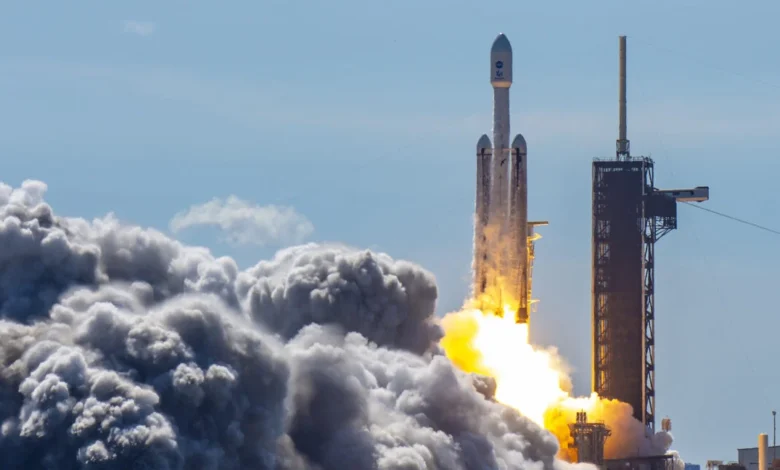
The United States Space Force announced on Friday a monumental expansion of its National Security Space Launch (NSSL) Phase 3 contract, tripling the maximum potential value for a critical segment of the program from an initial $5.6 billion to an unprecedented $17 billion. This substantial increase underscores a burgeoning demand within the Pentagon for military satellite launches and signals a strategic pivot towards greater reliance on commercial launch providers for an expanding array of national security missions. The move highlights the evolving landscape of space operations, where resilience, rapid deployment, and cost-effectiveness are becoming paramount in an increasingly contested domain.
The Evolution of National Security Space Launch
The National Security Space Launch (NSSL) program is the cornerstone of the U.S. government’s strategy for assured access to space, ensuring that vital national security payloads can reach orbit safely and reliably. Its origins trace back to the Evolved Expendable Launch Vehicle (EELV) program, initiated in the mid-1990s following the Challenger disaster, which emphasized the need for dependable, heavy-lift launch capabilities. For decades, the EELV program largely relied on a limited number of providers, primarily United Launch Alliance (ULA), a joint venture between Boeing and Lockheed Martin, which provided the Atlas V and Delta IV rockets. This model, while ensuring mission success, was often criticized for its high costs and lack of competitive pressure.
The NSSL program, formally established in 2019 under the Space Force, represents a deliberate shift towards a more diversified and competitive launch ecosystem. Its primary objective remains unchanged: to deliver the military’s satellites to orbit, supporting critical functions such as intelligence, surveillance, and reconnaissance (ISR), secure communications, missile warning, and global positioning. However, the means to achieve this have been strategically broadened. The program is designed to allow Space Systems Command (SSC), the Space Force entity responsible for overseeing launch operations, to select from a pool of qualified launch providers for individual missions, fostering competition and innovation.
The NSSL program is structured into two distinct "Lanes" to address the varying criticality and risk tolerance of military space missions. This dual-lane approach is central to the Space Force’s strategy for balancing mission assurance with cost efficiency and rapid deployment.
Lane 2: Strategic and High-Priority Missions
Lane 2 of the NSSL program is reserved for the most critical and strategically important missions. These typically involve the government’s largest, most expensive, and most sensitive assets, such as advanced spy satellites, early warning systems, or radiation-hardened communications satellites designed to withstand extreme environments, including potential nuclear conflict. Missions in Lane 2 demand the highest levels of reliability, security, and mission assurance. Consequently, launch vehicles selected for Lane 2 must undergo an extensive and rigorous certification process by the military, evaluating everything from manufacturing processes and quality control to launch vehicle performance and supply chain security.
Currently, only a select few launch systems have achieved this stringent certification. SpaceX’s Falcon 9 and Falcon Heavy rockets, known for their flight heritage and competitive pricing, are certified for Lane 2 missions. United Launch Alliance’s next-generation Vulcan Centaur rocket, which replaces the legacy Atlas V and Delta IV vehicles, also holds Lane 2 certification. These providers are tasked with delivering payloads where the cost of failure is astronomically high, and mission success is non-negotiable for national security. The contract value for Lane 2 missions, while not directly impacted by this latest $17 billion increase, remains substantial and is allocated through separate procurement actions.
Lane 1: Risk-Tolerant and Experimental Missions
The recent contract expansion specifically targets Lane 1 of the NSSL program. Lane 1 covers a broader spectrum of missions characterized by higher risk tolerance, often involving experimental payloads, technology demonstrations, or rideshare opportunities. These include medium-lift launches and missions to deploy satellites for rapidly growing constellations like those managed by the Pentagon’s Space Development Agency (SDA), which is building a proliferated low-Earth orbit (PLEO) architecture for data relay and missile tracking. The SDA’s Transport Layer and Tracking Layer, for instance, are designed to be resilient through sheer numbers and rapid replenishment, making them ideal candidates for Lane 1’s more flexible approach.
A key differentiator for Lane 1 is its accessibility to commercial launch providers without requiring the same extensive, multi-year certification and oversight process as Lane 2. This streamlined approach encourages broader participation from the commercial space industry, including newer entrants and those developing innovative, lower-cost launch solutions. The Space Force issues requests for bids on multiple Lane 1 missions each year, awarding individual fixed-price "task orders" to the winning companies. This competitive procurement model is designed to drive down costs, accelerate access to space, and foster a robust and diverse industrial base.
The $17 Billion Imperative: Why the Tripling?
The decision to triple the maximum value of the NSSL Phase 3 Lane 1 contract from $5.6 billion to $17 billion is a direct response to several converging factors, primarily a dramatic surge in demand for military satellite launches. Military officials cited Friday that the initial $5.6 billion allocation, intended to cover a multi-year period, was rapidly proving insufficient to meet the Pentagon’s evolving needs.
-
Proliferation of LEO Constellations: A major driver is the U.S. military’s shift towards proliferated low-Earth orbit (PLEO) constellations. Agencies like the SDA are deploying hundreds, and eventually thousands, of small to medium-sized satellites to create resilient and globally interconnected networks. Unlike monolithic, exquisite satellites in geosynchronous orbit, these LEO constellations rely on distributed architectures that require frequent and numerous launches to build out, maintain, and replenish. Each "tranche" of the SDA’s Transport Layer, for example, involves dozens of satellites needing launch services within tight timelines. The sheer volume of these satellites necessitates a much higher launch cadence than previously envisioned.
-
Strategic Competition and Resilience: In an era of great power competition with adversaries like China and Russia, the U.S. military recognizes the vulnerability of traditional, small-number, high-value satellite systems. The ability to rapidly launch and reconstitute space capabilities is a critical component of deterrence and resilience. Should space assets be degraded or destroyed in a conflict, the capacity to quickly replace them becomes paramount. Lane 1, with its emphasis on commercial providers and potentially faster turnaround times, is crucial for this rapid reconstitution strategy.
-
Technological Advancement and Experimentation: Lane 1 also serves as a vital avenue for testing and deploying new space technologies. The military is increasingly leveraging commercial innovation, from satellite bus designs to payload capabilities. This requires frequent opportunities to put experimental payloads into orbit, iterate on designs, and validate new concepts. The expanded funding ensures that there are sufficient launch slots available for these critical research and development efforts.
-
Fostering a Competitive Industrial Base: The Space Force has a strategic interest in cultivating a diverse and healthy launch industrial base. By increasing the available funding for Lane 1, it provides more opportunities for a wider range of companies to secure government contracts. This not only encourages innovation and cost competition but also reduces reliance on any single provider, enhancing national security through supply chain diversification and redundancy.
A Growing Pool of Providers for Lane 1
The expansion of the Lane 1 contract value is a significant boon for the commercial space launch industry. When Space Systems Command initially selected providers for NSSL Phase 3 Lane 1 in 2024, it included established players like SpaceX, ULA, and Blue Origin. Since then, the roster of companies qualified to compete for Lane 1 missions has steadily grown, reflecting the Space Force’s commitment to broad industry participation and the maturation of the commercial launch market.
Recent additions to this competitive pool include Rocket Lab, known for its Electron small satellite launcher and developing the larger Neutron rocket; Stoke Space, with its innovative fully reusable Nova rocket concept; and most recently, Relativity Space and Impulse Space. Relativity Space, initially focused on 3D-printed rockets like Terran 1 and now developing the larger Terran R, and Impulse Space, specializing in in-space transportation and orbital services, represent the cutting edge of aerospace innovation. This growing list of qualified providers ensures a robust competitive environment, which is expected to drive down costs and improve service delivery for the Space Force.
Historically, SpaceX has secured a significant share of Lane 1 task orders, leveraging its flight-proven Falcon 9 and competitive pricing. Blue Origin, with its upcoming New Glenn heavy-lift rocket, also secured its first Lane 1 contract earlier this year, signaling its growing presence in the national security launch market. The expanded funding means more opportunities for all these companies, potentially leading to a more evenly distributed allocation of contracts in the future as new vehicles come online and gain operational heritage.
Timeline and Key Milestones in NSSL Phase 3
- 2019: The National Security Space Launch (NSSL) program officially established, replacing the EELV program, with a renewed focus on competition.
- August 2020: NSSL Phase 2 contracts awarded to United Launch Alliance (ULA) and SpaceX for Lane 2 missions, covering launches from 2022 through 2027.
- Early 2023: Space Force begins outlining the structure for NSSL Phase 3, explicitly defining Lane 1 and Lane 2.
- 2024: Space Systems Command announces the initial selection of providers for NSSL Phase 3 Lane 1, including SpaceX, ULA, and Blue Origin, with an initial maximum contract value of $5.6 billion. This phase is designed to cover launches from 2025 onwards.
- Late 2024 – Early 2026: Additional companies like Rocket Lab, Stoke Space, Relativity Space, and Impulse Space are added to the roster of qualified Lane 1 providers, expanding the competitive landscape.
- July 2026 (approximate): The US Space Force announces the tripling of the NSSL Phase 3 Lane 1 contract value from $5.6 billion to $17 billion, reflecting increased demand and strategic imperatives. This adjustment is made within the existing Phase 3 framework, signaling an immediate need for greater procurement capacity.
Broader Impact and Implications
The Space Force’s decision to inject an additional $11.4 billion into the Lane 1 contract has profound implications for national security, the commercial space industry, and the global geopolitical landscape.
-
Enhanced National Security: The most immediate impact is a significant bolstering of U.S. national security capabilities in space. By enabling more frequent and diverse launches, the Space Force can accelerate the deployment of resilient satellite constellations, enhance its global surveillance and communication networks, and maintain a decisive technological edge over potential adversaries. This improved access to space directly supports military operations across all domains, from intelligence gathering to precision targeting. The ability to "proliferate" and "disaggregate" space assets makes them inherently more survivable and resistant to attack, as an adversary would need to target a vast number of satellites rather than a few critical ones.
-
Boom for Commercial Space Industry: For the commercial space sector, this funding increase is a massive vote of confidence and a substantial economic stimulus. The $17 billion represents a significant revenue opportunity for launch providers, especially those developing medium-lift capabilities suitable for Lane 1 missions. It validates the immense private investment poured into developing new rockets and launch infrastructure, fostering job creation, and driving further innovation in propulsive technologies, materials science, and manufacturing techniques. Smaller, agile launch companies now have a clearer path to securing lucrative government contracts, encouraging further growth and diversification of the industrial base. This move solidifies the government as a crucial anchor customer for many commercial space ventures.
-
Intensified Competition: While beneficial overall, the increased funding will also intensify competition among Lane 1 providers. Companies will need to demonstrate not only technical proficiency and reliability but also cost-effectiveness and schedule flexibility to win task orders. This competitive pressure is ultimately beneficial for the Space Force, as it incentivizes providers to offer the best possible services at the most competitive prices. The focus on fixed-price task orders encourages efficiency and innovation in operational models.
-
Geopolitical Ramifications: In the broader geopolitical context, this move signals the U.S.’s unwavering commitment to maintaining its leadership in space. As other nations, particularly China and Russia, rapidly advance their own space capabilities, the U.S. is demonstrating its intent to outpace and outmaneuver them through a strategy of resilience, rapid deployment, and leveraging commercial innovation. The ability to quickly replace or augment critical space assets could serve as a powerful deterrent against hostile actions in space.
-
Challenges and Future Outlook: While the funding increase addresses immediate demand, it also presents challenges. Managing an increasingly complex manifest with multiple providers requires sophisticated coordination and robust oversight from Space Systems Command. Ensuring interoperability among different satellite constellations and managing the growing orbital traffic will also be crucial. Looking ahead, the NSSL program will likely continue to evolve, potentially incorporating new technologies like in-space servicing, manufacturing, and transportation, as the definition of "assured access to space" broadens beyond just launch. The long-term vision involves a truly resilient, responsive, and adaptable space architecture capable of meeting any future national security challenge.
In conclusion, the tripling of the NSSL Phase 3 Lane 1 contract is more than just a budgetary adjustment; it is a strategic declaration. It underscores the U.S. military’s accelerating pivot towards a more dynamic, commercial-centric approach to space access, driven by an urgent need for resilience, rapid deployment, and innovation in an increasingly vital and contested domain. The $17 billion investment will shape the future of national security space operations and invigorate the commercial space industry for years to come.