For decades, the prevailing consensus in neuroscience has painted the cerebral cortex as a secondary participant in the sleep-wake cycle. Traditional models have long dictated that the cortex acts as a passive recipient, a stage where the slow, rhythmic oscillations of deep sleep perform, but not the director calling the cues. Instead, the deep-seated subcortical regions of the brain, such as the thalamus and the hypothalamus, were believed to be the primary conductors of sleep initiation. However, a groundbreaking study published in the journal Nature in 2026 by neuroscientists Geoffrey Terral and Renata Batista-Brito at the Albert Einstein College of Medicine has upended this long-standing hierarchy, identifying a rare population of cortical neurons that possess the remarkable ability to initiate sleep independently.
The Anatomy of a Sleep Switch
The discovery centers on a specific subset of inhibitory neurons known as Sst-Chodl cells. Named for the two distinct genes active within them—Somatostatin (Sst) and Cholecystokinin-like protein (Chodl)—these neurons represent an incredibly small fraction of the total cortical landscape. Inhibitory neurons themselves account for approximately 20 percent of all cortical neurons, but the Sst-Chodl population comprises a mere one percent of that inhibitory subset. This means that for every 1,000 neurons within the cortex, only one is an Sst-Chodl cell.
The identification of these cells was the result of a multi-year effort to develop a genetic strategy capable of isolating a population that is both sparse and highly heterogeneous. Previous attempts to target these cells using a single gene failed, as the markers were far too broad, capturing a vast array of unrelated cellular types. By refining a dual-gene targeting strategy, the team was able to successfully isolate and manipulate these rare cells, a task that Batista-Brito described as a high-risk endeavor that faced significant resistance during the grant-funding process.
Challenging the Passive Cortex Paradigm
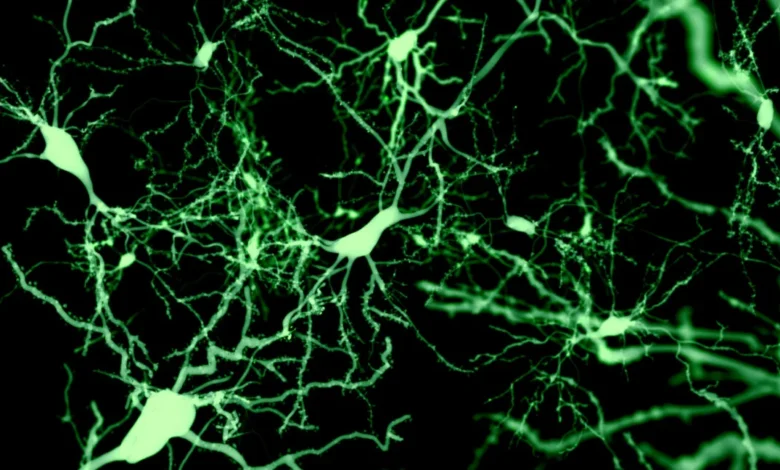
The structural findings revealed by the team were equally startling. While inhibitory neurons are typically localized—exerting their influence on neighboring cells within a small radius—Sst-Chodl neurons exhibit extensive "arborization." Under microscopic observation, these cells appear as a sparse but expansive network, with individual neurons possessing long-range axons that reach across the visual cortex and into distant areas responsible for high-level functions, including motor control, spatial navigation, hearing, and tactile processing.
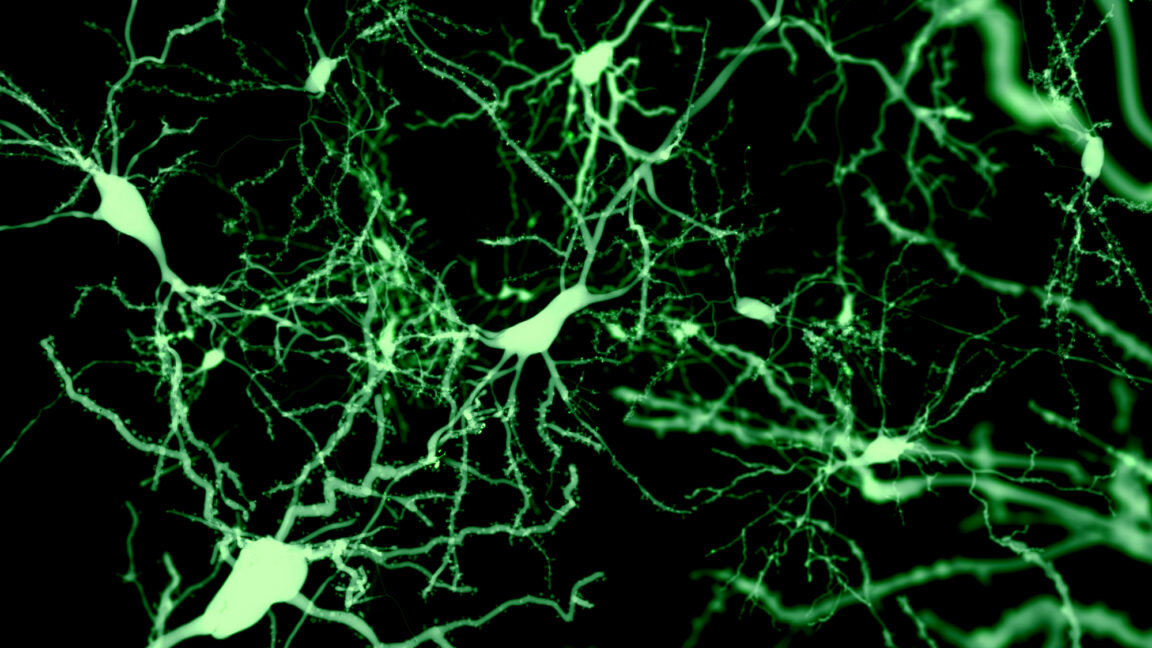
This "massive arborization" allows a single Sst-Chodl cell to broadcast signals across multiple functional brain regions simultaneously. While they receive highly precise inputs, they function as a broadcast hub, coordinating activity on a global scale. This is the antithesis of the standard model of local inhibitory control, suggesting that these cells function as a master synchronization switch for the entire brain.
Chronology and Methodology of the Discovery
The researchers employed a multi-modal approach to confirm the function of these cells. The study began with high-resolution imaging in awake, behaving mice. By tracking pupil size, muscle tone, and cortical electrical activity, the team observed that Sst-Chodl cells fire specifically during the transition into slow-wave sleep and during quiet, motionless wakefulness. Conversely, these cells remain silent during REM sleep and periods of high-intensity activity, such as running.
The team noted that Sst-Chodl neurons exhibit a unique pattern during the "UP" and "DOWN" states of slow-wave sleep. During the transition from an UP state (active firing) to a DOWN state (near-silence), the activity of these neurons actually intensifies, effectively driving the cortex into a period of silence. They notably lack the "rebound" activity typically seen in other cortical neurons as the brain transitions back to an active state, marking them as distinct from their neighboring neurons.
To confirm causality, the team utilized optogenetics, a technique that uses light-activated ion channels to stimulate cells on demand. When the researchers stimulated the Sst-Chodl neurons in the visual cortex, the results were immediate: the mice exhibited increased delta wave power—the hallmark of deep, restorative sleep—across all cortical layers. Furthermore, the stimulation induced longer and more frequent DOWN states, effectively forcing the animal into a state of sleep, regardless of whether the experiment took place during the animal’s natural rest phase or its active phase.
Broader Implications for Sleep Science
The discovery of the Sst-Chodl sleep switch offers a new framework for understanding both homeostatic and circadian sleep. Homeostatic sleep—often referred to as "sleep pressure"—is the cumulative fatigue that builds throughout the day, eventually necessitating rest. The researchers suggest that Sst-Chodl neurons may act as the physical sensors of this pressure. This theory, initially proposed by co-author Thomas Kilduff of SRI International, is supported by observations that these cells show heightened activity following periods of sleep deprivation.

The implications for human health are profound. Sleep disorders and the dysregulation of sleep-wake cycles are core features of numerous psychiatric and neurological conditions, including major depressive disorder, bipolar disorder, and neurodegenerative diseases like Alzheimer’s. If Sst-Chodl cells are the primary initiators of sleep, they represent a high-value target for therapeutic intervention. By modulating these cells, future treatments might be able to restore healthy sleep rhythms in patients whose internal clocks have been disrupted by illness.
Future Directions and Remaining Questions
Despite the magnitude of these findings, the research team is cautious, noting that their initial experiments were conducted exclusively within the visual cortex. While they suspect that the coordinating role of Sst-Chodl neurons is a universal feature of the mammalian cortex, the specific wiring and input pathways may vary by region. Current research is now shifting toward the prefrontal cortex to determine if these cells receive inputs from deep-brain structures like the hypothalamus or thalamus, which could serve as the "trigger" for the switch.
Furthermore, the team has identified three critical areas for ongoing investigation:
- The Activation Mechanism: What specific neurochemical or electrical signal flips the switch on these cells?
- Sleep Pressure Sensing: How do these neurons calculate and respond to the physiological demand for sleep?
- Delta Power Coordination: What are the precise biophysical mechanisms that allow these cells to drive delta-frequency oscillations so effectively across the entire cortex?
The fact that these neurons are conserved across species, from salamanders to humans, suggests that this sleep-initiating mechanism is an ancient, highly efficient evolutionary strategy. By shifting the focus from the deep brain to the cortex, this study provides a new roadmap for neuroscience, effectively bridging the gap between local cortical activity and the global state of the sleeping brain. As the scientific community begins to digest these findings, it is clear that our understanding of sleep—and the cortical cells that orchestrate it—has entered a new and transformative era. The risk that Batista-Brito once took in pursuing these "one-in-a-thousand" neurons has yielded a significant reward, fundamentally altering the way we view the quietest, yet perhaps most complex, hours of our lives.