The Democratic Republic of the Congo Opens Over Half Its Land to Oil and Gas Drilling Amid Global Conservation Concerns


The Democratic Republic of the Congo (DRC) is currently at a critical environmental crossroads as the government moves to auction off 52 new oil blocks for exploration and development. This decision, which comes in addition to three previously awarded blocks, effectively opens more than 53 percent of the nation’s total landmass to fossil fuel extraction. According to the latest findings from Earth Insight in their report, Forests to Frontlines: Oil Expansion Threats in the DRC, this expansion jeopardizes 64 percent of the country’s pristine tropical forests and creates a direct, existential threat to some of the most ecologically significant regions on the planet.
The Ecological Significance of the Congo Basin
The Congo Basin represents the second-largest tropical rainforest in the world, serving as a vital "lung" for the planet. Its ecological value is immeasurable, acting as a massive carbon sink that regulates global weather patterns and maintains atmospheric stability. Central to this landscape are the Cuvette Centrale peatlands, a vast, waterlogged forest region that stores approximately 30 gigatons of carbon. If these peatlands are disturbed or degraded by industrial drilling infrastructure—such as roads, pipelines, and drilling pads—the potential release of stored carbon would be catastrophic, effectively neutralizing global efforts to keep warming below critical climate thresholds.
Beyond its role in climate regulation, the region is a sanctuary for biodiversity found nowhere else on Earth. It serves as the primary habitat for mountain gorillas, eastern lowland gorillas, and bonobos—all of which are currently classified as endangered or critically endangered. The basin also supports vast populations of forest elephants, endemic bird species, and thousands of unique botanical specimens. The intersection of these sensitive habitats with oil blocks is not incidental; the maps provided by Earth Insight demonstrate a direct overlap between high-value conservation zones and the proposed development sites.
Chronology of Escalating Extraction
The 2025 auction represents a significant escalation of a policy shift that began in earnest three years prior. The timeline of this expansion highlights a consistent, if controversial, trajectory toward industrialization:
- 2022: The Congolese government launched an initial, highly contentious auction for 30 oil and gas blocks. This move drew immediate condemnation from international NGOs and climate scientists because many of the blocks were located within protected areas and the ecologically fragile peatlands.
- 2023: Despite international pressure to declare a moratorium on drilling, the government continued to finalize agreements and pursue development strategies, positioning fossil fuel revenue as a necessary component of national economic growth and poverty alleviation.
- 2025: The government expanded the scope of the project significantly, adding 52 new blocks to the licensing round. This move, which brings more than half of the national territory under the shadow of potential drilling, signals an acceleration that has stunned conservationists and civil society organizations.
The Human Cost: Indigenous and Local Communities
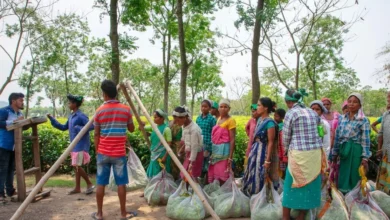
The implications of this expansion extend far beyond the biological realm. An estimated 39 million people rely directly on the ecosystems within these oil blocks for their livelihoods, food security, and cultural survival. Many of these individuals are members of Indigenous communities whose lives are inextricably linked to the health of the forests and rivers.
The displacement of these populations, or the degradation of the resources they depend on, poses a severe risk to regional stability. Pascal Mirindi, a campaign coordinator for the organization Notre Terre Sans Pétrole, has been a vocal critic of the government’s logic. Mirindi notes the blatant contradiction between the government’s public rhetoric regarding the Kivu-Kinshasa ecological corridor—a project meant to preserve biodiversity—and its private actions in auctioning off the land within those very corridors. According to current mapping, approximately 72 percent of the newly established Kivu-Kinshasa Green Corridor intersects with the proposed oil blocks, effectively stripping the project of its ecological integrity.

Data-Driven Analysis of the Risks
The statistical reality of the current auction is stark. The overlap between industrial concessions and protected areas is not merely an edge case; it is a fundamental feature of the proposed map:
- Protected Areas: Approximately 20.5 million acres of officially designated protected land are now open to bids.
- Biodiversity Hotspots: 21.3 million acres of "Key Biodiversity Areas" are slated for potential industrial activity.
- Intact Forest Landscapes: 165.1 million acres of primary, intact tropical forest are now vulnerable to the fragmented development that accompanies oil extraction.
The fragmentation of these landscapes is perhaps as dangerous as the extraction itself. Building the infrastructure required to access remote oil deposits inevitably leads to the "edge effect," where forest edges are exposed to light and wind, drying out the ecosystem and making it more susceptible to fire and invasive species. This process also opens previously inaccessible regions to illegal logging and poaching, which often follow in the wake of oil and gas exploration roads.
Official Responses and Civil Society Opposition
The government of the DRC has historically defended these auctions as a matter of economic sovereignty. The administration argues that the country must utilize its natural resources to pull its population out of poverty and invest in infrastructure and education. However, civil society groups, including the Coalition des Organisations de la Société Civile pour le Suivi des Reformes et de Action Publique (CORAP) and Rainforest Foundation UK, argue that the long-term economic and social costs of environmental destruction far outweigh the short-term gains of fossil fuel extraction.
The call from these organizations is clear: they are demanding that the 2025 licensing round be canceled immediately. Furthermore, they are urging international donors and financing institutions to align their support with the DRC’s international environmental commitments. There is a strong consensus among these groups that if international financing is tied to conservation and sustainable development, the government would be more incentivized to abandon the oil path in favor of initiatives that support the "green economy," such as carbon credit programs or eco-tourism.
Broader Implications for Global Climate Strategy
The DRC’s pivot toward oil is a litmus test for the global community’s commitment to climate change mitigation. If the international community fails to provide a viable economic alternative to oil extraction, the temptation for resource-rich developing nations to exploit their reserves will only grow.
However, the argument presented by environmental analysts is that the DRC is not just any country; it is a global climate lynchpin. Because of the sheer volume of carbon stored in the Congo Basin, the decisions made in Kinshasa have direct consequences for every nation on Earth. If the Cuvette Centrale is opened to drilling, the resulting degradation could significantly impair the planet’s ability to remain within the 1.5-degree Celsius warming target established by the Paris Agreement.
The situation remains fluid. As the auction process proceeds, the pressure on the Congolese government to balance its developmental aspirations with its global responsibilities is intensifying. The outcome of this struggle will likely determine the fate of the Congo Basin for generations to come, serving as a defining case study in the tension between national industrialization and the urgent, planetary need for conservation. The coming months will be critical, as the international scientific community and local civil society continue to press for transparency, environmental safeguards, and the protection of the fundamental rights of those living on the frontlines of this expansion.