The Hidden Driver of Global Heating: Understanding the Methane Crisis and the Path to Mitigation

Methane, a colorless and odorless hydrocarbon, has emerged as the most critical focal point in the international effort to curb global temperature rise. While carbon dioxide remains the primary long-term driver of the climate crisis due to its sheer volume and longevity in the atmosphere, methane serves as a powerful, short-lived accelerator of global heating. Recent data from the World Meteorological Organization (WMO) confirms that atmospheric concentrations of this gas have surged by 265 percent since the pre-industrial era, reaching 1,934 parts per billion (ppb) as of 2023. As policymakers and climate scientists pivot their strategies, the focus on methane has intensified, driven by the realization that cutting these emissions offers the fastest route to slowing the rate of planetary warming.

The Chemistry and Sources of Methane
At the molecular level, methane consists of one carbon atom bonded to four hydrogen atoms. It is generated through both geological and biological processes. Geologically, it is formed over millions of years as organic matter is subjected to immense heat and pressure deep underground, creating the natural gas deposits that currently provide roughly 25 percent of the world’s electricity. Biologically, the gas is produced through "methanogenesis," a process where microorganisms known as archaea respire in oxygen-poor environments. These environments include natural wetlands, the digestive tracts of ruminant livestock, and, increasingly, human-managed systems like landfills and rice paddies.
Human activity now accounts for approximately 60 percent of annual methane emissions. The remaining 40 percent stems from natural sources, primarily wetlands and freshwater systems. However, this natural baseline is increasingly volatile; as the climate warms, thawing permafrost in the Arctic and shifting precipitation patterns in tropical wetlands are creating a "methane feedback loop," where a warmer planet triggers ecosystems to release even more of the gas.

A Chronology of the Methane Surge
The escalation of methane in the atmosphere is a relatively recent phenomenon in terms of rapid acceleration.
- Pre-Industrial Era: Atmospheric methane levels remained relatively stable for centuries.
- The Industrial Revolution: The expansion of coal mining, oil and gas extraction, and large-scale agriculture began a steady upward trend in emissions.
- 2016: The United States lifted its ban on liquefied natural gas (LNG) exports, triggering a massive infrastructure boom that critics argue has undermined global climate progress by incentivizing continued reliance on gas.
- 2021 (COP26): The Global Methane Pledge was launched in Glasgow. Signatory nations committed to reducing global methane emissions by 30 percent from 2020 levels by 2030.
- 2022: Researchers utilized advanced satellite imagery to identify over 1,000 "super-emitter" events, many linked to oil and gas infrastructure, with some individual leaks emitting as much methane in an hour as entire nations.
- 2023–2024: Despite the pledges, atmospheric methane concentrations hit new records. The International Energy Agency (IEA) reported that emissions from the energy sector remained above 120 million metric tons per year.
Comparative Potency: Why Methane Matters
The primary reason for the urgent focus on methane is its high Global Warming Potential (GWP). Over a 20-year timeframe, methane is 86 times more potent than carbon dioxide at trapping heat. While its atmospheric lifespan is relatively short—approximately 12 years, compared to the centuries that CO2 persists—this "short-lived" nature is precisely why cutting methane is so effective. By reducing methane now, the world can achieve a cooling effect that is immediate and measurable, potentially preventing 0.2 degrees Celsius of warming by 2050.

The "Bridge Fuel" Controversy
For decades, the natural gas industry marketed methane as a "bridge fuel," arguing that because burning gas produces less CO2 than coal, it was a cleaner transition option. However, this narrative is increasingly under fire from climate researchers and policy analysts. The "bridge fuel" argument fails to account for the substantial volume of methane that leaks during the extraction, processing, and transport of natural gas.
Studies indicate that if even 0.2 percent of methane leaks throughout the supply chain, the climate-warming impact of natural gas can equal or exceed that of coal. With the rapid expansion of LNG export terminals in the U.S., Australia, and Canada, the infrastructure being built today risks "locking in" decades of high-emission activity, effectively canceling out the progress made by the adoption of solar and wind power. The U.S. Department of Energy has recently indicated that new LNG export capacity is increasingly likely to displace renewable energy investment rather than replace coal-fired power.

Measuring the Invisible: Bottom-Up vs. Top-Down
Accurate measurement is the cornerstone of any mitigation strategy. Historically, governments relied on "bottom-up" inventories—calculating emissions based on equipment types, number of cattle, or standard leak rates. These methods have proven to be dangerously imprecise.
"Top-down" approaches, which involve using satellite technology and high-altitude sensors to measure atmospheric concentrations directly, have revealed that real-world emissions are significantly higher than official reports. A prominent study found that direct measurements of U.S. oil and gas emissions were 60 percent higher than the estimates provided by the Environmental Protection Agency. This discrepancy highlights the prevalence of "super-emitters"—the top five percent of leaks that account for over 50 percent of total leakage volume.

Health and Economic Implications
The impact of methane extends beyond the thermostat. Methane is a precursor to ground-level ozone, a harmful air pollutant that exacerbates respiratory conditions and causes approximately 500,000 premature deaths annually. Beyond the human toll, ozone causes significant damage to agricultural productivity, reducing yields of staple crops like wheat, rice, and maize. Estimates suggest that every million metric tons of methane avoided could prevent thousands of asthma-related hospitalizations and protect hundreds of thousands of tons of food crops.
Mitigation Strategies: A Three-Pronged Approach
To achieve the 34 percent reduction in methane by 2030 required to remain within the 1.5-degree Celsius warming threshold, the IPCC and other international bodies advocate for a multi-sector strategy:

- Fossil Fuels: The IEA estimates that 70 percent of methane emissions from the oil and gas sector could be eliminated using existing technology. This involves mandatory leak detection and repair programs, the installation of "no-bleed" pneumatic devices, and the phasing out of routine venting and flaring.
- Agriculture: Livestock account for roughly 32 percent of human-caused methane. Solutions include dietary additives for cattle—such as seaweed, which has been shown to reduce enteric methane by up to 82 percent—and the use of anaerobic manure digesters to capture gas for energy. For rice cultivation, techniques such as "alternative wetting and drying" can reduce the oxygen-poor conditions that foster methane-producing bacteria.
- Waste Management: Landfills are a major, preventable source of emissions. Moving toward a circular, zero-waste economy that diverts organic matter to composting facilities is essential. In wastewater treatment, upgrading to plants that capture and reuse biogas can transform a source of pollution into a source of renewable energy.
The Role of Policy and Individual Action
While individual changes—such as reducing meat consumption and transitioning from gas stoves to induction cooktops—are beneficial, experts emphasize that systemic change is the primary driver of necessary emissions reductions. The current policy landscape is characterized by a "gap" between climate rhetoric and legislative action. As of 2023, only 13 percent of global methane emissions were covered by binding, sector-specific reduction policies.
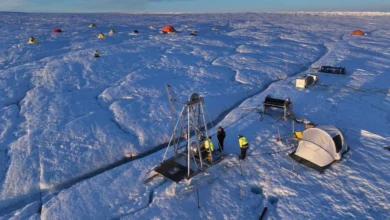
The path forward requires a transition away from the expansion of fossil fuel infrastructure, specifically the halt of new LNG terminals, alongside rigorous, mandatory enforcement of methane leak standards. As the scientific community continues to refine its understanding of the climate tipping points—such as the potential for massive releases from thawing Arctic permafrost—the pressure on political and corporate leaders to prioritize methane mitigation has never been greater. The opportunity to prevent near-term temperature spikes remains within reach, provided that the current era of "pledges" is replaced by an era of verified, enforceable, and immediate action.