In a decision that will reverberate through international legal corridors for decades, the International Court of Justice (ICJ) in The Hague has delivered a historic advisory opinion confirming that the protection of the environment is not merely a policy goal, but a binding obligation rooted in international human rights law. The ruling, issued on July 23, 2025, establishes that UN member states have a legal duty to protect the Earth’s climate system from the catastrophic impacts of greenhouse gas (GHG) emissions. By framing a healthy environment as a precondition for the enjoyment of existing human rights—such as the right to life, health, and an adequate standard of living—the court has provided a potent new legal framework for climate litigation globally.
The Origins of a Global Legal Campaign
The path to this advisory opinion began years prior, born from the existential anxiety of small island nations facing the literal erasure of their territories due to rising sea levels. In 2021, the Pacific Island nation of Vanuatu, guided by the advocacy of the youth-led group Pacific Island Students Fighting Climate Change, initiated a diplomatic campaign to bring the climate crisis before the world’s highest court.
Vanuatu’s leadership recognized that while international climate treaties like the Paris Agreement set voluntary targets, they lacked the teeth required to force compliance from the world’s largest emitters. By lobbying for a UN General Assembly resolution, Vanuatu successfully prompted the court to address two pivotal questions: What are the obligations of states under international law to ensure the protection of the environment, and what are the legal consequences for states when their actions—or lack thereof—cause environmental harm?
The resulting process was unprecedented in scale. Over the course of the proceedings, the ICJ received 91 written statements and heard oral arguments from 97 member states, marking the largest case in the history of the institution.
The Court’s Legal Reasoning
The ICJ’s ruling is anchored in the interconnected nature of global treaties. The court examined the commitments made under the Kyoto Protocol, the Convention on Biological Diversity, and the Paris Agreement, weaving them into a cohesive tapestry of legal duty. The court clarified that the obligation to protect the environment is not an isolated requirement but a derivative of the Universal Declaration of Human Rights and other core human rights instruments.
ICJ President Yuji Iwasawa emphasized that the climate crisis is an existential threat that transcends borders. The court ruled that states must act with “due diligence and cooperation” to curb greenhouse gas emissions. Crucially, the ruling addresses the issue of state responsibility: if a country fails to meet these obligations, it incurs legal responsibility. This could potentially require states to cease wrongful conduct, provide full reparations to affected populations, and offer formal guarantees that the harmful conduct will not be repeated.
A Timeline of Climate Jurisprudence
The journey toward this ruling reflects the evolution of climate change from an environmental issue to a primary human rights concern:

- 2015: The Paris Agreement is adopted, setting the framework for national climate targets but lacking mechanisms for enforcing state liability.
- 2021: Vanuatu, inspired by student activists, officially announces its bid to seek an ICJ advisory opinion.
- March 2023: The UN General Assembly adopts a resolution requesting the ICJ’s advisory opinion on the climate obligations of states.
- December 2024: The ICJ conducts two weeks of intensive hearings in The Hague, featuring 97 participating nations.
- July 2025: The ICJ delivers its final advisory opinion, establishing the link between a healthy environment and human rights.
Data and Environmental Realities
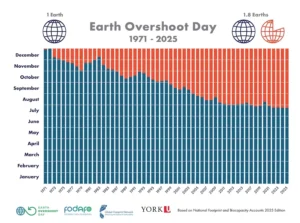
The court’s ruling comes at a time of accelerating ecological instability. According to data from the 2024 Lancet Countdown on Health and Climate Change, the global population is facing an unprecedented increase in heat-related morbidity and mortality, food insecurity, and the spread of vector-borne diseases. Greenhouse gas concentrations have reached record highs, and urban centers—which are responsible for a significant share of global emissions—are struggling to adapt to the reality of extreme weather events.
The ICJ’s decision provides a scientific and legal baseline that plaintiffs in national and international courts can now use to hold governments and corporations accountable. By explicitly linking GHG emissions to human rights violations, the court has effectively lowered the threshold for "climate litigation," allowing domestic courts to apply international legal standards to local environmental disputes.
Official Reactions and Global Implications
The reaction to the ruling has been characterized by a mix of celebration from vulnerable nations and cautious recalibration from major industrial powers. Prime Minister Jotham Napat of Vanuatu hailed the decision as a "turning point in the fight for climate justice." He noted that the process has successfully elevated the voices of those most impacted by rising temperatures, providing a foundation for future accountability.
Conversely, some of the world’s largest emitters maintained during the hearings that their only legal obligations regarding climate change were those specifically outlined in the Paris Agreement. They argued that the ICJ’s intervention might overstep the boundaries of international consensus. However, legal scholars suggest that the moral and legal authority of an ICJ advisory opinion is profound. While not technically "binding" in the sense of a criminal conviction, these opinions are considered authoritative statements of international law that shape state practice and influence the decisions of lower courts worldwide.
Non-governmental organizations, including Oxfam and various human rights watchdogs, have lauded the opinion as a vital tool for social justice. By forcing states to justify their climate policies through the lens of human rights, the court has effectively narrowed the space for "greenwashing" or performative environmentalism.
Analyzing the Future Landscape
The long-term implications of this ruling will likely manifest in three key areas:
- Litigation Strategy: Climate-impacted communities and NGOs will likely use the ICJ’s definition of "due diligence" to initiate domestic lawsuits against governments that fail to update their Nationally Determined Contributions (NDCs) in line with scientific necessity.
- Policy Cohesion: The ruling forces a reconciliation between trade, energy, and environmental policies. If a country’s economic policy leads to significant GHG emissions that violate the rights of others, that country may now face diplomatic and legal pressure to alter its trajectory.
- The Precedent of Reparations: The mention of "full reparations" is perhaps the most radical element of the ruling. While the practical execution of reparations for climate-related damage remains complex, the court has officially acknowledged that climate change causes injury that necessitates compensation.
As the international community digests this ruling, the focus will likely shift to how individual nations incorporate these legal standards into their domestic statutes. The ICJ has not provided a magic bullet that will stop the warming of the planet overnight, but it has provided a compass. By clearly articulating that the environment is not a luxury, but a human right, the court has ensured that the climate crisis will remain at the forefront of international law for the foreseeable future.
For the generations to come, the ruling serves as a vital safeguard, asserting that the protection of the biosphere is an obligation that no state can ignore without consequence. As the world navigates the transition to a sustainable economy, the standard set by the ICJ will serve as the primary metric by which the performance of nations is measured. The legal debate has moved from "if" states are responsible for climate change to "how" they must fulfill that responsibility, marking a fundamental shift in the global legal order.
Related posts: