Earth Overshoot Day 2025 marks the earliest date in history as human consumption outpaces planetary regeneration

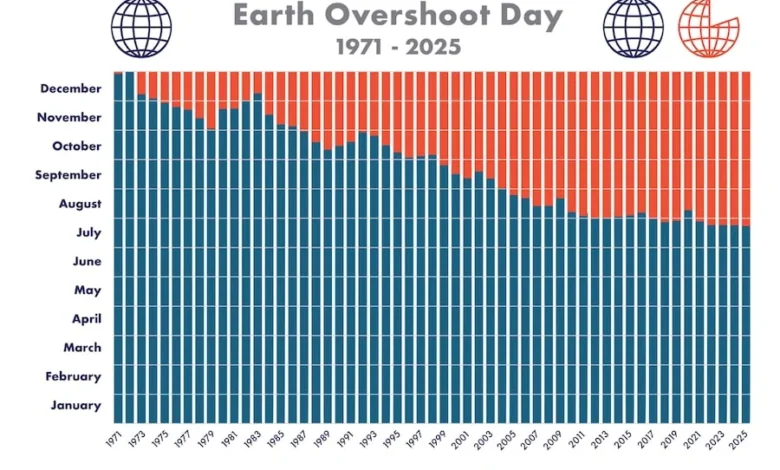
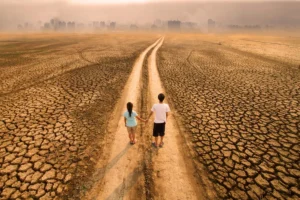
Humanity has hit a somber ecological milestone, as Earth Overshoot Day for 2025 fell on July 24. This date represents the precise point in the calendar when human demand for natural resources and ecological services exceeds what the Earth’s ecosystems can regenerate within a single year. By the end of July, the global population had effectively consumed the entire "budget" of biological resources—including timber, water, fertile soil, and carbon absorption capacity—allocated for the remainder of the year. This year’s date, the earliest ever recorded, underscores a deepening crisis of unsustainable consumption that threatens the stability of the global environment.
According to data from the Global Footprint Network, which calculates the date annually, humanity is currently operating at a deficit, utilizing nature 1.8 times faster than the planet’s capacity to replenish itself. This means that, theoretically, it would take 1.8 Earths to sustain the current global consumption patterns indefinitely.
A Chronology of Declining Sustainability
The concept of Earth Overshoot Day, launched in 2006 by political economist Andrew Simms in collaboration with the Global Footprint Network, serves as a stark metric of human impact. Since the project began, the date has trended consistently earlier in the year, reflecting a trajectory of accelerating resource extraction.
Recent recalculations by the Global Footprint Network have provided a clearer, albeit more alarming, view of historical trends. In 1972, humanity lived within its ecological means, with the overshoot date falling on December 31. By 1979, the date had shifted to November 3, signaling the onset of a global deficit. Throughout the 1980s, the date fluctuated but generally trended toward earlier months, hitting October 12 by 1989. The transition into the new millennium saw a rapid acceleration: the date reached September 25 by 1999 and moved into August by 2006.
The 2018 calendar year marked a significant turning point, as Earth Overshoot Day fell in July for the first time. Aside from a brief, pandemic-induced dip in 2020—when global lockdowns temporarily reduced resource consumption—the date has remained firmly in the month of July, reaching its current record-breaking position of July 24 in 2025. This historical progression illustrates that despite increased global awareness of climate change and sustainability, the fundamental mechanisms of global consumption remain locked in an extractive, linear model.
The Science of Ecological Deficit
The "overshoot" is driven by a combination of factors, primarily the over-exploitation of natural capital. When humanity extracts freshwater faster than aquifers can recharge, harvests timber faster than forests can regrow, and emits more carbon dioxide than oceans and forests can sequester, the biological "interest" of the planet is depleted.

The carbon footprint is currently the most significant component of the global ecological footprint. The discrepancy between the rate of carbon emissions and the rate of carbon sequestration by the Earth’s biosphere is the primary driver pulling the overshoot date earlier into the year. Furthermore, the depletion of fisheries, the degradation of topsoil, and the loss of biodiversity represent a cumulative, compounding effect. Scientists warn that this is not merely an accounting issue but a physical reality that undermines the foundational support systems for human civilization.
This year’s data arrives as the scientific community notes that humanity is hovering dangerously close to breaching seven of the nine identified planetary boundaries—a framework developed by the Stockholm Resilience Centre to measure the safe operating space for humanity. These boundaries include climate change, biodiversity loss, land-system change, and the integrity of biogeochemical cycles.
Expert Perspectives and Official Responses
The implications of reaching this milestone so early in the year have drawn sharp commentary from the scientific and policy communities. Lewis Akenji, a board member of the Global Footprint Network, emphasized the intergenerational theft inherent in the current model. "We are stretching the limits of how much ecological damage we can get away with," Akenji stated. "It is now a quarter into the 21st century and we owe the planet at least 22 years of ecological regeneration, even if we stop any further damage now."
Akenji’s remarks highlight a critical point: the damage is cumulative. Every year of overshoot adds to an ecological "debt" that limits the regenerative potential of the planet for future generations. He argues that current adaptation and mitigation strategies, while necessary, fail to match the sheer scale of the ecological crisis.
Mathis Wackernagel, co-founder of the Global Footprint Network, provided a sobering outlook on the inevitable correction. "Because of the nature of physics, overshoot cannot last," Wackernagel noted. "It will end either by deliberate design or dumped-on disaster. It should not be too hard to choose which one is preferable, particularly in light of so many possible choices."
The Power of Possibility: A Path Forward
Despite the grim statistics, the Global Footprint Network emphasizes that "overshoot" is not an irreversible state. The organization’s "Power of Possibility" campaign highlights specific, actionable policy and industrial shifts that could fundamentally alter the trajectory of the date.
The most substantial impact could come from a aggressive decarbonization of the global economy. By cutting global carbon emissions by 50%, the Earth Overshoot Day could be pushed back by three months. This would effectively restore a significant portion of the planet’s natural sequestration capacity.

Other high-impact interventions include:
- Food Waste Reduction: Global food waste accounts for a massive portion of agricultural resource consumption. Cutting global food waste by 50% would push the date back by approximately 13 days.
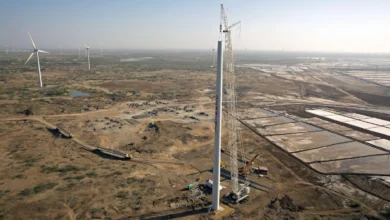
- Renewable Energy Transition: Generating at least 75% of electricity from renewable sources, such as wind, solar, and hydroelectric power, would result in a 26-day improvement.
- Structural Policy Shifts: Implementing a Green New Deal on a global scale—focused on sustainable infrastructure, circular economy principles, and green employment—could shift the date by as much as 42 days.
Broader Implications for Global Policy
The fact that Earth Overshoot Day continues to occur earlier suggests that current international agreements, such as the Paris Agreement, are currently insufficient in their implementation. While global leaders frequently pledge to reach "net-zero" carbon emissions, the broader ecological footprint—which encompasses resource depletion beyond just carbon—remains largely absent from high-level economic planning.
Economists are increasingly debating the transition from Gross Domestic Product (GDP) as a primary metric of success to "well-being" or "regenerative" metrics. If the global economic system continues to prioritize infinite growth on a finite planet, the overshoot date will inevitably continue to move closer to the beginning of the year.
The data for 2025 serves as an empirical warning. As the date creeps earlier, the margins for error diminish. The depletion of natural resources does not just represent an abstract ecological risk; it is a direct threat to food security, energy stability, and the economic viability of nations that rely on these natural systems.
As the world processes the news of the 2025 overshoot, the discourse is shifting from whether humanity can make the necessary changes to whether it will do so before the ecological deficit leads to systemic collapse. The options identified by the Global Footprint Network—ranging from renewable energy expansion to the reduction of waste—provide a roadmap, but the window for "deliberate design" is narrowing, making the coming decade a critical period for global environmental policy and resource management.