Transforming the Cafeteria: How Schools Are Turning Massive Food Waste into Educational Opportunities

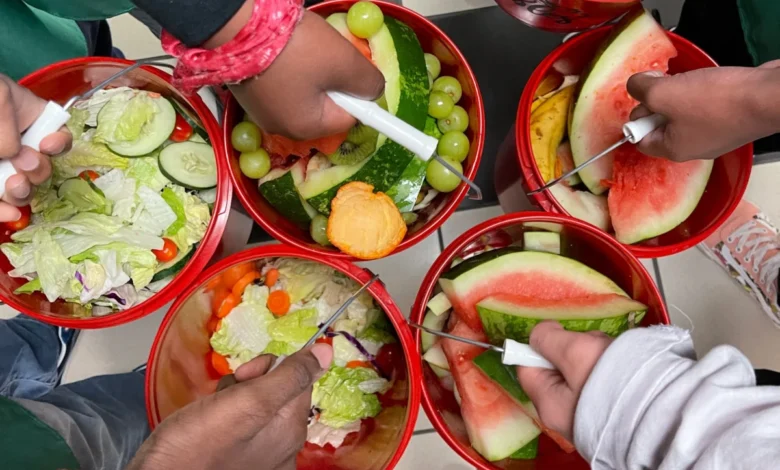
The American K-12 school system serves as a massive engine of consumption, yet a staggering 40 percent of the food prepared for students—totaling approximately 530,000 tons annually—ends up in the trash rather than in the stomachs of those it was intended to nourish. This systemic inefficiency is not merely a budgetary concern for cash-strapped districts; it carries a significant environmental toll. According to a recent report by the World Wildlife Fund (WWF), school food waste is responsible for approximately 1.9 million metric tons of greenhouse gas emissions each year. As climate change continues to impact local communities, schools are increasingly being viewed not just as sites of instruction, but as critical hubs for environmental stewardship and waste reduction.
The Scale of the Crisis and the Environmental Toll
To understand the magnitude of the problem, one must look at the intersection of nutrition, logistics, and environmental science. In a typical school setting, food waste is driven by a combination of rigid regulatory requirements, student preferences, and the logistical challenges of feeding hundreds of children in narrow time windows. When food is discarded, it is sent to landfills, where it decomposes anaerobically. This process releases methane, a greenhouse gas significantly more potent than carbon dioxide in its ability to trap heat in the atmosphere.
The WWF’s report, "Ending Food Waste in K-12 Schools," provides a roadmap for mitigation, highlighting that the path to zero waste is both technologically feasible and pedagogically beneficial. By integrating food recovery programs—such as share tables, where students can leave untouched items for others to take, and industrial-scale composting—schools can drastically reduce their methane footprint while simultaneously teaching students about the circular economy.
A Model of Success: The Gwinnett County Initiative
At Lovin Elementary in Gwinnett County, Georgia, the approach to this crisis has been data-driven and student-led. Gerin Hennebaul, a STEM content specialist, has spearheaded a transformation that has seen the school reduce its food waste by approximately 70 percent since 2018. This initiative was not an overnight success; it began with a fundamental assessment of the waste stream.
In late 2018, the school conducted its first formal food audit, facilitated by the "Green & Healthy Schools" partnership. The results were sobering: on a single "Taco Day," students disposed of 589 pounds of waste. Crucially, 120 pounds of that total consisted of "recoverable" items—unopened milk cartons, sealed bags of carrots, and fresh apples. This data became the catalyst for change. By presenting these figures to the students, Hennebaul empowered them to move from passive consumers to active problem solvers.
Chronology of Implementation
The success at Lovin Elementary followed a structured, multi-year progression:
- 2018 (The Audit Phase): The school established baseline data. Students participated in the sorting process, gaining firsthand insight into the volume of waste produced.
- 2019 (The Share Table Era): Following the audit, students brainstormed solutions. The implementation of "share tables" allowed unopened, non-perishable items to be redistributed. By March 2019, follow-up audits showed waste had dropped to 435 pounds, with a significant portion of food diverted to the share table.
- 2021 (Composting Infrastructure): A grant from the Food Well Alliance provided the funding for a formal composting bin. This marked a transition from waste diversion to nutrient recovery.
- 2022-2023 (Scaling Up): The program expanded to include all grade levels from first through fifth. Students began taking responsibility for the entire composting cycle, from collection to temperature monitoring.
- 2023-2024 (Systemic Integration): The school reached a milestone of 5,489 pounds of food waste diverted in a single academic year, necessitating a partnership with a local church to manage the overflow of organic material.
Integrating the Cafeteria into the Classroom
The "cafeteria as a classroom" philosophy is the cornerstone of the Lovin Elementary model. Rather than treating waste management as a janitorial task, the school treats it as a core component of the STEM curriculum.
Fourth-grade students are tasked with the practical application of mathematics, measuring and weighing the daily food waste, documenting the data in binders, and calculating weekly averages. This exercise aligns with state curriculum standards regarding decimals and data analysis. Furthermore, the school’s "Eco Heroes" club and other student groups use the resulting compost to maintain school gardens, bridging the gap between waste generation and food production. By the time students reach the third grade, they are formally introduced to the concepts of pollution, landfill mechanics, and the role of methane in climate change.
Technological Hurdles and Future Prospects
Innovation in waste management has also invited the use of emerging technology. In early 2025, the school began testing "Raccoon Eyes AI," a system designed to analyze the contents of student trays via image recognition. By scanning the trays, the system provides granular data on what students are throwing away—such as specific entree items or side dishes—allowing for adjustments in cafeteria procurement.
However, the path to widespread adoption is not without obstacles. The reliance on external vendors often restricts a school’s ability to adjust menus based on student preferences, and the administrative burden of maintaining these programs is significant. Hennebaul emphasizes that the "fully released" nature of her position—meaning she is not tethered to a traditional homeroom—is a major factor in the program’s consistency. For schools lacking such dedicated personnel, the logistics of maintaining daily composting or managing share tables can prove daunting.
Policy Implications and Broader Impact
The implications of the Lovin Elementary model extend far beyond Gwinnett County. As districts across the nation face pressure to reduce their carbon footprints and manage tightening budgets, the "Food Waste Warriors" approach offers a scalable solution. The environmental benefit is clear: by keeping organic material out of landfills, schools contribute to a lower regional methane output.
From an educational standpoint, the program fosters a sense of agency among students. When children see their own data-driven suggestions lead to measurable changes—such as the addition of more flavorful sauces to popular dishes or the successful diversion of thousands of pounds of food—it reinforces the effectiveness of civic participation and scientific inquiry.
Experts in education and sustainability suggest that for such programs to go national, systemic support from district leadership is essential. This includes support from custodial staff, cafeteria managers, and school administrators. Without a top-down mandate paired with bottom-up student engagement, initiatives often struggle with long-term sustainability.
As the climate discourse continues to shift toward practical, community-level actions, the lessons from Gwinnett County serve as a blueprint. Food waste in schools is not an inevitable byproduct of education; it is a resource that, when managed with intentionality and scientific rigor, can serve as a powerful vehicle for teaching the next generation about the complexities of a sustainable future. Whether through the humble act of composting or the high-tech implementation of artificial intelligence, schools are demonstrating that even the most stubborn environmental problems can be addressed one tray at a time.