Deep-sea discovery of vibrant chemosynthetic colonies in the Mariana Trench shatters records for life in the extreme abyss

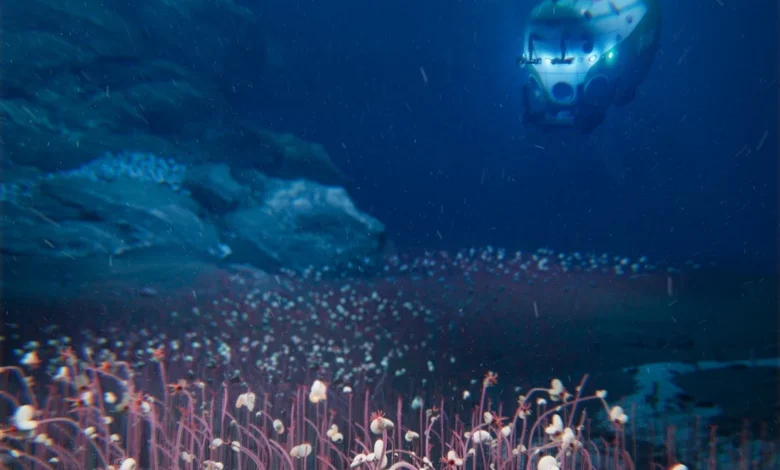
In a revelation that challenges the fundamental understanding of biological limits, researchers have identified the deepest and most extensive colonies of chemosynthetic life ever observed on Earth. Utilizing the Chinese-developed manned submersible Fendouzhe, a scientific team from the Institute of Deep-sea Science and Engineering (IDSSE) at the Chinese Academy of Sciences discovered massive communities of mollusks, tubeworms, and crustaceans thriving nearly six miles below the surface of the Pacific Ocean. This discovery, detailed in a peer-reviewed study published in the journal Nature, indicates that the hadal zones—the deepest, most isolated trenches in the world’s oceans—may host far more complex and abundant ecosystems than previously theorized.
The Geography of the Abyss
The expedition focused on the Hadal trenches, specifically the Mariana Trench, the Kuril-Kamchatka Trench, and the western Aleutian Trench. These regions, which reach depths exceeding the height of Mount Everest, have long been considered biological deserts due to the crushing pressure, near-freezing temperatures, and total absence of sunlight.
The Fendouzhe submersible completed 23 dives into the Mariana Trench last year alone, capturing high-definition imagery and biological samples from depths ranging between 3.6 and 5.92 miles. Researchers observed vast fields of siboglinid Polychaeta (tubeworms) growing up to one foot in length, alongside dense clusters of Bivalvia (mollusks). Unlike shallow-water ecosystems that rely on photosynthesis, these organisms survive through chemosynthesis, a biological process where microbes convert chemical energy from methane and hydrogen sulfide into nutrients.
A Chronology of Deep-Sea Exploration
The history of exploring the Mariana Trench is marked by technological hurdles and long periods of mystery. The first human descent occurred in 1960, when Jacques Piccard and Don Walsh reached the Challenger Deep in the bathyscaphe Trieste. For decades, the trench remained largely inaccessible to all but the most advanced military and scientific hardware.
In 2012, filmmaker and explorer James Cameron made a historic solo dive, describing the environment as "desolate" and "alien." His expedition, while groundbreaking, was brief and focused on mapping the topography. In contrast, the recent Chinese expeditions represent a shift toward sustained, systematic biological research. By conducting 23 separate dives in a single year, the IDSSE team was able to map a corridor of life spanning over 1,550 miles, identifying that the life forms were not localized anomalies but part of a widespread, connected network of deep-sea oases.
Supporting Data and Biological Mechanisms
The isotopic analysis conducted by the research team suggests that these communities are sustained by a complex subterranean plumbing system. Fluids rich in hydrogen sulfide and methane are transported along tectonic faults that traverse the deep sediment layers of the trenches. These chemicals serve as the foundational fuel for microbial mats, which in turn support the larger invertebrates.
The scale of this discovery is unprecedented. Where previous missions might have identified individual organisms or single-cell life, the Fendouzhe mission documented thriving ecosystems. These communities included:
- Tubeworms (Siboglinid Polychaeta): Often clustered around microbial mats that act as the primary energy source.
- Bivalves: Found in dense mounds, suggesting a stable, long-term nutrient supply.
- Crustaceans and Sea Cucumbers: Observed scavenging and navigating the seafloor, indicating a more complex food web than previously assumed.
Marine geochemist Mengran Du, a co-author of the study, noted that the density of these populations was perhaps the most surprising element. Rather than finding isolated pockets of biological activity, the team observed a "vibrant oasis," suggesting that the geological conditions required to support such life—specifically the presence of chemical-rich fluid seepage—are far more common than current oceanographic models predict.

Official Perspectives and Scientific Implications
The scientific community has reacted with significant interest, noting that the findings necessitate a major revision of deep-ocean carbon cycling models. If these trenches are not merely voids but are instead productive biological zones, the total biomass of the ocean floor must be recalculated.
"Given the geological similarities between these hadal trenches and others across the globe, it is highly probable that chemosynthesis-based communities are more widespread than previously anticipated," lead author Xiatong Peng stated in the findings. The study suggests that the "deep-sea desert" paradigm is a limitation of our previous technology rather than an accurate reflection of the seafloor’s biological capacity.
Broader Impact: The Mining Debate
The timing of this discovery is critical, as it enters the international discourse on deep-sea mining. Several nations and private corporations are currently lobbying for the right to extract polymetallic nodules from the seabed, which contain minerals essential for battery production and green energy technologies.
Environmental scientists and oceanographers have voiced concerns that the delicate ecosystems in these trenches are incredibly sensitive to disturbance. The discovery that these areas host vibrant, multi-species colonies—rather than just microbial life—adds a new dimension to the argument against mining. If mining activities disrupt the sediment layers or the fluid seepage pathways that fuel these chemosynthetic oases, the destruction could be irreversible.
The International Seabed Authority (ISA) is currently tasked with drafting regulations for deep-sea mining. The discovery of these thriving, high-density communities provides a concrete argument for the preservation of these habitats, suggesting that the "last wild zone" on Earth is not as barren as it appears and may be vital to the health of the global ocean.
The Future of Deep-Sea Research
The success of the Fendouzhe missions demonstrates the effectiveness of sustained, targeted exploration. As the scientific community continues to analyze the samples collected, the focus will likely shift toward understanding the lifecycle and reproduction of these deep-sea species. How do larvae travel across such immense, pressure-filled distances? How long do these colonies persist, and are they resilient to the natural seismic shifts that occur in the trench zones?
The researchers emphasize that their work is merely the beginning. By unveiling a "hidden world" at the bottom of the Pacific, they have opened a new chapter in marine biology. The transition from viewing the deep sea as an alien, static environment to an active, productive biome is likely to drive future funding and technological development in submersible capabilities.
As the world continues to grapple with the impacts of climate change and the depletion of terrestrial resources, the ocean floor remains the final, largely unexplored frontier. The discovery of life thriving six miles down is a stark reminder of the resilience of nature and the extent of the mysteries that remain buried in the deepest reaches of the planet. The challenge for the coming decade will be to balance the human drive for technological advancement and resource acquisition with the urgent need to protect these newly discovered, ancient, and highly fragile biological communities.
Related posts: