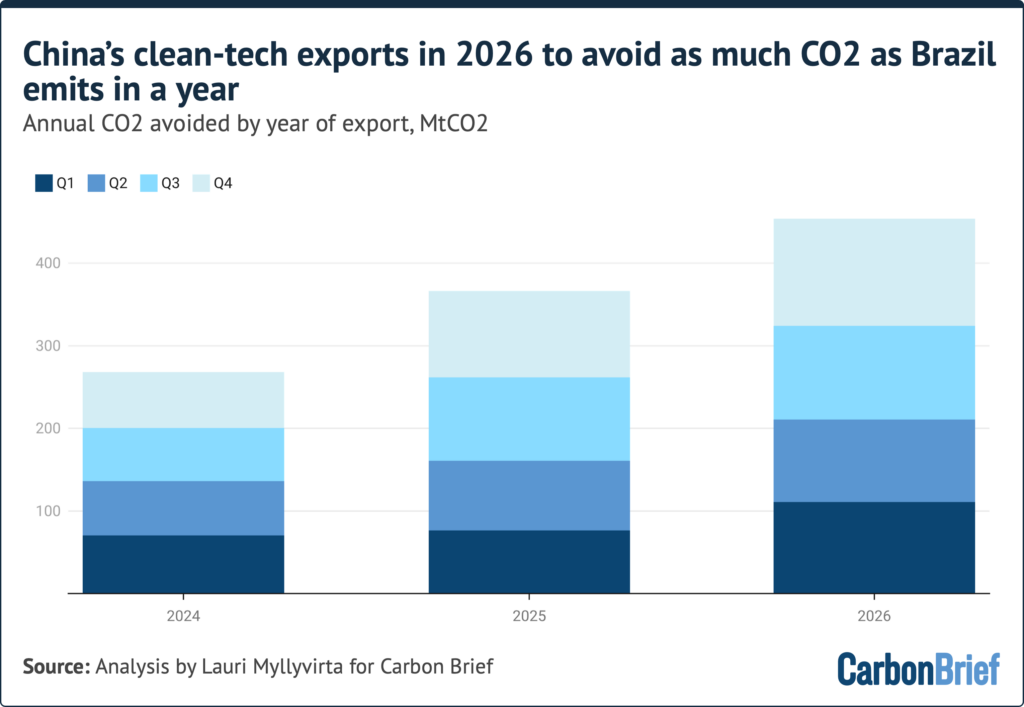
Analysis: China’s clean-tech exports in 2026 to avoid as much CO2 as Brazil emits in a year


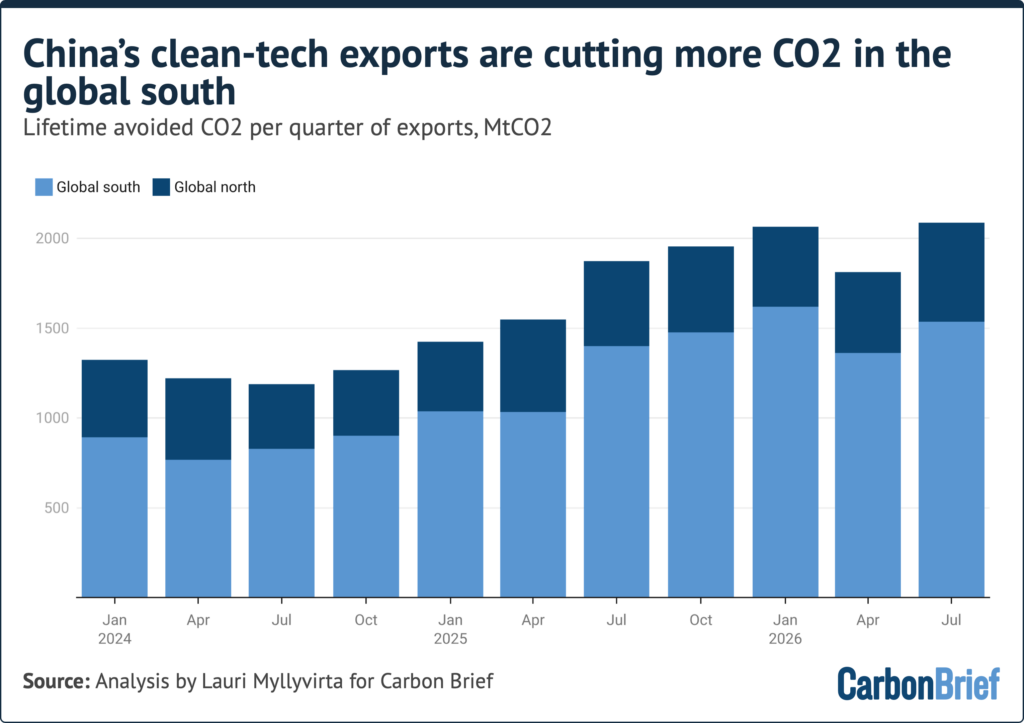
This momentum represents a significant acceleration of China’s green export influence. The impact of these technologies on global CO2 reductions grew by 26 percent year-on-year during the first three quarters of 2026, building upon an already impressive 36 percent increase recorded throughout 2025. By analyzing granular trade data alongside the electricity grid compositions of destination nations and the carbon footprint associated with Chinese manufacturing, researchers have mapped a clear trajectory: while the production of these technologies remains energy-intensive, the carbon "payback" period is remarkably short, typically taking only six months of operation for an exported clean-energy product to offset the emissions generated during its creation.
The Solar Dominance and Infrastructure Shift
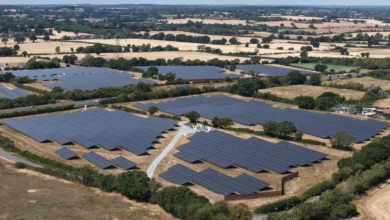
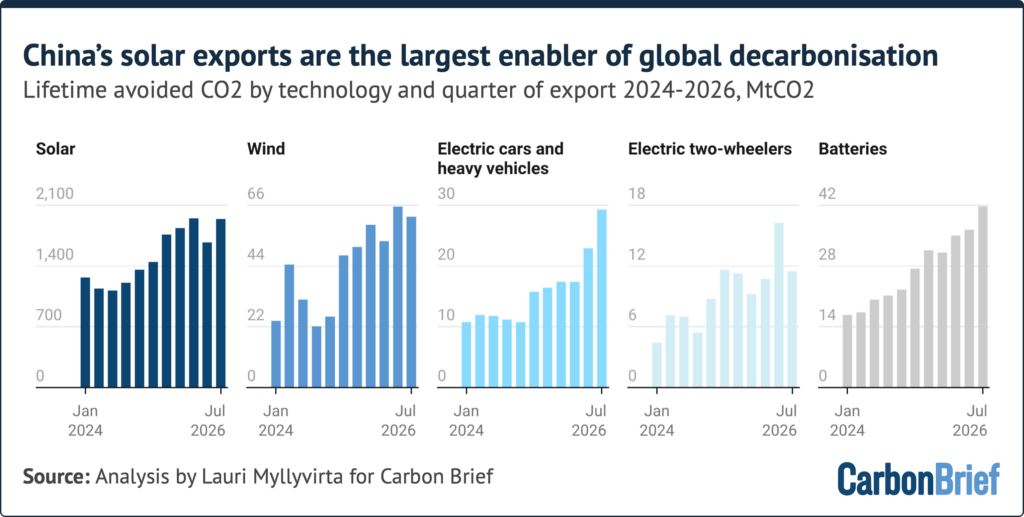
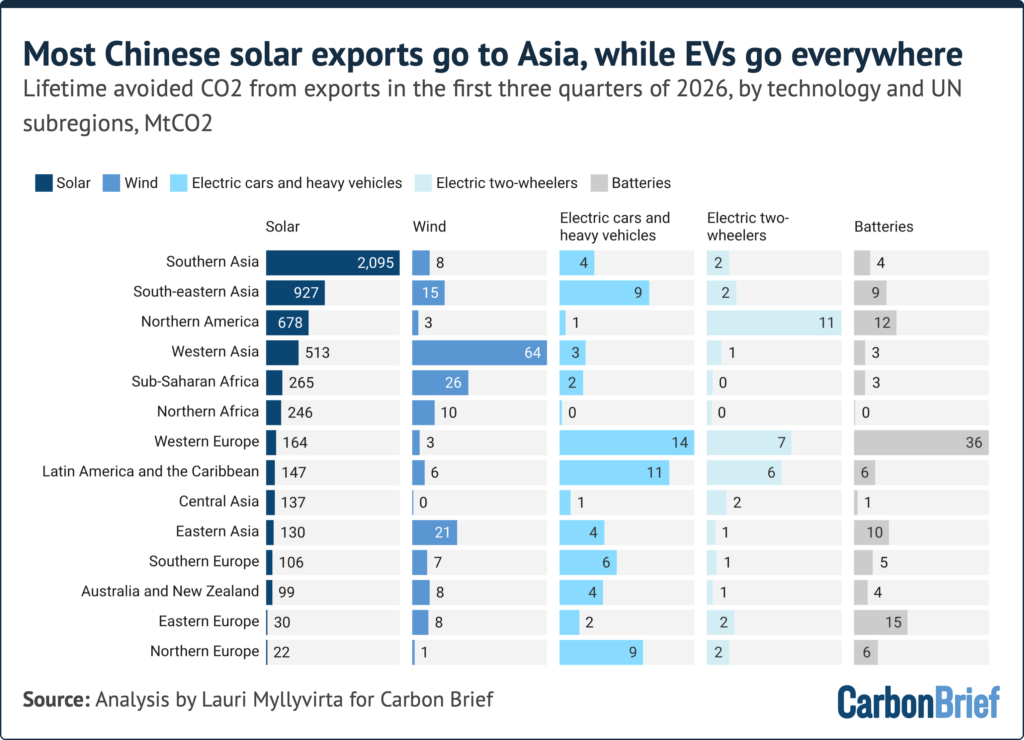
Solar energy technology remains the primary catalyst for this global decarbonization effort. In 2025 alone, China exported finished solar panels and essential intermediate components—such as wafers and cells—that, once installed, accounted for a total generation capacity of 436 gigawatts (GW). When coupled with the 8GW of wind turbine capacity exported in the same period, these technologies are set to generate roughly 800 terawatt-hours (TWh) of clean electricity annually. To contextualize this scale, 800 TWh of generation is sufficient to replace the output of approximately 100 large-scale coal-fired power plants.
The long-term benefits are even more substantial. Over the projected 20-year operational lifespan of the solar hardware exported in 2025, the estimated avoided emissions total approximately 6,400 MtCO2. Wind energy, while currently a smaller portion of the export portfolio, remains a critical secondary pillar, contributing an additional 180 MtCO2 in lifetime avoided emissions.
Beyond hardware, the transportation sector has undergone a rapid electrification shift. In 2025, China exported 39 million electric vehicles, a figure heavily weighted toward two-wheeled transport, which included 36 million e-bikes and scooters. Furthermore, the export of 305 gigawatt-hours (GWh) of battery capacity provided the infrastructure necessary to power an additional five million electric passenger cars. Analysts note that these EVs are essential for shifting reliance away from internal combustion engines, particularly in the Global South, where the electrification of two-wheelers is significantly reducing oil dependency.
A Global South-Centric Transition
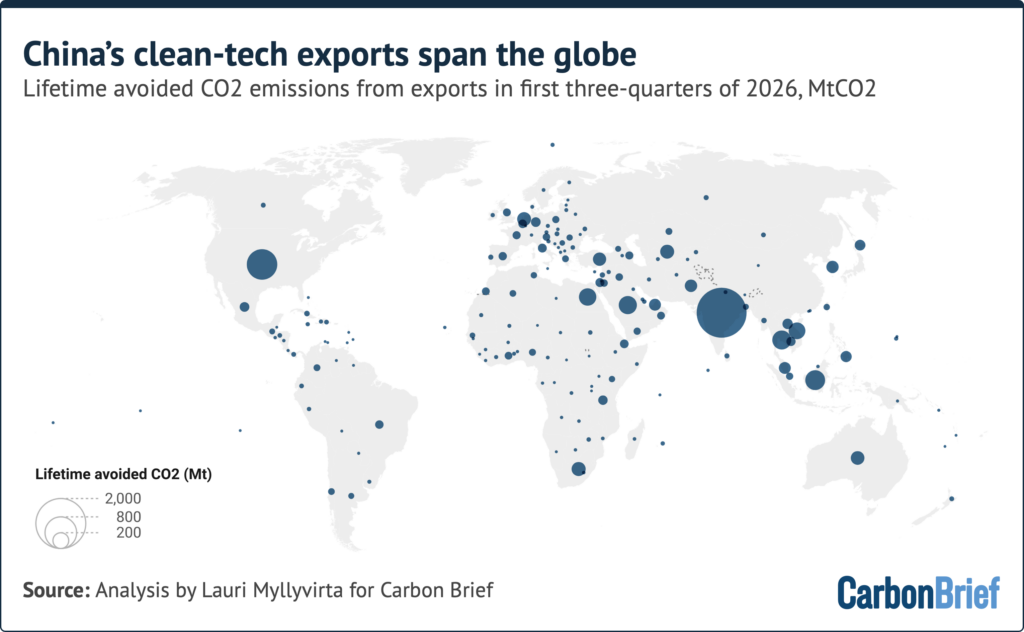
A defining characteristic of this export wave is its geographic distribution. The Global South has emerged as the primary beneficiary of China’s green manufacturing prowess, accounting for 73 percent of the total lifetime emissions avoided through Chinese clean-tech imports in 2025. This trend intensified in 2026, with developing nations responsible for nearly the entirety of the growth in avoided emissions compared to the previous year.
Several factors drive this trend. First, nations in the Global South often possess more carbon-intensive power grids, meaning the displacement of fossil fuel generation by renewable sources yields a higher immediate reduction in emissions per gigawatt installed. Second, many of these regions benefit from optimal solar irradiance, which enhances the efficiency of the imported technology. South Asia currently stands as the largest regional beneficiary of these imports, showing robust year-on-year growth, followed closely by Southeast Asia, the Middle East, and parts of Africa.
Navigating Trade Tensions and Industrial Strategy
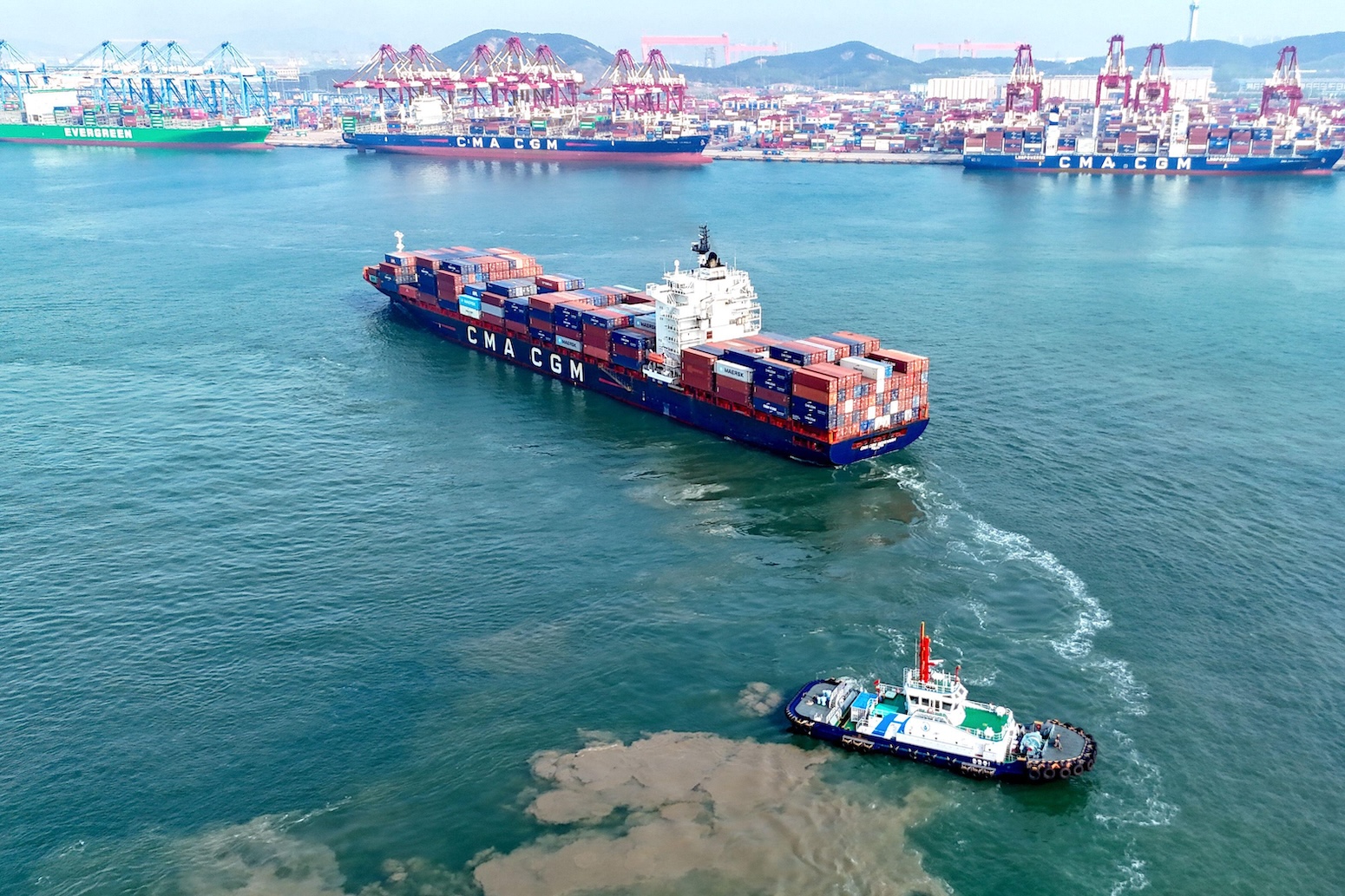
Despite the clear environmental benefits, the rapid surge in Chinese clean-tech exports has prompted significant political and economic friction in the West. Trade barriers, including tariffs on Chinese-made solar modules and electric vehicles, have become a focal point of industrial policy in the United States and the European Union. However, the data suggests that these protectionist measures have not significantly stifled demand.
For instance, despite increased tariffs implemented in mid-2025, Chinese solar equipment exports to the United States rose by 13 percent during the first three quarters of 2026. This resilience indicates that the demand for cost-effective, high-quality renewable technology is currently outpacing the domestic manufacturing capacity of many importing nations. The analysis suggests that if Western nations wish to reduce their reliance on Chinese supply chains, they must significantly scale up their own manufacturing capabilities rather than relying solely on trade restrictions, which have thus far only served to shift, rather than eliminate, the trade flows.
From an economic perspective, the clean-energy sector has become a vital component of China’s own economic health. In the first half of 2026, clean energy technology accounted for 16 percent of all net growth in Chinese exports. Throughout 2025, these sectors contributed to one-third of the country’s total GDP growth. This creates a powerful economic incentive for Beijing to remain committed to the global energy transition, as the success of its domestic manufacturers is now intrinsically linked to the decarbonization goals of its international partners.
The Evolution of Overseas Project Development
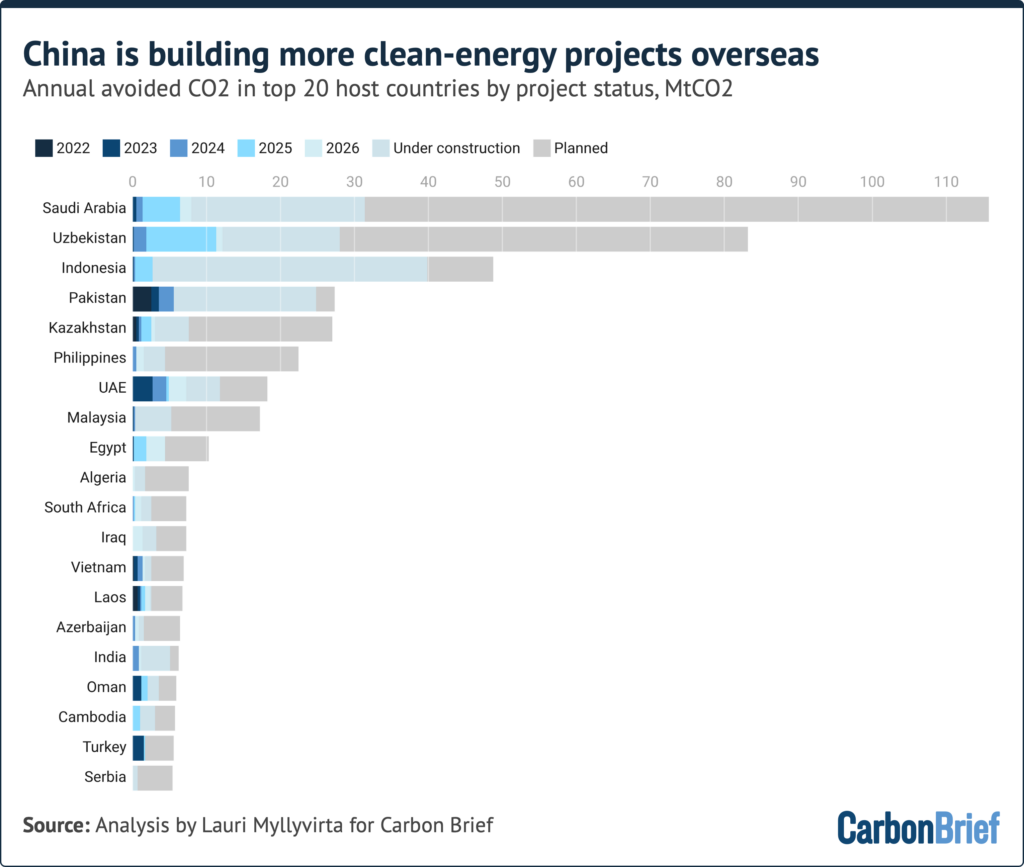
Parallel to its role as an exporter of hardware, China has increasingly positioned itself as a financier and developer of overseas clean-energy projects. This shift began in earnest following President Xi Jinping’s 2021 pledge to cease the construction of new coal-fired power plants abroad and to increase support for low-carbon energy in developing nations.
As of July 2026, 69GW of China-linked renewable energy projects were operational overseas, with an additional 100GW under construction and a massive 280GW currently in the planning pipeline. While the scale of these direct projects remains smaller than the volume of equipment exported, they demonstrate a strategic evolution in China’s "Belt and Road" investment philosophy. Nuclear energy is also part of this portfolio, with six reactors operational in Pakistan and further construction underway at the Chashma-5 site.
However, critics point to the existence of "captive" coal plants—often linked to industrial projects in Indonesia—as a persistent gap in the execution of the 2021 pledge. These projects continue to weaken the credibility of China’s climate leadership, despite the massive scale of its renewable investments elsewhere.
Future Implications and Policy Considerations
The sheer volume of Chinese clean-tech exports has sparked a global debate regarding "overcapacity." Critics argue that China’s state-supported production leads to price dumping that threatens to crowd out domestic industries elsewhere. Yet, the evidence suggests that for most clean-tech categories, China has largely captured market growth rather than displacing existing production. In sectors such as EVs and heat pumps, the growth in the value of exports from the EU and other nations has outpaced that of China, suggesting that the global market is expanding rapidly enough to accommodate multiple manufacturing hubs.
As the world looks toward upcoming climate summits, including the COP31 talks, the focus on electrification will likely intensify. China’s role as the pre-eminent supplier of electrification technology positions it to support—or potentially lead—calls for a global electrification target.
The volatility of the domestic Chinese market, however, adds a layer of uncertainty. A slowdown in domestic solar deployment in 2026 has forced manufacturers to look even more aggressively toward foreign markets to maintain sales volumes. If this trend continues without a resurgence in domestic demand, it could further heighten trade tensions and lead to more complex, multi-layered trade maneuvers, such as the re-routing of components through third countries to circumvent regional tariffs.
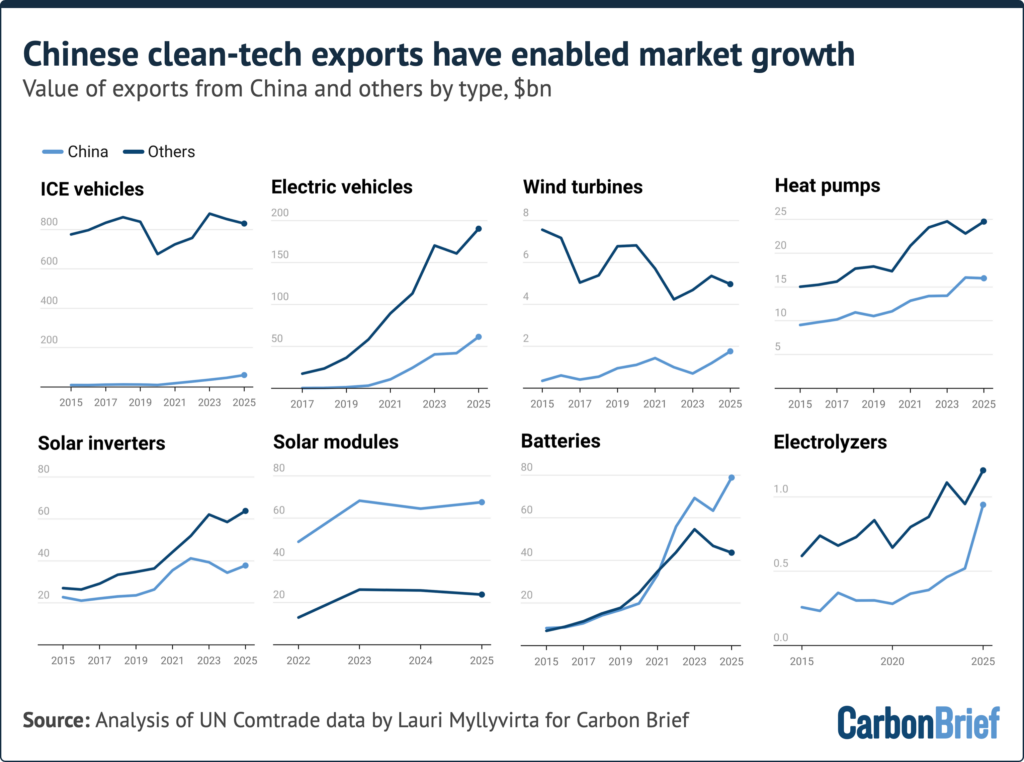
Ultimately, the data presents a complex picture: China’s industrial policy is simultaneously a primary source of global trade friction and the most significant driver of international emissions reduction. As countries balance the need for rapid decarbonization against domestic economic protectionism, the reliance on Chinese technology remains a central, unavoidable reality of the current energy transition. The coming years will likely be defined by how efficiently other nations can integrate these technologies into their own industrial strategies, ensuring that the global shift to green energy remains both affordable and resilient against the shifting tides of international trade policy.