Global Hunger Declines Slightly But Escalates in Vulnerable Regions Amidst Persistent Economic and Climate Pressures

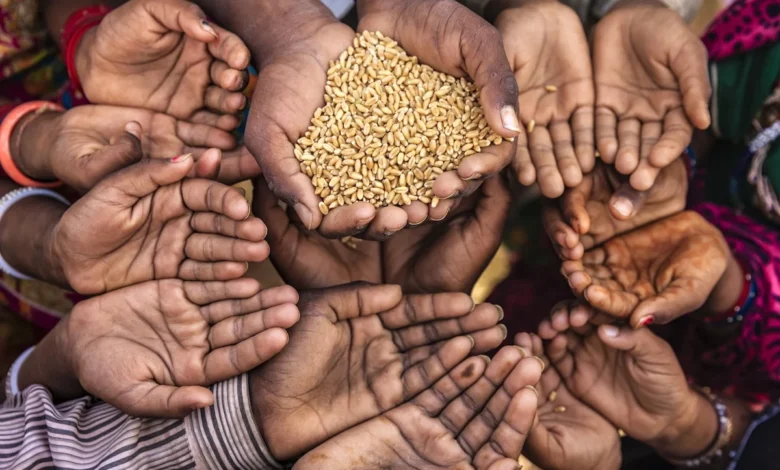
The latest edition of The State of Food Security and Nutrition in the World (SOFI) report, a comprehensive annual assessment published by five specialized United Nations agencies, reveals a complex and bifurcated reality regarding global hunger. While the overall prevalence of undernourishment has seen a marginal decline on the global stage, the data indicates that hunger is entrenching itself more deeply within specific geographic corridors, particularly across Africa and western Asia. Released by the Food and Agriculture Organization (FAO), the report highlights that approximately 673 million people—roughly 8.2 percent of the global population—suffered from hunger in 2024.
This figure represents a slight improvement from the 8.7 percent recorded in 2022 and the 8.5 percent in 2023. However, beneath these aggregate numbers lies a narrative of profound inequality, where progress in some regions is being effectively cancelled out by mounting crises in others.
A Chronology of Crisis: From Pandemic to Policy Shifts
The trajectory of global food security since 2020 has been marked by a series of volatile external shocks. The onset of the COVID-19 pandemic catalyzed a massive disruption in global supply chains, leading to initial spikes in food insecurity. As nations attempted to recover, the conflict in Ukraine began in early 2022, creating further bottlenecks in the distribution of essential grains and fertilizers. This was compounded by an intensification of extreme weather events—linked to climate change—which decimated crop yields in fragile agricultural economies.
Between 2021 and 2023, the world witnessed a period of unprecedented food price inflation. In low-income nations, the situation reached a breaking point in May 2023, when food price inflation peaked at 30 percent, far outpacing the global median of 13.6 percent. This period served as a bottleneck for progress, effectively stalling efforts to meet the UN’s Sustainable Development Goal (SDG) of Zero Hunger by 2030.
Regional Disparities and Data Analysis
The SOFI 2025 report offers a granular look at how different regions have navigated these turbulent years. Asia, which houses the largest absolute number of undernourished people, saw its hunger rate decline to 6.7 percent in 2024, down from 7.9 percent just two years prior. Similarly, Latin America and the Caribbean experienced a positive shift, with undernourishment rates dropping to 5.1 percent, or 34 million people, a notable improvement from the 2020 peak of 6.1 percent.
However, these gains contrast sharply with the reality in Africa. In 2024, the proportion of the population facing hunger in Africa surpassed 20 percent, impacting 307 million individuals. Western Asia faces a similarly bleak outlook, with an estimated 12.7 percent of its population—roughly 39 million people—struggling to access adequate nutrition.
The report further categorizes food insecurity into "moderate" and "severe" levels. While the percentage of the global population experiencing these constraints fell slightly to 28 percent in 2024 (down from 28.4 percent in 2023), the absolute numbers remain staggering: 2.3 billion people still face uncertainty regarding their ability to access nutritious food on a consistent basis.
Economic Barriers to a Healthy Diet
One of the most concerning metrics identified in the report is the inability of populations to afford a healthy, balanced diet. Globally, 2.6 billion people could not afford such a diet in 2024. While this represents a decrease from 2.76 billion in 2019, the trend in low-income countries is moving in the opposite direction.
In low-income nations, the number of people unable to afford a healthy diet rose to 545 million in 2024, up from 464 million five years earlier. In lower-middle-income nations—excluding India—this figure increased from 791 million to 869 million over the same period. This suggests that while global commodity prices may have stabilized in some markets, the local purchasing power of the most vulnerable populations has been severely eroded, effectively pricing them out of basic nutrition.

Official Responses and Institutional Strategy
The release of the SOFI report has prompted a coordinated call to action from the heads of the five UN agencies: the FAO, the International Fund for Agricultural Development (IFAD), the World Food Programme (WFP), UNICEF, and the World Health Organization (WHO).
FAO Director-General QU Dongyu emphasized that the decrease in the global rate, while encouraging, must be viewed through a lens of caution. "Progress is uneven," Qu noted. "We must work collaboratively and innovatively with governments, organizations, and communities to address the specific challenges faced by vulnerable populations, especially in regions where hunger remains persistent."
IFAD President Alvaro Lario highlighted the urgent need for structural economic shifts. "In times of rising food prices and disrupted global value chains, we must step up our investments in rural and agricultural transformation," Lario said. "These investments are not only essential for ensuring food and nutrition security—they are also critical for global stability."
UNICEF Executive Director Catherine Russell focused on the human cost of these statistics, particularly for the youngest generation. "Over 190 million children under the age of 5 are affected by undernutrition, which can have negative consequences for their physical and mental development," Russell stated. She urged governments to prioritize social protection programs and to better educate families on the value of locally produced, nutrient-dense foods.
The Path Toward 2030: Challenges and Implications
The long-term projections provided in the report serve as a sobering reminder of the distance remaining to reach the Zero Hunger goal. It is estimated that 512 million people will still experience chronic undernourishment by 2030, with nearly 60 percent of those individuals residing in Africa.
The implications of failing to bridge this gap are extensive. Chronic hunger does not merely represent a temporary lack of calories; it creates a cycle of poverty, poor health outcomes, and social instability. Malnutrition in childhood leads to stunting and cognitive deficits that follow individuals throughout their lives, reducing their economic productivity and limiting the development potential of entire nations.
Policy Recommendations
To reverse these trends, the UN report outlines a multi-faceted policy framework:
- Monetary Policy and Inflation Control: Agencies recommend that countries implement transparent and credible monetary policies to dampen the impact of food price spikes.
- Targeted Fiscal Measures: Governments are encouraged to utilize time-bound, direct social protection programs to provide a safety net for the most vulnerable households during periods of extreme price volatility.
- Agrifood Research and Infrastructure: Long-term resilience requires significant investment in agricultural R&D, market information systems, and rural transportation networks. By modernizing production and distribution, nations can insulate themselves against localized supply chain shocks.
- Strengthening Social Safety Nets: UNICEF and other agencies advocate for the reinforcement of programs that support maternal health and breastfeeding, which are identified as the most cost-effective interventions for child nutrition and long-term development.
Broader Impact on Global Stability
The findings of the 2025 SOFI report suggest that food security is not just an agricultural issue, but a cornerstone of global geopolitical stability. The rising number of people unable to afford a healthy diet in low-income nations acts as a precursor to migration, civil unrest, and the breakdown of local governance.
As the world looks toward the 2030 deadline, the disparity between regions suggests that a "one-size-fits-all" approach to global hunger is insufficient. Instead, the focus must shift toward localized, high-impact interventions that address the specific socio-economic drivers of hunger in Africa and western Asia. Whether these strategies can be scaled effectively depends on the willingness of international donors and national governments to prioritize, fund, and sustain these essential investments in the face of competing geopolitical demands.
Ultimately, the data confirms that while the global hunger crisis is not worsening at the catastrophic rates seen during the height of the pandemic, the recovery is fragile. Without aggressive, collaborative intervention, the dream of a world without hunger will remain largely out of reach for hundreds of millions of people in the most vulnerable corners of the globe.
Related posts: