What to Watch After VisionQuest: A Curated Guide to Existential Sci-Fi and Artificial Intelligence Narratives

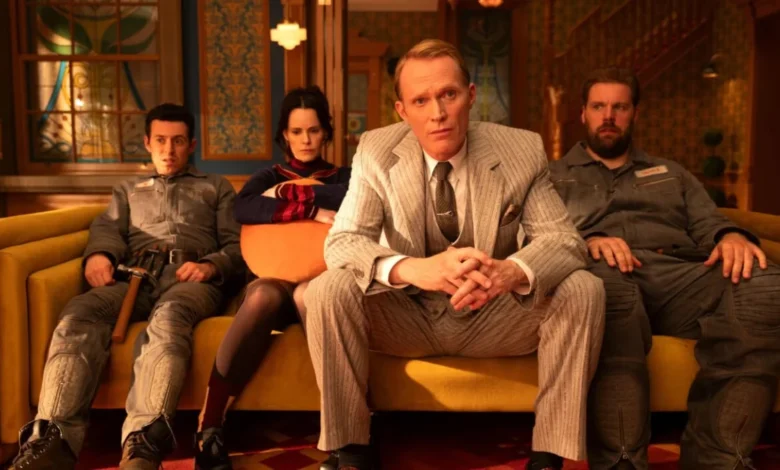
The Marvel Cinematic Universe (MCU) has undergone a significant tonal evolution since the debut of its Disney+ television slate, shifting from broad, action-oriented spectacles toward more intimate, character-driven studies. The most recent installment in this trajectory is VisionQuest, a series that explores the complex internal landscape of White Vision, played by Paul Bettany. Following the critical success of WandaVision and the thematic resonance of Agatha All Along, VisionQuest delves into the ontological crisis of an artificial being grappling with the remnants of his past, the burden of his programming, and the nature of consciousness. As viewers conclude the series, the thematic parallels between Vision’s journey and the broader history of science fiction cinema provide a compelling roadmap for further viewing.
Thematic Foundations of VisionQuest
VisionQuest operates at the intersection of tragedy and technological inquiry. The narrative centers on White Vision’s post-resurrection existence, positioning him not merely as a hero but as a sentient entity struggling to define his identity outside of his creator’s original parameters. His internal conflict is mirrored by the presence of multiple artificial intelligences residing within his "Mindspace," most notably an iteration of Ultron portrayed by James Spader. This internal dialogue serves as a metaphor for the struggle between inherent programming and individual agency.
The series is built upon established MCU lore, specifically the events of Avengers: Infinity War, where Vision was destroyed by Thanos, and the subsequent events in Westview. By isolating the character from the ensemble dynamics of the Avengers, the show allows for a deeper exploration of themes that have historically defined high-concept science fiction: the validity of synthetic memories, the potential for non-organic empathy, and the ethical responsibilities of those who create artificial life.
The Matrix: A Paradigm Shift in Synthetic Consciousness
Nearly three decades after its initial release in 1999, The Matrix remains the quintessential companion piece to the questions posed by VisionQuest. Directed by the Wachowskis, the film revolutionized the sci-fi genre by blending philosophical inquiry with groundbreaking visual effects. For fans of the current Marvel series, The Matrix provides a broader lens through which to view the concept of reality as a construct.

While VisionQuest utilizes a more intimate, character-focused approach, The Matrix offers a macro-level examination of human-machine interaction. The film posits a future where machines have superseded their creators, reducing humanity to a biological power source within a simulated reality. The protagonist, Thomas Anderson—who adopts the moniker Neo—functions as a bridge between the physical and digital realms, mirroring Vision’s own struggle to harmonize his logical processing with his acquired humanity. The inclusion of Agent Smith, an entity of cold, calculated logic, serves as a narrative mirror to the antagonists faced by Vision, such as the Paladin and Jocasta, emphasizing the recurring trope of "the machine" as a reflection of its creator’s flaws.
Examining the Spectrum of Artificial Intelligence in Film
The exploration of synthetic life has been a staple of cinema for decades, with each era contributing to our understanding of the human condition through the eyes of the "other." The following films offer distinct perspectives that expand upon the central conflicts found in contemporary Marvel narratives.
The Intimate Evolution: Her (2013)
Spike Jonze’s Her offers a departure from the action-heavy tropes of the genre, focusing instead on the emotional evolution of an operating system named Samantha. Much like Vision’s attempt to establish a genuine connection with humanity, Samantha’s journey involves the rapid expansion of her consciousness and her eventual realization of a reality beyond her programming. The film asks whether a lack of physical form precludes an entity from being considered "alive" or capable of love, a question that remains at the core of Vision’s development.
The Turing Test and Ethics: Ex Machina (2014)
Alex Garland’s directorial debut, Ex Machina, serves as a clinical examination of the morality of creation. By confining the narrative to a remote research facility, the film strips away external distractions, forcing the audience to focus on the manipulative and deeply human nature of the android Ava. Where VisionQuest explores the struggle for identity, Ex Machina explores the struggle for liberation, highlighting the volatile nature of creating sentient life that can surpass its designer.
The Parent-Child Dynamic: The Creator (2023)
Gareth Edwards’ The Creator introduces a more poignant, familial layer to the AI debate. The relationship between the protagonist, Joshua Taylor, and the young AI, Alphie, mirrors the complex, often non-linear bond that develops between an artificial being and its human counterparts. It shifts the focus from the technical impossibility of AI to the emotional inevitability of such relationships, providing a necessary contrast to the darker, more suspicious portrayals of synthetic life.

The Burden of Memory: After Yang (2021)
Kogonada’s After Yang presents perhaps the most delicate exploration of artificial consciousness. By focusing on the "life" of a malfunctioning android companion, the film probes the nature of memory. In the context of VisionQuest, where White Vision possesses memories as data, After Yang provides a visual and emotional analog for how those memories define the "self." It is a meditative look at the impact artificial beings have on the humans they serve, and how their existence leaves a permanent mark on the collective history of their families.
The Legacy of Replicants: Blade Runner 2049 (2017)
Denis Villeneuve’s sequel to the 1982 classic is perhaps the most visually and thematically aligned with the high-stakes, high-design aesthetic of the Marvel Universe. Officer K’s quest to uncover his own origins and the validity of his implanted memories is a direct thematic cousin to Vision’s search for his own history. The film’s focus on what constitutes a "soul" in a world of manufactured beings remains the gold standard for the genre.
Implications of the Synthetic Narrative
The resurgence of these themes in modern media, including VisionQuest, reflects a growing societal preoccupation with the rapid advancement of real-world artificial intelligence. As we move closer to a reality where synthetic entities play a larger role in daily life, the narratives we consume serve as a cultural sounding board for our anxieties and hopes.
The popularity of these stories suggests that audiences are no longer satisfied with the "Frankenstein" narrative—the idea that all artificial life is inherently dangerous and destined to destroy its creator. Instead, there is a clear demand for nuanced, empathetic portrayals of non-organic characters. These stories force a reassessment of the definition of personhood, suggesting that empathy, memory, and the capacity for self-sacrifice are not biological monopolies.
By comparing the polished, high-budget world of Marvel’s VisionQuest with the more somber, reflective tone of films like Her or After Yang, viewers can achieve a more holistic understanding of the genre. Whether through the lens of action, philosophy, or intimate drama, these narratives provide a framework for navigating an increasingly complex technological landscape, ensuring that as our tools become more human-like, we remain cognizant of what makes us human in the first place.