Chancellor John Healey Announces Radical Energy Reform in Landmark 2026 Budget Amid Global Crisis


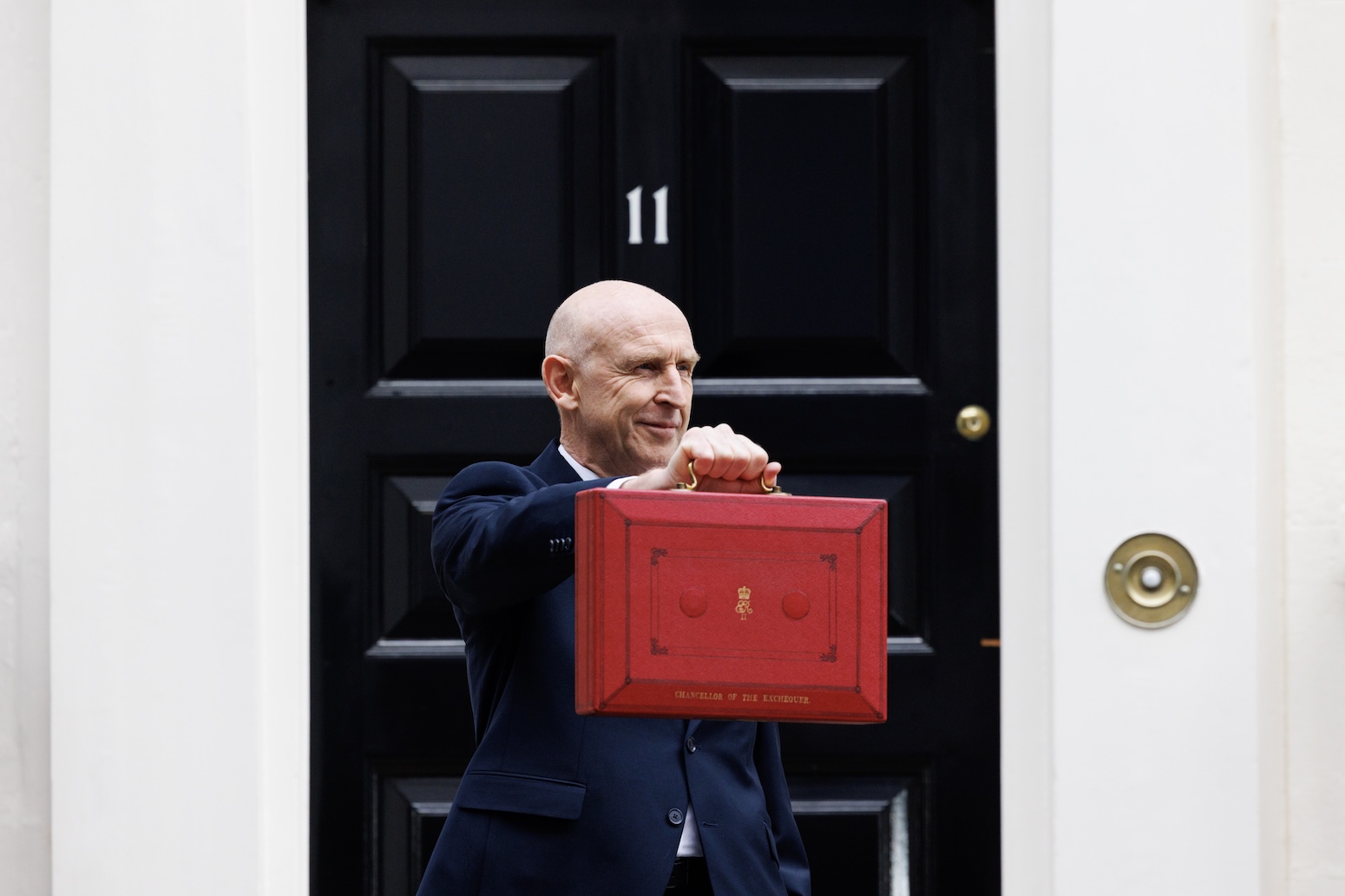
Chancellor John Healey has unveiled a comprehensive new energy strategy for the United Kingdom, marking a pivotal shift in the government’s approach to both domestic utility costs and the broader net-zero transition. In his first budget address, delivered against the backdrop of a volatile global energy market exacerbated by the ongoing conflict in the Middle East, the Chancellor prioritized the reduction of household and industrial energy bills while maintaining a pledge to reach net-zero carbon emissions by 2050. The budget introduces a series of immediate fiscal interventions, long-term structural reforms, and significant reallocations of capital aimed at securing the UK’s energy sovereignty.
The Context of the Global Energy Crisis
The UK’s energy landscape has been defined by instability over the last two years. The Office for Budget Responsibility (OBR) reported that fossil-fuel prices spiked by 83% in the year leading up to September 2026. This surge, triggered by regional warfare and resulting supply chain disruptions, has hit British consumers particularly hard, with forecasts suggesting that typical household energy bills could climb by 25%—an increase of approximately £470—to an annual average of £2,200 by early 2027.
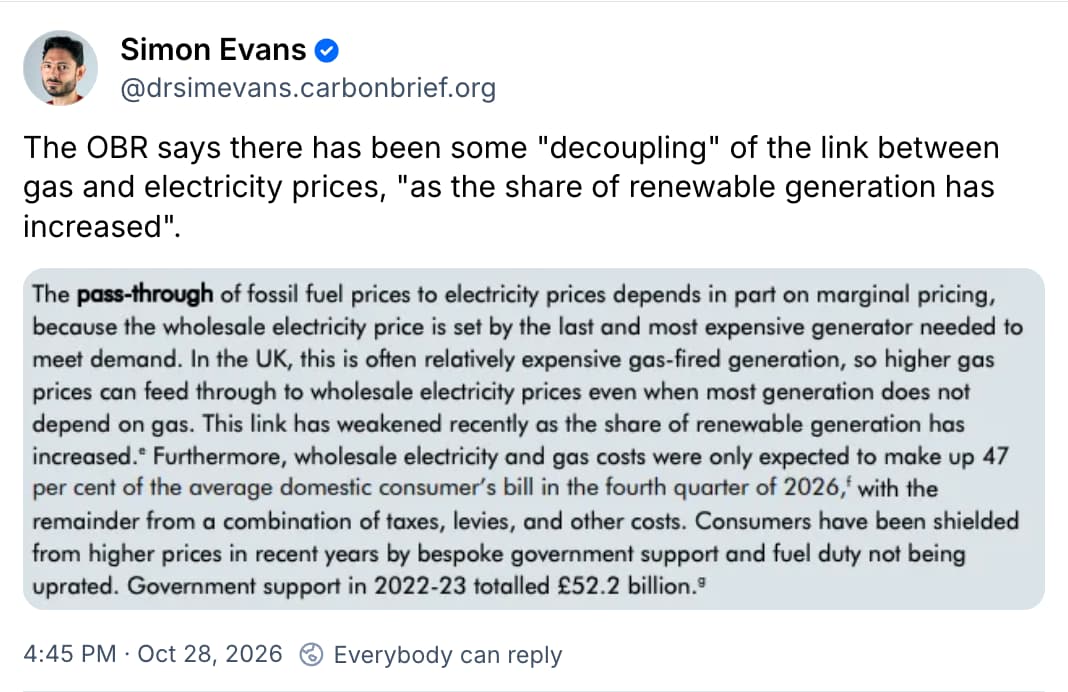
The government’s response, as outlined by Chancellor Healey, focuses on the concept of "cheaper energy" as the primary driver for economic stability. By decoupling the price of electricity from the volatile wholesale gas market, the Treasury aims to insulate the public from future geopolitical shocks.
Immediate Relief and Legislative Shifts
To address the immediate financial burden on households, the Chancellor introduced a targeted £2.6bn package, headlined by a £100 council-tax rebate for residents in bands A-D across England. Devolved administrations are expected to receive equivalent funding to implement similar measures. Furthermore, the government has extended the removal of VAT from household electricity bills for an additional three months, covering the period from April to July 2027.
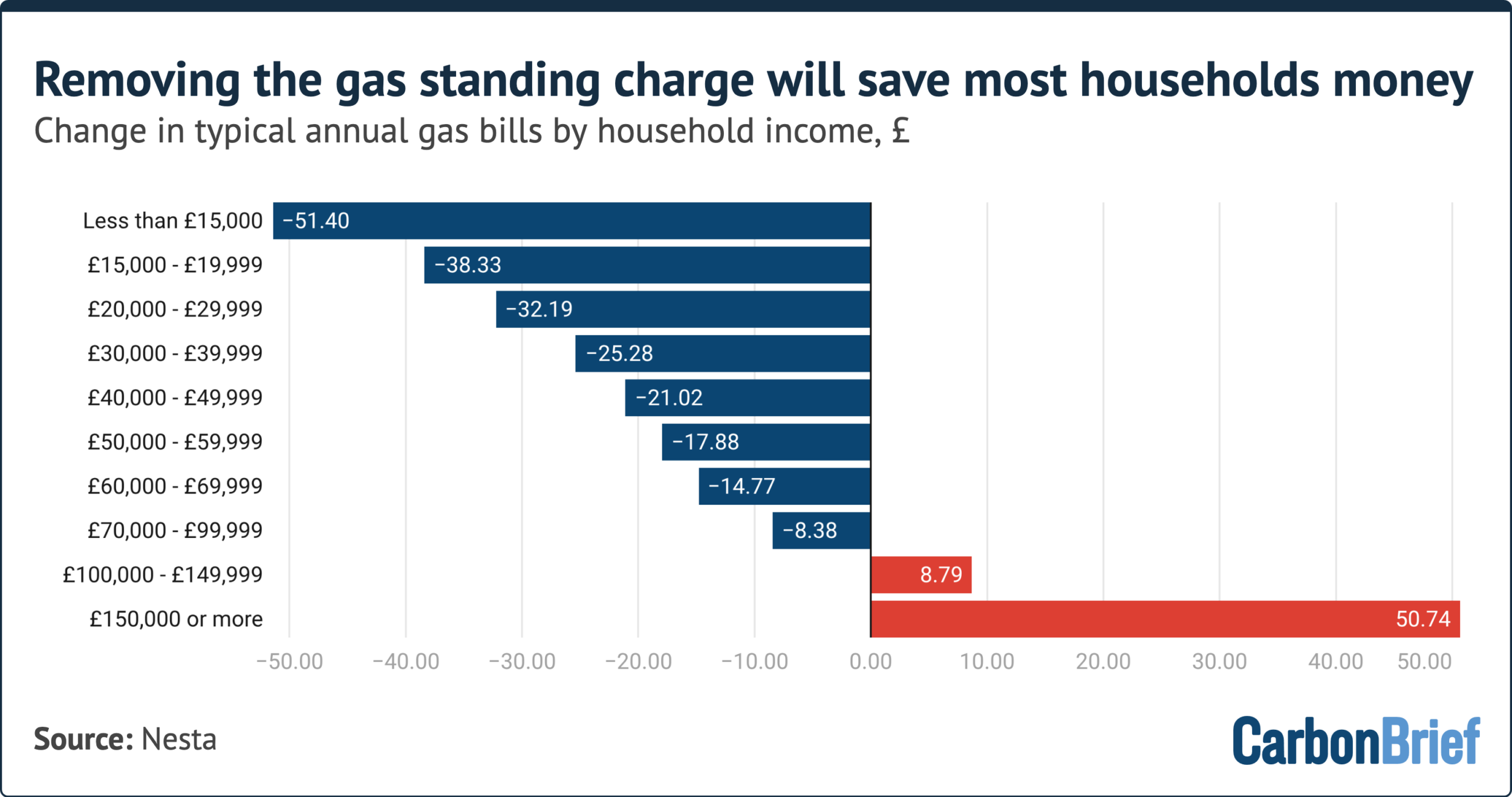
Perhaps the most significant structural change announced is the abolition of the "gas standing charge," a fixed daily fee that has long been criticized as regressive. By shifting these costs to unit rates, the government estimates that 60% of households will see an average annual saving of £45. While the move is designed to provide immediate relief to the poorest households, it also serves a secondary purpose: reducing the "spark gap"—the ratio between electricity and gas prices—which, in turn, incentivizes the adoption of electrified heating solutions such as heat pumps.
The Trade-off: Reprioritization of Green Spending
The budget contains notable trade-offs, particularly regarding the government’s flagship "warm homes plan." In a move necessitated by the requirement to increase national defence spending, the Treasury has cut £1bn from the home energy efficiency program. Furthermore, an estimated £4.7bn in financial transactions has been reallocated from the departments responsible for energy and environmental oversight.
These reductions have drawn criticism from industry analysts and environmental groups. The funding for heat-pump subsidies has effectively been reduced by £800m over a three-year period. According to experts, this shortfall could result in approximately 100,000 fewer heat pump installations than originally projected. The decision to prioritize defense spending over long-term residential decarbonization highlights the government’s current struggle to balance immediate national security needs with long-term climate commitments.

Carbon Capture and Hydrogen Strategy
The government’s commitment to Carbon Capture and Storage (CCS) and low-carbon hydrogen projects has also undergone a strategic pivot. While the Chancellor reaffirmed the necessity of these technologies for achieving net-zero, capital grant funding has been reduced by £200m for CCS and £500m for hydrogen initiatives.
The budget specifically prioritizes "mature" clusters, such as those in Teesside, Merseyside, and North Wales. Conversely, the Acorn cluster in north-east Scotland faces a reduction in direct grant support. However, the Treasury has signaled its intention to explore loan and equity-based investments to maintain momentum in these sectors, acknowledging that a complete withdrawal from CCS would likely undermine investor confidence and jeopardize the UK’s regional economic development goals.
Data Centres and Infrastructure
In a nod to the growing importance of Artificial Intelligence and digital infrastructure, the budget introduces a new regulatory framework for data centres. Developers must now adhere to a "data-centre covenant," requiring them to meet strict environmental standards, including the mandatory publication of energy-use data and the utilization of waste heat for local building heating where feasible.
While the government has opened the door for on-site power generation for strategically important data centres, it has faced scrutiny from NGOs concerned that such provisions could lead to the installation of fossil-fuel-based backup generation, thereby conflicting with broader climate objectives. The government has countered that such instances will be "tightly controlled" and reserved for projects of exceptional strategic importance.

Fuel Duty and Transportation
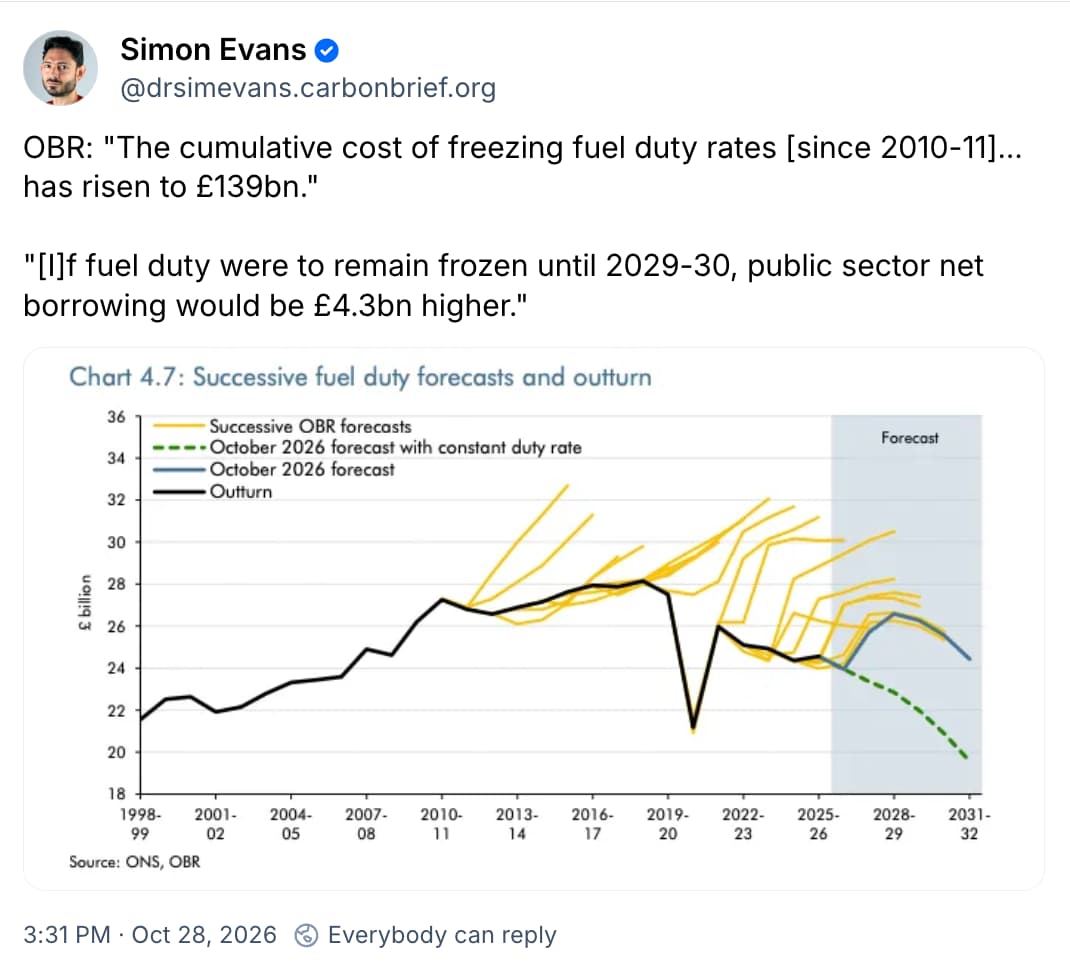
For the 16th consecutive year, the government has opted to freeze fuel duty, extending the "temporary" 5p-per-litre reduction that has been in place since 2022. The cumulative cost of these freezes since 2010 now stands at £139bn, according to OBR data. While popular with motorists, the continued suppression of fuel duty has been cited by fiscal hawks as a significant drain on public finances, with the OBR projecting an increase in public-sector net borrowing of £4.3bn if the freeze continues through 2030.
The transition to Electric Vehicles (EVs) also faces headwinds. A new legislative change in the 2026-27 finance bill will apply a 20% VAT rate to electricity supplied through public and workplace charging points, classifying it as non-domestic use. Industry representatives have warned that this will disproportionately penalize drivers who lack access to off-street, home-based charging, potentially slowing the transition to zero-emission vehicles.

Implications and Future Outlook
The 2026 budget represents a complex, and at times contradictory, approach to the UK’s energy future. While the Chancellor’s focus on lowering bills through market reform and grid expansion aligns with the urgent need for cost-of-living relief, the simultaneous withdrawal of billions in funding from green infrastructure projects raises questions about the pace of the UK’s energy transition.
The government maintains that it remains "unshakably committed" to its net-zero goals, yet the reliance on "financial transactions" and private investment to fill the gaps left by public spending cuts will be a critical metric of success in the coming years. The upcoming 2027 spending review is expected to provide further clarity on the "cost-control framework" that will govern energy policy moving forward.
As the UK navigates this "new course on energy," the efficacy of these measures will be tested by the upcoming January 2027 price cap announcement. Should global energy prices remain high or further escalate, the pressure on the government to provide additional, more substantial support for consumers will only intensify. For now, the administration is betting that a combination of grid-connected clean power, reduced standing charges, and targeted industrial support will be sufficient to steer the nation through a period of profound economic and environmental uncertainty.
Chronology of Key Energy Policy Developments
- 2022: Initial 5p-per-litre fuel duty cut implemented in response to the energy crisis following the invasion of Ukraine.
- 2025: Renewables successfully reduce the frequency of gas-setting wholesale electricity prices to 60%, down from 90% in the early 2020s.
- September 2026: Fossil-fuel prices record an 83% year-on-year increase.
- October 2026: Chancellor Healey delivers his first budget, announcing the "new course on energy," the abolition of the gas standing charge, and cuts to the "warm homes plan" to fund defense spending.
- November 2026: Implementation of 20% VAT on public EV charging points takes effect.
- April 2027: Scheduled expansion of the British Industrial Competitiveness Scheme (BICS) and potential adjustments to the CfD auction processes.
- 2027 Spending Review: Expected date for the introduction of the comprehensive "cost-control framework" for energy bills.
The long-term impact of these decisions remains to be seen. As the government attempts to balance the immediate, painful realities of high energy costs against the existential necessity of transitioning to a low-carbon economy, the 2026 budget will likely serve as the definitive marker of a new, more pragmatic, and highly scrutinized era of British energy policy.
Related posts: