New York Becomes First U.S. State to Mandate All-Electric Construction for New Buildings

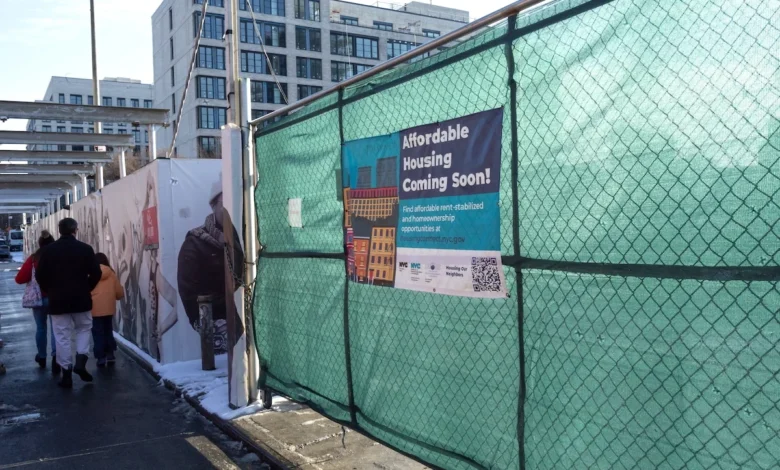
New York has officially cemented its status as a pioneer in climate policy, becoming the first state in the nation to enact a comprehensive mandate requiring new construction projects to move away from fossil fuel infrastructure. Following the finalization of rules by the State Fire Prevention and Building Code Council in late July 2025, the state is set to transition nearly all new residential and commercial developments to fully electric power. This move marks a significant shift in how the state addresses its carbon footprint, targeting the built environment—a sector that currently accounts for approximately 31% of New York’s total greenhouse gas emissions.
The mandate, rooted in the All-Electric Buildings Act passed in 2023, represents the culmination of years of legislative negotiation, environmental advocacy, and legal challenges. By eliminating natural gas hookups in favor of electric heat pumps, induction stoves, and advanced electrical heating systems, the state aims to align its building codes with the aggressive decarbonization goals established under the Climate Leadership and Community Protection Act.
A Chronology of the Legislative Push
The journey toward this mandate was neither swift nor unchallenged. The legislative process began in earnest as New York lawmakers sought to reconcile the state’s housing needs with its ambitious climate targets.
- 2023: The New York State Legislature passes the All-Electric Buildings Act. The bill faces immediate scrutiny from industry groups and fossil fuel stakeholders who argue that the transition could impose undue costs and technical challenges on developers.
- Early 2024: Debate intensifies as the State Fire Prevention and Building Code Council begins the complex process of drafting the technical regulations necessary to implement the law.
- July 2025: A pivotal moment occurs when the U.S. District Court for the Northern District of New York rules in favor of the state, rejecting a lawsuit filed by industry groups. The plaintiffs had attempted to invoke legal arguments similar to those used to successfully overturn a gas ban in Berkeley, California.
- Late July 2025: The State Fire Prevention and Building Code Council provides final approval for the new building codes, effectively triggering the countdown for the compliance phase.
- December 31, 2025: The effective date for the first wave of building permits for residential buildings up to seven stories and smaller commercial/industrial projects.
Scope and Compliance Requirements
The regulation is not a blanket prohibition applied overnight; it is phased to allow the construction industry time to adapt. Residential buildings up to seven stories, as well as commercial and industrial facilities with a footprint of 100,000 square feet or less, are required to be fully electric if their initial construction permit applications are filed on or after December 31, 2025.
For larger commercial and industrial projects—those exceeding 100,000 square feet—the compliance deadline is extended to 2029. This staggered approach acknowledges the greater engineering complexity required for large-scale skyscrapers and massive infrastructure hubs, ensuring that the transition does not inadvertently stall urban development.
Certain exemptions are built into the mandate to ensure public safety and operational continuity. Facilities such as hospitals, medical clinics, research laboratories, crematoriums, and specific agricultural buildings are permitted to retain fossil fuel hookups where high-heat processes or life-safety requirements necessitate them. Additionally, restaurants with specialized high-output cooking requirements may be granted specific considerations, though the trend toward high-performance electric commercial kitchens is already gaining momentum.
Economic and Environmental Implications
Proponents of the mandate point to significant long-term savings for both building owners and occupants. Analysis from the New Buildings Institute suggests that while the initial capital expenditure for electrification can vary, the total cost of ownership is often lower. For single-family homes, the transition to all-electric systems is estimated to save owners between $7,500 and $8,200 compared to conventional fossil-fuel-dependent homes.

On a broader scale, the transition is expected to reduce household energy usage by approximately 17%. Over a 30-year period, this translates to nearly $5,000 in savings per household—a critical factor in a state where utility costs have historically been a burden for middle- and low-income residents. Beyond the financial incentives, the move is expected to drastically improve indoor air quality. By removing combustion appliances—which are known to emit nitrogen dioxide, carbon monoxide, and fine particulate matter—new homes will inherently be healthier living environments.
Legal Challenges and Industry Resistance
The path forward is not entirely clear of obstacles. Despite the favorable court ruling in July 2025, industry groups, including various trade associations and fossil fuel interests, have petitioned the U.S. Department of Justice to intervene. The core argument remains rooted in federal preemption—the assertion that the state’s building codes interfere with federal energy regulations.
Critics of the ban argue that the rapid shift could strain the electrical grid and potentially increase construction costs in an already expensive real estate market. Some developers have expressed concern regarding the readiness of the regional grid to handle the increased load, particularly during peak heating months in the winter. However, state officials maintain that the transition will be supported by ongoing investments in grid modernization and renewable energy generation, such as offshore wind and solar, which are being fast-tracked as part of New York’s broader energy transition strategy.
Reactions from Key Stakeholders
The legal victory was heralded as a watershed moment by environmental justice organizations. Dawn Wells-Clyburn, executive director of PUSH Buffalo, emphasized the importance of prioritizing public health over industrial profit. "The fossil fuel industry was sent a powerful message by the court in this case—the health, well-being, affordability, and prosperity of our communities matters more than the industry’s profits and the hollowness of its fear-mongering," she stated.
Alex Beauchamp, the Northeast region director at Food & Water Watch, viewed the policy as a testament to grassroots organizing. "When New Yorkers come together, we can win even in the face of opponents with an almost-limitless budget," Beauchamp noted. "This is a victory for the climate, but it is also the beginning of the fight to address the millions of existing buildings that still rely on fossil fuels."
The Road Ahead: Decarbonizing Existing Stock
While the new mandate applies strictly to new construction, the "existing building" problem remains the most significant hurdle for New York’s climate targets. Retrofitting older, historic, or high-density buildings in cities like New York and Buffalo presents a much more complex set of challenges than designing new, efficient buildings from the ground up.
Policy analysts anticipate that the success of this new mandate will provide a blueprint for future retrofitting incentives and potential mandates for existing structures. The state’s focus is likely to shift toward "electrification-ready" upgrades, where building owners are encouraged to replace aging gas boilers with electric heat pumps during routine maintenance cycles.
As New York moves into the implementation phase, the eyes of the nation remain fixed on the Empire State. With other jurisdictions watching the legal and technical outcomes of this policy, New York’s experiment in building decarbonization serves as a high-stakes litmus test for the feasibility of an all-electric future in a cold-climate, densely populated region. Whether this mandate remains the gold standard or faces further judicial or legislative narrowing, the shift has already fundamentally altered the landscape of American urban development.