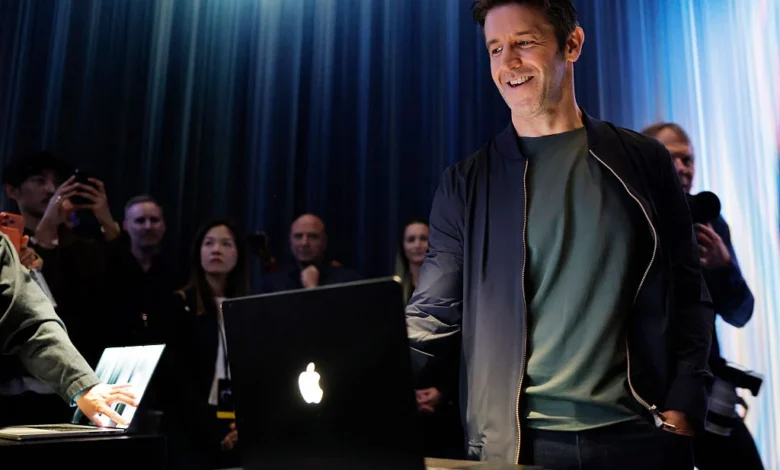
Apple Inc. finds itself at a critical juncture in its storied history of consumer technology innovation as newly minted Chief Executive Officer John Ternus steps forward to defend the company’s deliberate, measured approach to artificial intelligence. In a wide-ranging interview with veteran technology journalist Steven Levy published by Wired, Ternus addressed lingering skepticism from Wall Street, Silicon Valley competitors, and consumer advocates regarding Apple’s perceived lag in the generative AI race.
Over the past several years, the Cupertino-based tech giant has faced mounting criticism for moving slower than rivals such as Microsoft, Google, and OpenAI in deploying advanced large language models and autonomous digital agents. While competitors aggressively rushed feature sets to market, Apple’s rollout faced notable delays, particularly surrounding the long-awaited overhaul of its virtual assistant, Siri. However, with the much-anticipated release of a more powerful, deeply integrated Siri arriving this past summer, Apple has sought to signal a turning point in its hardware and software ecosystems.
Speaking publicly as CEO—a role he officially stepped into on September 1, following a distinguished career leading Apple’s hardware engineering division—Ternus pushed back against external narratives characterizing the company as a laggard. Acknowledging the chorus of external commentary surrounding the tech sector, Ternus remarked that while “everyone has an opinion,” he ultimately stands firm in his assessment: “I really like where we’re at.”
The Philosophy of Purposeful Technology Integration
At the heart of Apple’s AI strategy, according to Ternus, is a philosophy of purposeful integration rather than technological exhibitionism. During his conversation with Levy, the CEO emphasized that Apple is “absolutely going to leverage AI” across its expanding hardware and software portfolio, but drew a sharp distinction between deploying technology for its own sake and delivering genuine consumer utility.
“We don’t want to ship AI for AI’s sake,” Ternus stated. “When we’re doing it right, people won’t have to think about whether it was AI that made this happen or more traditional software. What matters is, did we build something that they really love?”
This philosophy mirrors Apple’s historical playbook for entering emerging technology categories. Rather than being the first to market with nascent innovations, the company has frequently waited for hardware capabilities, software maturity, and privacy frameworks to align before introducing features to the mass market. From graphical user interfaces and digital music players to smartwatches and wireless headphones, Apple’s strategy has traditionally prioritized user experience, fluid ecosystem integration, and stringent privacy protocols over speed.
However, the generative AI boom has tested this playbook like few technological shifts before it. As generative models demonstrate an unprecedented capacity to generate text, synthesize data, and execute complex cross-platform tasks, consumers and enterprise customers alike have begun expecting intelligent capabilities to be embedded by default into every operating system.
Chronology of Apple’s AI Evolution and Leadership Transition
To understand Apple’s current positioning, it is necessary to examine the timeline of events that have shaped the company’s AI trajectory over the past several years:

- Late 2022 to 2023: The launch of OpenAI’s ChatGPT ignites a global generative AI race. Competitors immediately begin embedding conversational assistants and generative tools into search engines, productivity suites, and mobile operating systems. Apple maintains a measured public posture, integrating machine learning quietly into features like photo editing, predictive text, and health monitoring.
- June 2024: At the Worldwide Developers Conference (WWDC), Apple officially unveils “Apple Intelligence,” detailing a comprehensive suite of generative features designed to run both on-device and via private cloud servers. However, analysts note that the most advanced capabilities—particularly the contextual, deeply integrated version of Siri—are slated for delayed releases.
- Summer 2026: Following a series of iterative developer betas and internal testing phases, Apple officially rolls out its overhauled, highly capable iteration of Siri. While met with consumer relief, tech critics debate whether the launch feels anticlimactic relative to the dizzying pace of advancements seen across the broader AI landscape.
- September 1, 2026: John Ternus officially assumes the role of Chief Executive Officer, taking over leadership of the trillion-dollar enterprise. Ternus immediately signals an upcoming wave of product development and hardware launches designed to showcase the company’s long-term vision.
- October 31, 2026: In his interview with Wired, Ternus provides his most comprehensive defense yet of Apple’s strategic pacing, directly confronting anxieties over autonomous software agents and shifting app paradigms.
The Threat of Autonomous Agents and the App Economy
One of the most provocative subjects raised during the interview was the potential rise of autonomous AI agents. Industry futurists have increasingly predicted that sophisticated AI agents—capable of executing complex multi-step workflows, booking travel, managing finances, and cross-referencing disparate databases on behalf of a user—could eventually bypass traditional app interfaces entirely. If an agent can directly interact with underlying APIs and web services, the argument goes, the foundational iOS app economy that has generated hundreds of billions of dollars for developers and Apple alike could face existential disruption.
When Levy pressed Ternus on whether autonomous agents might fundamentally alter Apple’s ecosystem and render apps obsolete, the CEO offered a grounded, human-centric counter-perspective.
“That could make life really easy, I suppose,” Ternus acknowledged, before pivoting to the core ethos of product creation at Apple. “But the creation of products is a deeply human and personal thing, something that we love to do.”
This response underscores Apple’s dual identity as both a software platform holder and a premier hardware manufacturer. Devices such as the iPhone, iPad, Mac, and Apple Watch rely heavily on tactile interactions, gorgeous displays, and intuitive physical and digital design. For Apple, software is not merely a utility to be optimized away by abstract algorithms; it is an integral dimension of a holistic product experience crafted by human designers and engineers.
Industry Data and Market Context
Market research data highlights the unique pressure points facing Apple as it navigates this technological transition. Smartphone upgrade cycles across the globe have lengthened in recent years, prompting manufacturers to search for compelling hardware drivers. Historically, major camera upgrades, cellular standard shifts (such as the rollout of 5G), and radical redesigns have spurred consumers to purchase new devices. Today, industry analysts view artificial intelligence processing capabilities—specifically neural engine performance and on-device privacy safeguards—as the primary catalyst for the next multi-year hardware supercycle.
According to recent financial disclosures and supply chain analyses, consumer demand for AI-enabled hardware has shown robust growth among early adopters, yet mainstream consumers remain discerning. While competitors have aggressively marketed cloud-dependent features that occasionally face scrutiny over latency and data privacy, Apple has staked its market differentiation on local processing power. By leveraging its custom Apple Silicon processors, the company aims to process sensitive AI workloads directly on the user’s device, thereby maintaining industry-leading standards for data privacy and security—a key selling point for consumer trust.
Strategic Implications for the Future
As John Ternus settles into his tenure as CEO, the implications of his leadership strategy will reverberate across the consumer electronics sector. By publicly validating Apple’s measured pacing, Ternus is betting that consumer loyalty, privacy-first architecture, and hardware-software synergy will ultimately outweigh the advantage of being first to market with unrefined technology.
Nevertheless, the road ahead is not without challenges. Software developers, enterprise partners, and equity markets will closely monitor upcoming hardware releases and operating system updates to evaluate how effectively Apple translates its AI vision into daily utility. Whether Ternus’s philosophy of avoiding "AI for AI’s sake" resonates with a consumer base increasingly enamored with generative automation will define not only his early leadership, but Apple’s competitive standing for the next decade.
Related posts: