Tesla Pivots Refer and Earn Program Entirely to Full Self-Driving Subscriptions, Dropping Vehicle Purchase Rewards

Tesla has officially overhauled its long-standing Refer and Earn program in the United States, shifting its core incentive structure away from vehicle sales and onto its driver-assistance software. Under the newly implemented guidelines, the automaker has eliminated all buyer and referrer rewards tied to the purchase of new electric vehicles, choosing instead to compensate participants exclusively in Full Self-Driving (Supervised) software access and ecosystem credits.
This strategic alteration represents a historic departure for the company. Historically, Tesla’s referral initiatives have functioned primarily as a direct-to-consumer marketing apparatus designed to accelerate vehicle delivery volumes, clear inventory at the end of financial quarters, and stimulate consumer demand through direct price reductions. By removing vehicles entirely from the equation, Tesla is signaling a profound corporate recalibration, prioritizing software monetization and recurring revenue over pure hardware unit deliveries.
The update, which surfaced via changes to the company’s digital support documentation, establishes a system where existing owners share referral links to incentivize other current owners to convert software trials into paid monthly subscriptions. While the transition has drawn immediate attention from industry analysts and everyday consumers alike, it aligns closely with Tesla’s broader financial and operational objectives heading into the latter half of the decade.
Mechanically, the new FSD-centric referral loop operates through specific parameters outlined in Tesla mobile application version 4.62.0 and later. To initiate a referral, a current customer must either maintain an active monthly subscription to Full Self-Driving (Supervised) or have purchased the software outright prior to Tesla’s recent discontinuation of outright software sales. Customers who obtained their FSD capabilities via temporary, manufacturer-granted promotional periods are barred from generating referral links.
On the receiving end, the criteria are similarly restrictive. The referred individual must possess a registered Tesla vehicle equipped with the appropriate hardware suite, must not have purchased FSD outright, and cannot have paid for an FSD subscription within the preceding twelve months. Furthermore, recent vehicle purchasers who received a complimentary FSD trial bundled with their initial car acquisition must wait a full twelve months following the expiration of that trial before they become eligible to utilize a friend’s referral link.
When a referred customer successfully transitions from a trial phase into a paid monthly subscription, the financial and utility mechanics trigger. The referred owner receives a complimentary month of FSD service. For the referrer, the compensation depends on their own software status: monthly subscribers receive an additional free month of service, while owners who purchased FSD outright in the past receive a $99 Tesla credit, mirroring the exact dollar cost of a single monthly software installment.

Tesla has implemented strict operational guardrails to manage the program’s liability. Credits earned through referrals expire precisely twelve months from the date of issuance and cannot be redeemed for cash, refunds, or applied directly to vehicle loan balances. Additionally, the automaker has capped individual earnings at twelve successful referrals per calendar year. Consequently, a single dedicated advocate can earn a maximum annual equivalent of one full year of complimentary FSD or $1,188 in redeemable Tesla ecosystem credits.
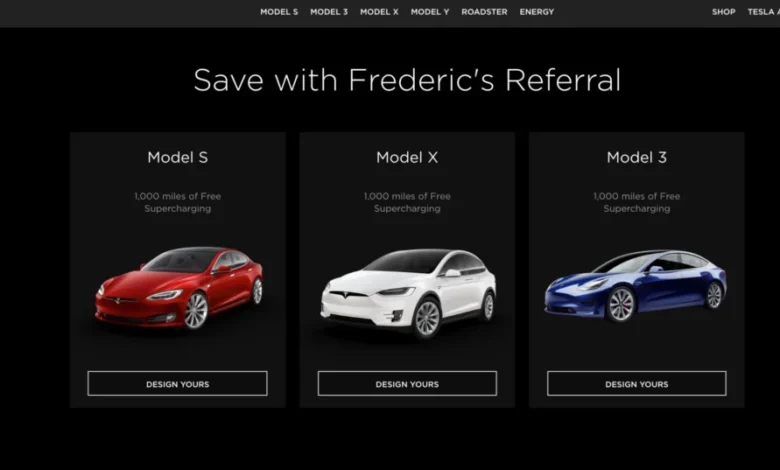
The complete exclusion of automobiles from the referral matrix represents a stark contrast to previous iterations of the program. When Tesla reinstated its Refer and Earn framework in August 2024, the structure was explicitly built around hardware acquisition. At that time, a prospective buyer utilizing a referral link received a direct $1,000 price reduction on a new Model S, Model X, Model Y, or Model 3, while the corresponding referrer received a $500 digital credit.
Throughout its corporate history, Tesla has repeatedly experimented with the lifecycle of its referral initiatives. The company has retired, revived, and drastically altered the terms of the program numerous times over the past ten years, adapting to fluctuating production capacities, supply chain constraints, and shifting market demand. However, until this latest silent update—stamped on the company’s support portals as revised on February 24, 2026—motor vehicles remained the undeniable centerpiece of the endeavor.
Under the current guidelines, the primary Refer and Earn page restricts buyer financial benefits exclusively to home solar panel installations. Referrer benefits cover solar deployments, initial vehicle demo drives capped at 30 over the lifetime of a single account, and the newly introduced FSD referral mechanism. Meanwhile, core volume drivers such as the Model 3, Model Y, and Cybertruck appear solely within loyalty frameworks designated for existing owners looking to purchase an additional Tesla product, while the flagship Model S and Model X vehicles are omitted from the reward structures entirely.
The timing of this pivot coincides directly with monumental shifts in how Tesla prices and sells its advanced driver-assistance software. On February 14, 2026, Tesla officially ceased selling Full Self-Driving outright to new consumers in the United States, transitioning the product into a strictly subscription-based model priced at $99 per month.
This software transition is intimately tied to corporate reporting metrics and executive compensation milestones. In its Q3 shareholder letter, Tesla formally reported reaching 1.74 million active FSD subscriptions, marking a 67% increase year-over-year. This specific metric explicitly counts past upfront buyers alongside active monthly subscribers while omitting short-term promotional trials.
Crucially, this exact metric forms the bedrock of CEO Elon Musk’s 2025 Performance Award, which establishes a formal corporate milestone of achieving 10 million active FSD subscriptions. This monumental target serves as the primary impetus behind Tesla’s decision, initiated in January 2026, to begin publicly disclosing active FSD subscriber counts for the first time in its corporate history.

By tying referral rewards directly to software subscription conversions rather than vehicle unit sales, Tesla has engineered a self-sustaining customer acquisition loop designed specifically to accelerate progress toward the 10 million subscriber milestone.
Market observers and industry analysts have pointed out the distinct economic efficiency of this new program design. Unlike historical iterations that required substantial capital outlays—such as $1,000 direct discounts off the purchase price of a multi-thousand-dollar automobile—the current framework costs Tesla remarkably little to operate.
The software capability itself is already embedded within the physical architecture of the vehicle fleet via over-the-air deployment. By giving away a temporary month of software access that requires no incremental marginal manufacturing cost, Tesla secures a high-margin, recurring revenue stream valued at $99 per month for every successful conversion.
Furthermore, because the program mandates that the software recipient must already own a registered Tesla vehicle, the initiative does not introduce a single new physical vehicle onto public roadways or manufacturing assembly lines. Instead, the strategy is explicitly calibrated to mine the existing, mature vehicle population for software upgrades.
By the conclusion of 2025, cumulative global vehicle deliveries by Tesla had reached approximately 8.9 million units. With only 1.74 million of those accounts currently paying for active FSD subscriptions, the addressable internal market remains vast. Financial modeling based on Q3 subscriber acquisition paces suggests that achieving the targeted 10 million active subscriptions remains a multi-year endeavor, positioning software-focused referral mechanics as a long-term structural pillar for the enterprise.
Ultimately, the termination of vehicle-based referral rewards in favor of software-locked incentives underscores a profound evolution in Tesla’s corporate identity. By stepping away from programs designed primarily to move metal off showroom floors and leaning aggressively into subscription-based ecosystem monetization, the automaker is demonstrating that its operational priorities have firmly shifted toward the software-driven valuation metrics that dictate its future financial landscape.