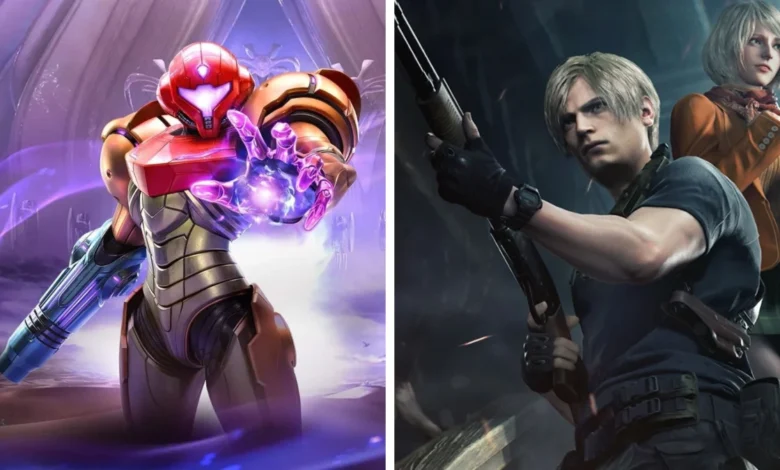
The release of Metroid Prime 4: Beyond in 2025 marked a pivotal moment for Nintendo, representing the culmination of over five years of high-profile development at Retro Studios. Despite the immense anticipation surrounding the title—which served as the long-awaited successor to the critically acclaimed Metroid Prime trilogy—the game’s reception has been markedly polarized. Rather than cementing the series’ legacy, the title’s performance has prompted an industry-wide discussion regarding the stewardship of legacy intellectual properties, particularly when contrasted with the successful modernization strategies employed by competitors like Capcom.
A Chronology of Development and Disappointment
The history of the Metroid Prime franchise is defined by both technical brilliance and turbulent production cycles. The original Metroid Prime, released in 2002 for the Nintendo GameCube, was a landmark title that successfully transitioned the 2D Metroid formula into a 3D first-person perspective. It remains one of the highest-rated games in Nintendo’s history, boasting a Metacritic score of 97. The subsequent entries, Metroid Prime 2: Echoes (2004) and Metroid Prime 3: Corruption (2007), expanded the scope of the universe, introducing mechanics like light-dark world shifting and motion-controlled aiming.
However, the period following 2007 was characterized by a significant drought. While the 2D side-scrolling entries, such as Metroid Dread, maintained the series’ relevance, the Prime sub-series remained dormant for over a decade. The announcement of Metroid Prime 4 at E3 2017 sent shockwaves through the industry, but the project famously hit a reset button in 2019, with Nintendo announcing that development would restart from scratch under the direction of Retro Studios. When the game finally reached consumers in 2025, the inclusion of divisive narrative elements, such as ancillary side characters and a controversial vehicular traversal system, led to widespread criticism regarding the game’s departure from the atmospheric isolation that defined the original trilogy.
The Resident Evil Model: A Blueprint for Revitalization
Industry analysts have frequently pointed to Capcom’s handling of the Resident Evil franchise as the gold standard for reviving aging intellectual properties. Following the critical underperformance of Resident Evil 6 in 2012, Capcom faced a crisis of confidence. The company’s subsequent pivot—marked by the release of the Resident Evil 2 Remake in 2019 and the Resident Evil 4 Remake in 2023—demonstrated a clear path forward.
Capcom’s strategy centered on three core pillars: fidelity to the original’s tone, modernization of control schemes, and the integration of contemporary engine technology. By leveraging the RE Engine, Capcom was able to preserve the "bones" of the original games while stripping away outdated design constraints. This approach created a bridge between veteran fans, who appreciated the adherence to source material, and new players, who expected the fluidity of modern action titles.
For Nintendo, the current state of the Metroid Prime series mirrors the "lull" Capcom experienced a decade ago. While Metroid Prime Remastered (2023) was hailed for its visual fidelity and quality-of-life improvements, it was ultimately a restoration of existing assets. A full-scale remake of the trilogy, utilizing the advanced engine technology developed for the fourth installment, could allow Nintendo to unify the franchise’s visual language and rectify the narrative inconsistencies that have plagued recent entries.
Statistical Context and Market Implications
The disparity in user engagement between the original trilogy and the recent release is notable. Metroid Prime 2: Echoes, for instance, is frequently cited for its robust multiplayer suite, which included Deathmatch and Bounty modes—features that were conspicuously absent in Metroid Prime 4: Beyond. The lack of online multiplayer in the 2025 release has been a point of contention for long-term fans who view the original multiplayer components as essential to the series’ replayability.
Furthermore, market data suggests that players are increasingly gravitating toward "definitive" editions. With the recent launch of the successor to the Nintendo Switch, the demand for high-performance remakes has reached an all-time high. The success of remakes like The Legend of Zelda: Ocarina of Time (modernized for new hardware) suggests that there is a viable commercial appetite for re-releasing foundational titles with modern technical specifications, including haptic feedback (HD Rumble 2) and high-frame-rate performance modes.

The Technical Case for a Trilogy Remake
From a development perspective, rebuilding the Metroid Prime trilogy using the current engine would allow for a cohesive narrative experience. By standardizing the movement, combat, and environmental interaction across all three games, Nintendo could offer a seamless transition from the events of Zero Mission through the entirety of the Prime arc.
Analysts suggest that such an initiative could include:
- Unified Control Schemes: Standardizing aim-assist and movement physics across all three titles.
- Expanded Multiplayer: Integrating a modern, cross-platform online infrastructure that supports the legacy modes from Echoes while introducing co-op campaign support.
- Visual Parity: Utilizing ray-tracing and advanced lighting models to match the aesthetic standards set by modern AAA titles, ensuring the older games do not feel "out of time" when played alongside new releases.
Broader Industry Trends and Strategic Risks
The current climate of the gaming industry is defined by consolidation and risk aversion. Several major publishers have shuttered studios or narrowed their focus to "mega-hit" franchises. In this environment, Nintendo’s approach to its secondary franchises is under increased scrutiny. Should the company fail to address the tepid response to its latest big-budget entries, there is a risk that the Metroid brand could drift back into the obscurity that characterized the 2010s.

The absence of Samus Aran from recent high-level promotional events and Nintendo Direct showcases has fueled speculation regarding the studio’s long-term commitment to the character. However, the precedent set by successful remakes in the industry indicates that a "back to basics" approach is often the most effective way to regain consumer trust.
Conclusion: The Path to Redemption
The path forward for the Metroid franchise requires a reassessment of what made the series a pillar of the industry in the first place. Whether through the inclusion of the older titles in the Nintendo Switch Online library or a comprehensive, top-down remake of the original trilogy, the goal must be to restore the sense of isolation and discovery that the Prime series pioneered.
While the reception of Metroid Prime 4: Beyond has been disappointing to many, it serves as a critical data point for Nintendo. The studio now has the opportunity to evaluate the feedback, look toward the successes of the survival-horror genre, and provide a definitive, modern version of the trilogy that honors the series’ history. Failure to do so may result in the franchise being relegated to a secondary status, leaving one of gaming’s most iconic protagonists behind in the metaphorical wasteland of the Sol Valley. The tools for success are available; the question remains whether the studio is willing to revisit the past to secure the future of the bounty hunter.