NASA Langley Research Center Unveils Flight Dynamics Research Facility, Marking Agency’s First New Wind Tunnel in Over Four Decades

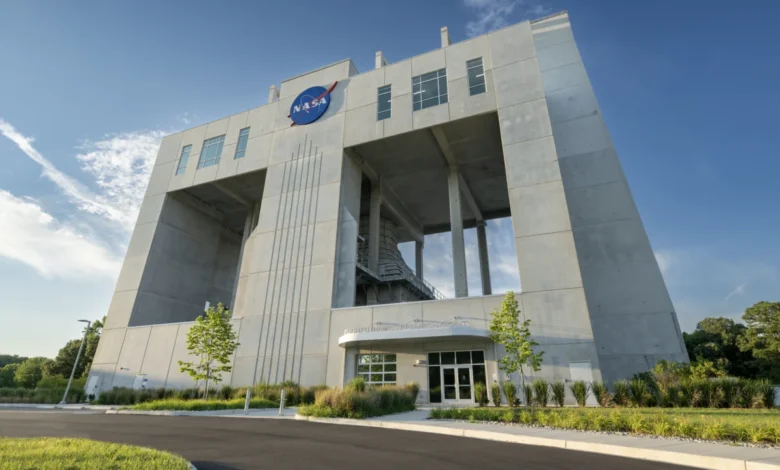
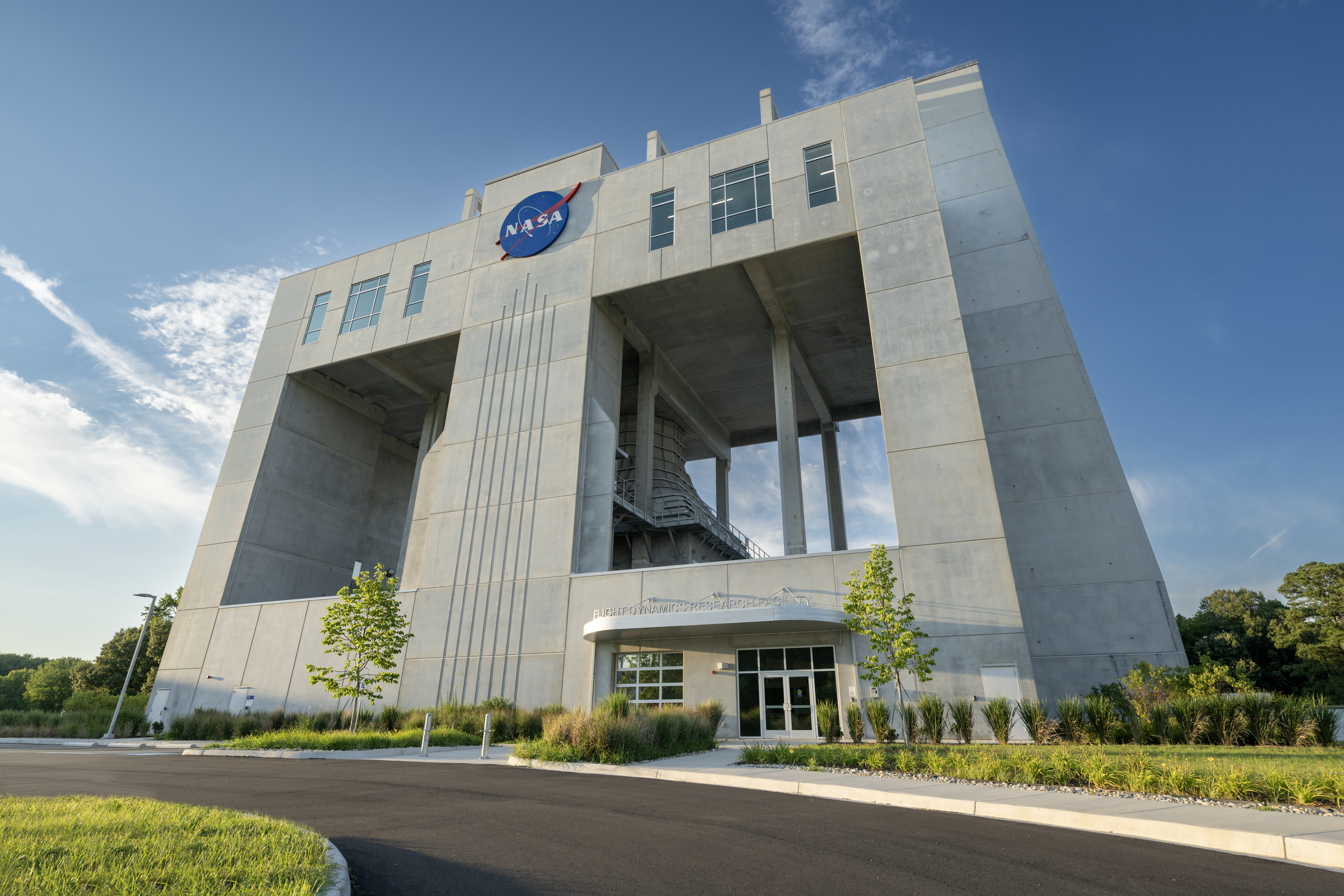
HAMPTON, Va. — NASA’s Langley Research Center in Hampton, Virginia, is set to host a pivotal event on Friday, July 31, 2026, with a media tour and ribbon-cutting ceremony for its newly constructed Flight Dynamics Research Facility (FDRF). This cutting-edge installation represents a significant milestone for the agency, as it is NASA’s first new wind tunnel to be completed in more than 40 years, poised to dramatically enhance the nation’s capabilities in aeronautics and space research. The state-of-the-art facility is designed to support a broad spectrum of research and technology development critical to advancing NASA’s ambitious aeronautics, exploration, and science goals, including the establishment of a sustained human presence on the lunar surface through the Artemis program and the foundational development of a Moon Base.
The unveiling of the FDRF comes at a crucial juncture for aerospace innovation. For decades, NASA has relied on an impressive but aging infrastructure of experimental facilities, many of which date back to the mid-20th century. While these facilities have been meticulously maintained and upgraded over time, the inherent demands of modern aerospace design—characterized by complex geometries, advanced materials, and unprecedented operational envelopes—necessitate new capabilities that can only be provided by purpose-built, next-generation research tools. The decision to invest in a new wind tunnel underscores a renewed commitment to experimental validation, a critical counterpart to the rapidly evolving field of computational fluid dynamics (CFD). While CFD offers unparalleled flexibility and cost-efficiency in early design phases, the physical testing offered by facilities like the FDRF remains indispensable for validating models, identifying unforeseen phenomena, and certifying designs for flight. This blend of advanced computational modeling with high-fidelity experimental testing is fundamental to de-risking complex aerospace projects and ensuring the safety and success of future missions.
A Legacy of Aerodynamic Innovation and the Need for Renewal
NASA Langley Research Center has a storied history as the birthplace of American aerospace innovation, having pioneered much of the foundational aerodynamic research that enabled both atmospheric flight and space exploration. Since its establishment in 1917 as the first national aeronautics laboratory, Langley has been at the forefront of designing, building, and operating a diverse array of wind tunnels. Iconic facilities such as the 14×22-Foot Subsonic Tunnel, the Transonic Dynamics Tunnel, and the National Transonic Facility have played instrumental roles in the development of every major American aircraft and spacecraft, from the X-planes and commercial airliners to the Space Shuttle and early Mars probes. However, the last major wind tunnel construction project at NASA was the National Transonic Facility (NTF), completed in the early 1980s. While the NTF remains a world-class facility, capable of testing models at cryogenic temperatures to achieve high Reynolds numbers, the intervening four decades have seen profound shifts in aerospace technology and research priorities. The "over 40 years" gap highlights a period where investment in large-scale experimental facilities became less frequent, partly due to the rise of supercomputing and CFD, and partly due to changing national priorities. The re-establishment of a new, major wind tunnel facility signals a strategic re-balancing, acknowledging that certain complex aerodynamic and aerothermodynamic phenomena can only be fully understood and characterized through physical experimentation. The FDRF is not merely a replacement but an augmentation, offering capabilities specifically tailored to the challenges of the 21st century aerospace landscape.
The Flight Dynamics Research Facility: A Closer Look at State-of-the-Art Capabilities
While specific technical details of the Flight Dynamics Research Facility are expected to be fully revealed during the ribbon-cutting ceremony, its designation suggests a primary focus on the stability, control, and performance characteristics of aerospace vehicles across various flight regimes. Unlike some specialized tunnels focused solely on high-speed flow or acoustics, the FDRF is anticipated to be a versatile facility capable of simulating a wide range of atmospheric conditions relevant to both terrestrial flight and planetary entry/descent. Industry experts and aerospace researchers anticipate the FDRF to incorporate several cutting-edge features:
- Advanced Instrumentation: Expect sophisticated laser-based measurement techniques such as Particle Image Velocimetry (PIV) for detailed flow field mapping, Pressure Sensitive Paint (PSP) for surface pressure distribution analysis, and high-speed schlieren imaging for visualizing shockwaves and flow phenomena. These tools offer unprecedented resolution and accuracy compared to older technologies.
- Reconfigurable Test Section: To accommodate diverse research needs, the FDRF likely features a modular or reconfigurable test section, allowing engineers to quickly adapt the tunnel for different types of models and testing objectives, from sub-scale prototypes of lunar landers to full-scale components of advanced air mobility (AAM) vehicles.
- Aeroacoustic Capabilities: With increasing emphasis on quieter aircraft and urban air mobility, the facility may integrate advanced acoustic measurement systems, including phased microphone arrays, to pinpoint noise sources and evaluate noise reduction technologies.
- Environmental Controls: Precise control over air temperature, pressure, and humidity will enable more accurate simulation of real-world flight conditions, particularly critical for propulsion system integration and icing research.
- Integration with Computational Tools: The FDRF is expected to be tightly integrated with NASA’s supercomputing capabilities, allowing for seamless comparison between experimental data and CFD simulations. This synergy will accelerate design cycles, improve predictive models, and provide deeper insights into complex aerodynamic phenomena.
- High-Fidelity Model Support: The facility will support advanced model manufacturing techniques, including additive manufacturing (3D printing), enabling rapid prototyping and testing of complex geometries with intricate internal structures. This significantly reduces the lead time and cost associated with traditional model fabrication.
The name "Flight Dynamics" itself points to research into how vehicles move through the air, their stability in various flight conditions, and the effectiveness of their control surfaces. This is paramount for next-generation aircraft, from electric vertical takeoff and landing (eVTOL) vehicles navigating urban airspaces to hypersonic aircraft pushing the boundaries of speed, and critically, for spacecraft re-entering Earth’s atmosphere or descending through the atmospheres of other celestial bodies.
Fueling Artemis and Lunar Ambitions: The FDRF’s Role in Space Exploration
The stated support for the Artemis program and the development of a Moon Base underscores the FDRF’s critical role in NASA’s return to the Moon and beyond. The challenges of lunar exploration are multifaceted, and many involve complex aerodynamic and aerothermodynamic considerations. For instance:
- Lunar Lander Aerodynamics: While the Moon has a negligible atmosphere, the Earth-bound ascent and descent of human landing systems (HLS) like SpaceX’s Starship HLS or Dynetics’ ALPACA will require rigorous aerodynamic testing. The FDRF will be instrumental in validating the stability and control characteristics of these large, complex vehicles during their atmospheric flight phases, from launch through re-entry and landing.
- Re-entry Vehicles: Future sample return missions from the Moon or Mars, and indeed, the return capsules for astronauts, require precise control during atmospheric re-entry. The FDRF can test scaled models to understand aerothermal heating, shockwave interactions, and the effectiveness of control surfaces or deployable decelerators.
- Future Planetary Missions: Beyond the Moon, the facility can simulate atmospheric entry conditions for probes destined for Mars, Venus, or gas giants, helping to optimize aeroshell designs and descent trajectories.
- Habitat and Infrastructure Development: Although a Moon Base operates in a vacuum, the transport vehicles and modules designed to operate in space and potentially land on the Moon still undergo atmospheric transit. Testing these components for launch vehicle integration, fairing separation dynamics, and abort scenarios will be crucial. Furthermore, understanding the interaction of lunar dust with vehicle surfaces during atmospheric transit could provide insights into mitigation strategies.
The data gathered from the FDRF will directly inform the design and operational procedures for vehicles and systems integral to establishing a sustained human presence on the Moon, ensuring their safety, efficiency, and reliability under diverse and extreme conditions. This commitment to experimental validation will de-risk critical components of the Artemis architecture, accelerating the timeline for lunar surface operations and eventual human missions to Mars.
Advancing Future Aviation: Contributions to Terrestrial Aeronautics
Beyond space exploration, the FDRF will be a cornerstone for advancing NASA’s ambitious aeronautics goals, which are largely focused on making aviation safer, more efficient, and more sustainable. Key areas of impact include:
- Sustainable Aviation: The facility will be vital for testing innovative aircraft designs aimed at reducing fuel consumption and emissions. This includes new wing geometries, blended wing body concepts, advanced propulsion integration (e.g., hybrid-electric or hydrogen-powered aircraft), and active flow control technologies. Testing these concepts at scale provides critical data for optimizing aerodynamic efficiency.
- Advanced Air Mobility (AAM): The burgeoning AAM sector, encompassing urban air taxis (eVTOLs) and regional air mobility aircraft, presents unique aerodynamic challenges. These vehicles often operate at low speeds, in close proximity to structures, and require precise control for vertical takeoff and landing. The FDRF can simulate these complex low-speed flight dynamics, rotor-airframe interactions, and acoustic profiles, helping to ensure the safety and viability of future urban air transportation systems.
- Supersonic and Hypersonic Flight: With renewed interest in high-speed commercial and military flight, the FDRF can contribute to research on sonic boom mitigation, high-speed laminar flow control, and novel propulsion-airframe integration concepts for supersonic and hypersonic vehicles.
- Unmanned Aircraft Systems (UAS) Integration: As UAS become increasingly integrated into civilian airspace, understanding their aerodynamic characteristics, particularly in challenging weather conditions or complex airflows, is essential. The FDRF can provide controlled environments for testing UAS designs and their interactions with the atmosphere.
- Aeroelasticity and Flutter: Ensuring the structural integrity of aircraft and spacecraft components at various speeds and loads is paramount. The FDRF will likely feature capabilities for aeroelastic testing, helping engineers predict and prevent dangerous phenomena like flutter, which can lead to catastrophic structural failure.
By providing a robust experimental platform, the FDRF will accelerate the development and maturation of technologies that promise to revolutionize air travel, making it more environmentally friendly, accessible, and efficient for future generations.
Leadership Statements and Strategic Vision
While the list of speakers for the media availability remains pending, it is highly probable that senior NASA leadership and prominent figures from the Langley Research Center will participate, emphasizing the strategic importance of this new facility.
- The NASA Administrator, likely to speak, would undoubtedly highlight the FDRF as a testament to NASA’s enduring commitment to scientific discovery and technological innovation. "This new wind tunnel isn’t just concrete and steel; it’s an investment in the future of American leadership in aerospace," an inferred statement might articulate. "It represents our unwavering dedication to pushing the boundaries of what’s possible, from enabling sustainable aviation here on Earth to establishing humanity’s permanent foothold on the Moon and preparing for missions to Mars. The FDRF will be instrumental in de-risking the complex technologies required for these monumental endeavors, ensuring our astronauts and our payloads are safe and successful."
- The Director of NASA Langley Research Center would likely focus on the facility’s immediate impact on the center’s research capabilities and its role in the Hampton Roads community. "For over a century, Langley has been synonymous with aerodynamic excellence," an inferred remark could be. "The Flight Dynamics Research Facility reasserts our position at the forefront of this critical field. It will attract top talent, foster groundbreaking research, and provide our engineers and scientists with the tools they need to solve the toughest challenges in aerospace. This facility is a beacon of innovation for Virginia and for the nation."
- The FDRF Project Manager or Lead Engineer would provide insights into the technical achievements and the collaborative effort behind its construction. An inferred statement might emphasize: "Building a facility of this complexity, incorporating the latest in measurement science and computational integration, has been a monumental undertaking. The FDRF embodies decades of accumulated knowledge and foresight, designed to be flexible and adaptable for research we haven’t even conceived of yet. It’s a testament to the ingenuity and dedication of countless engineers, technicians, and scientists who brought this vision to life."
- A Representative from the U.S. Congress, particularly from Virginia, might also be present to underscore the federal investment and its economic impact. An inferred statement could highlight: "This investment in NASA Langley is an investment in American jobs, American innovation, and American competitiveness. Facilities like the FDRF ensure that our nation remains at the vanguard of scientific discovery and technological development, providing opportunities for future generations and driving economic growth right here in Virginia."
These anticipated statements collectively underscore the FDRF’s significance as a national asset, a catalyst for both scientific progress and economic prosperity.
A Strategic Investment in National Capabilities and STEM
The opening of the Flight Dynamics Research Facility is more than just the inauguration of a new building; it is a strategic investment in the fundamental capabilities that underpin national security, economic competitiveness, and scientific exploration. By providing unparalleled experimental research infrastructure, the FDRF reinforces the United States’ leadership in aerospace engineering. It will serve as a magnet for top talent, attracting researchers, engineers, and students to NASA Langley, thereby fostering the next generation of STEM professionals. The facility will not only generate invaluable data for specific projects but also advance the broader understanding of fluid dynamics, materials science, and control systems, leading to innovations that could have far-reaching applications beyond aerospace. The synergy between this new experimental facility and the advancements in computational fluid dynamics will create a powerful research ecosystem, where theoretical models are rigorously tested against physical reality, leading to more robust and reliable designs. This symbiotic relationship ensures that NASA’s research is both groundbreaking and deeply rooted in empirical evidence, a hallmark of scientific excellence. The long-term implications include enhanced safety for air travel, accelerated development of sustainable transportation options, and the successful execution of ambitious human spaceflight missions that will inspire humanity for decades to come.
Media Access and Logistics
The event on Friday, July 31, is strictly in-person and open exclusively to members of the media who are United States citizens or lawful permanent residents. Information regarding the precise timing of the media tour and ceremony will be shared closer to the event date. All media representatives planning to participate must adhere to NASA’s agency-wide media accreditation policy, which is available online at https://www.nasa.gov/general/nasa-agencywide-media-accreditation-policy/.
To request participation, media must RSVP no later than 5 p.m. EDT on Wednesday, July 29, 2026. RSVPs must be sent via email to Kimiko Booker at [email protected] and Brittny McGraw at [email protected]. The RSVP email should include the reporter’s full name, media affiliation, contact phone number, and email address, along with any specific equipment requests (e.g., satellite truck access, specific camera requirements).
Further details about the Flight Dynamics Research Facility and its capabilities can be found online at: https://go.nasa.gov/4yzKEGQ.
-end-
Media Contacts:
Camille Gallo / Rob Margetta
NASA Headquarters, Washington
202-358-1600
[email protected] / [email protected]
Kimiko Booker / Brittny McGraw
NASA Langley Research Center, Hampton, Va.
757-506-5939 / 757-769-3763
[email protected] / [email protected]