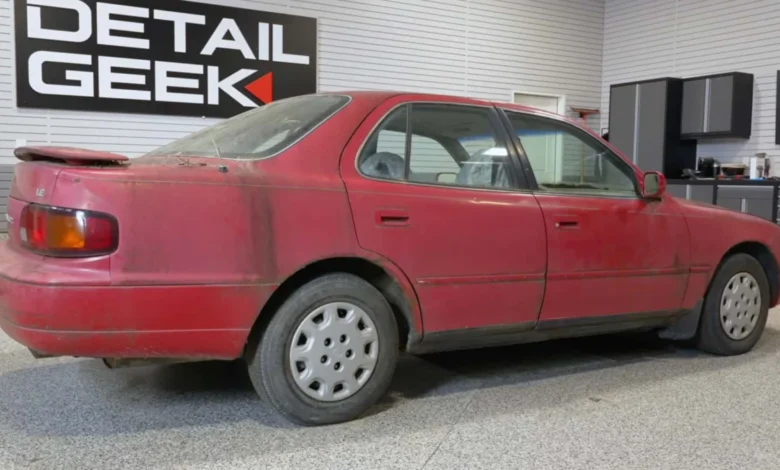
The art of automotive detailing has evolved from a niche maintenance practice into a globally recognized form of digital entertainment, captivating millions through platforms like YouTube. In a recent display of meticulous restoration, the content creator known as "The Detail Geek" has successfully revitalized a 1995 Toyota Camry that had been abandoned to the elements for years. This project serves as a compelling case study on the durability of legacy automotive engineering and the transformative potential of professional-grade chemical cleaning and restorative labor.
The Vehicle: A Case of Long-Term Environmental Exposure
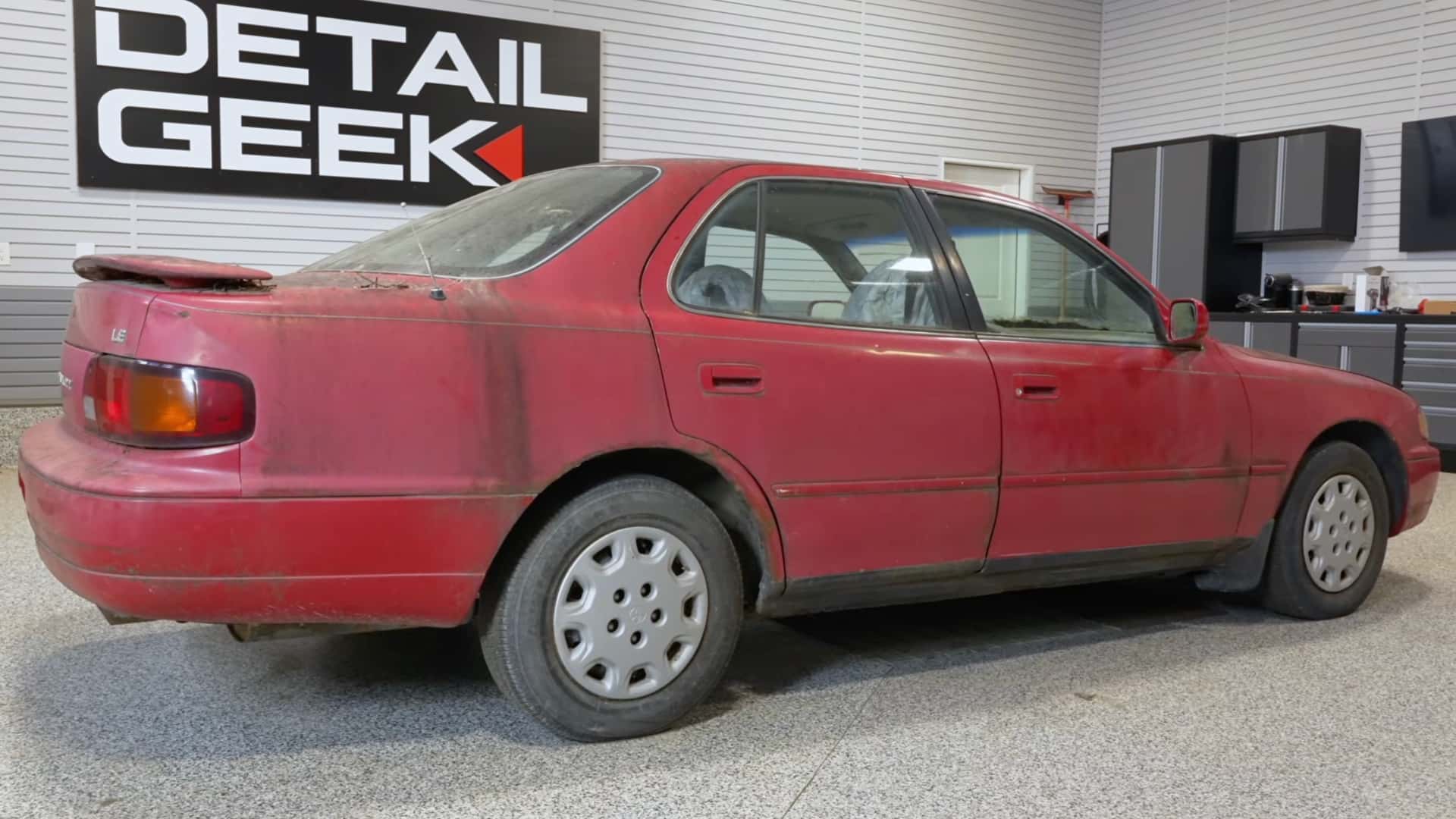
The vehicle in question, a fourth-generation Toyota Camry, represents a pivotal era in automotive history. Introduced in the early 1990s, the XV10 platform is frequently cited by automotive historians and mechanics alike for its exceptional reliability, often referred to as the "golden era" of Toyota build quality. However, even the most robust machines are susceptible to environmental degradation when left static for extended periods.
Based on the visual evidence provided in the restoration footage, the vehicle had been stored outdoors, likely beneath deciduous trees, for a duration spanning several years. This exposure resulted in a multi-layered accumulation of organic debris, including leaf litter, pine needles, and sap, which had bonded to the exterior paintwork. More critically, the interior had succumbed to significant biological growth. The presence of mold, combined with substantial accumulations of animal hair and environmental refuse, created an environment that rendered the vehicle virtually unusable in its neglected state.
Chronology of the Restoration Process
The restoration followed a structured, systematic methodology typical of high-end professional detailing, designed to mitigate further damage to the vehicle’s aging surfaces.
- Initial Assessment and Decontamination: The process began with an exterior pre-wash. The detailer utilized high-pressure water systems to displace the top layer of caked-on dirt and organic matter. This step is critical; without it, manual scrubbing would likely have resulted in micro-scratching of the clear coat, as the trapped particulates would act as an abrasive.
- Exterior Chemical Treatment: Once the bulk debris was cleared, the vehicle underwent a contact wash using pH-balanced detergents. This phase focused on breaking down the embedded environmental contaminants that had compromised the exterior finish.
- Interior Extraction and Sanitation: The cabin required the most intensive labor. The detailer initiated the process by stripping the interior—removing the floor mats and, in some instances, the seat cushions—to ensure total access to the sub-flooring and upholstery. Specialized vacuum systems with high-filtration capabilities were employed to remove biological allergens and debris.
- Deep Cleaning and Conditioning: Following the mechanical removal of debris, the detailer utilized steam cleaners and enzymatic cleaners to address the mold and odor-causing bacteria. These tools are essential for deep-cleaning porous surfaces such as cloth seat upholstery and headliners, which are prone to absorbing odors and moisture-related stains.
- Final Preservation: The concluding phase involved the application of UV-protectant conditioners to the plastic and vinyl trim, which helps prevent future cracking and fading, effectively "resetting" the interior’s aesthetic baseline.
Supporting Data and Automotive Context
The longevity of the 1995 Toyota Camry is well-documented within the automotive industry. According to data from the National Highway Traffic Safety Administration (NHTSA) and various independent consumer reporting agencies, the 1992-1996 Camry models consistently achieved high marks for powertrain longevity. Many of these vehicles remain on the road today with odometer readings well exceeding 300,000 miles, provided they receive regular preventative maintenance.
However, "curb appeal" and interior health are often the first metrics to decline in vehicles stored outdoors. Mold growth, a primary issue in this specific restoration, can pose health risks to occupants, including respiratory irritation and allergic reactions. The process demonstrated by The Detail Geek aligns with industry standards for "Biohazard Detailing," a specialized subset of automotive care that prioritizes sanitation over mere cosmetic improvement. By removing the organic material that fuels mold growth, the detailer essentially extended the viable service life of the vehicle by years.
Industry Implications and Public Perception
The popularity of such restoration videos, often reaching millions of views, highlights a broader cultural trend. In an era of rapid technological turnover, there is a renewed public appreciation for the preservation of older, mechanical-heavy vehicles. This sentiment is often described as "restoration satisfaction," where viewers find the visual transition from a state of entropy—chaos and decay—to a state of order and cleanliness to be inherently calming and rewarding.
From a market perspective, this project serves as a reminder of the "hidden value" in used car markets. Many consumers overlook older vehicles due to cosmetic neglect, failing to realize that many of these issues are reversible with the correct application of labor and specialized chemicals. While a professional detailing service of this magnitude can be costly—often ranging from $300 to over $1,000 depending on the severity of the contamination—it is frequently more economical than the depreciation loss associated with purchasing a newer vehicle.
Official Perspective on Vehicle Maintenance
While the restoration was a private venture, the techniques employed echo the recommendations provided by major automotive manufacturers. Maintenance manuals for vehicles of this age emphasize that moisture is the primary enemy of long-term storage. When water enters the cabin through compromised door seals or window gaskets, it creates a greenhouse effect that accelerates the degradation of upholstery and the growth of mold.
Experts in the field of automotive conservation suggest that for vehicles stored long-term, owners should invest in climate-controlled environments or, at the very least, moisture-wicking desiccants inside the cabin. When such precautions are absent, the type of intensive professional intervention seen in this video becomes the only viable path to returning the vehicle to a safe and operable condition.
Broader Impact and Conclusion
The transformation of the 1995 Toyota Camry is more than a viral video; it is a testament to the fact that with proper professional care, even vehicles that appear destined for the scrap heap can be reclaimed. The project underscores the importance of consistent maintenance, the durability of late-20th-century Japanese automotive design, and the professional skill sets required to address extreme cases of neglect.
As the automotive industry pivots toward electrification and software-defined vehicles, the mechanical simplicity of cars from the 1990s continues to gain a cult following. Videos like those produced by The Detail Geek play a crucial role in documenting the history of these machines, ensuring that they remain a visible part of the automotive landscape for years to come. By applying systematic cleaning methods, the detailer did not just improve the aesthetics of a singular Camry; he provided a roadmap for the preservation of a classic, reliable workhorse that still has many miles left to travel.
This restoration stands as a poignant reminder that while time and nature are relentless in their work of decay, they can be successfully challenged by the consistent application of effort and professional-grade restorative techniques. Whether the goal is to sell the vehicle, pass it down, or simply maintain a piece of automotive history, the results achieved in this project provide a clear benchmark for what is possible with patience and proper technique.