This Fast Ford Impressed U.K. Enthusiasts, While U.S. Enthusiasts Remained Largely Unmoved

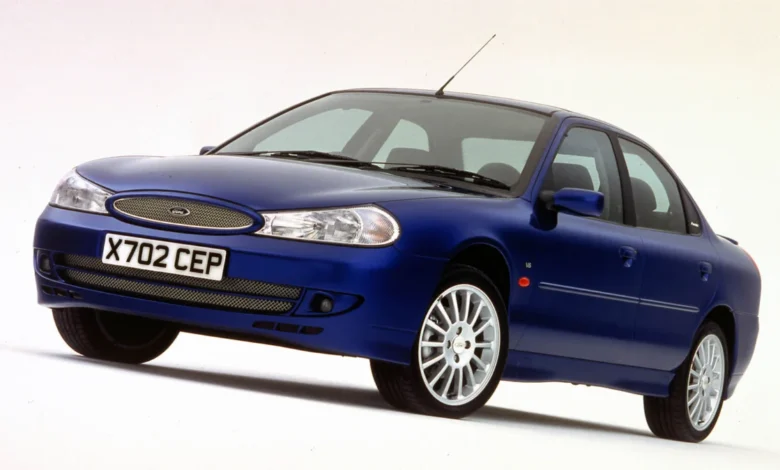
In the interconnected landscape of the global automotive industry, manufacturers frequently leverage shared platforms to deploy performance variants across multiple continents. While iconic nameplates like the Porsche 911 or the Volkswagen Golf GTI enjoy a high degree of commonality regardless of their destination, the history of the sport sedan segment reveals a more fragmented reality. More than two decades ago, Ford attempted to bridge the gap between American performance expectations and European engineering prowess with the Ford SVT Contour. While its sibling, the Ford Mondeo ST200, became a cultural touchstone for British enthusiasts, the American-market SVT Contour struggled to gain traction, serving as a case study in the divergent tastes of global automotive markets.
The Engineering Foundations of the Sport Compact
The late 1990s represented a pivotal era for the sport compact class, characterized by a transition toward more sophisticated, handling-focused front-wheel-drive platforms. The Ford SVT Contour was developed as a direct response to this shift, leveraging the Duratec 2.5-liter V6 engine—a powerplant praised for its smooth delivery and immediate torque.
For the inaugural 1998 model year, the SVT Contour produced 195 horsepower and 165 pound-feet of torque. These figures were achieved through a comprehensive suite of mechanical upgrades, including a high-flow intake manifold, more aggressive camshaft profiles, a larger throttle body, and a performance-oriented exhaust system. The vehicle was offered exclusively with a five-speed manual transmission, signaling a clear intent to target driving enthusiasts.
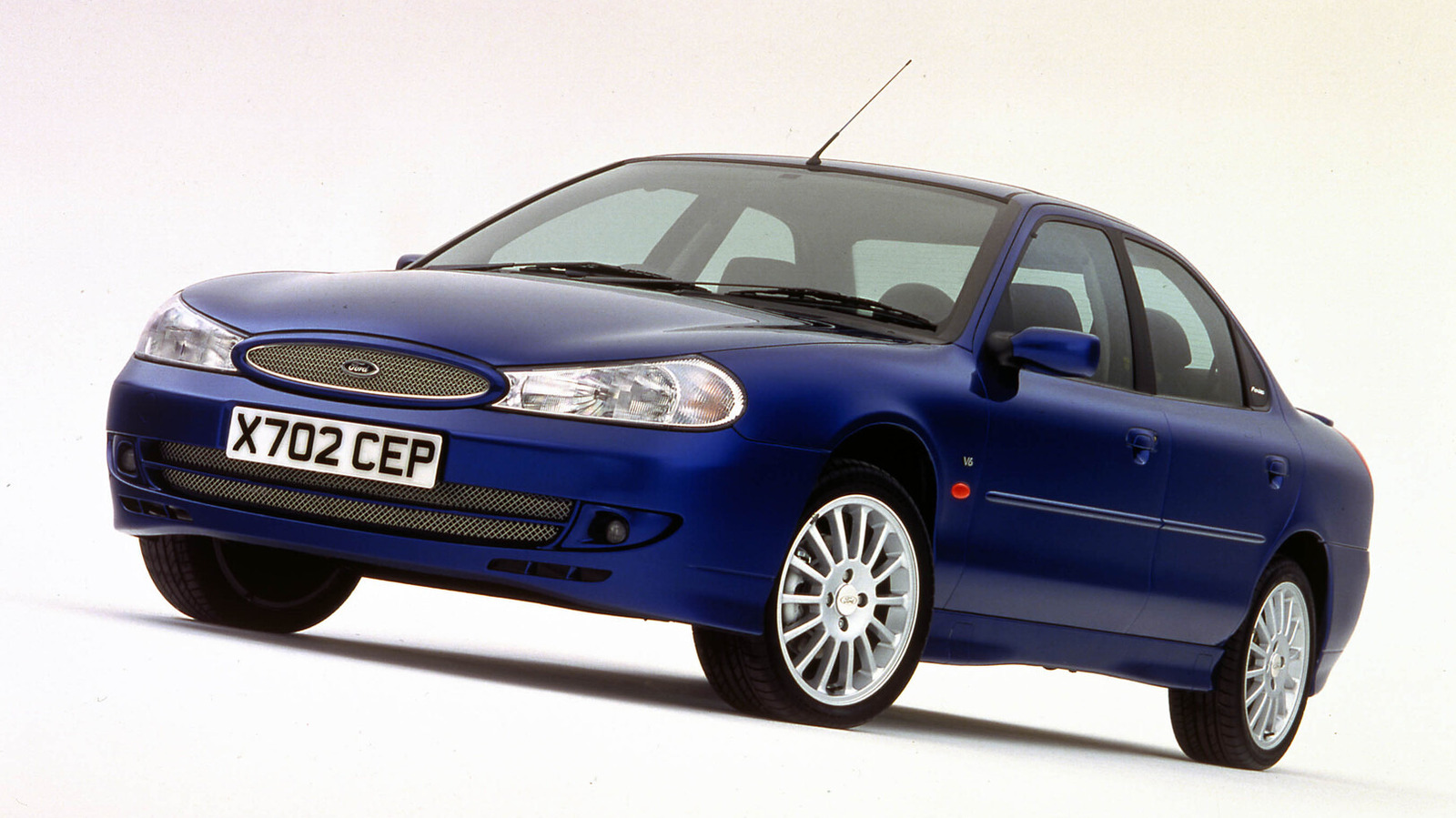
Across the Atlantic, the Ford Mondeo ST200 debuted in 1999 as the apex of the European lineup. While sharing the same fundamental architecture, the ST200 boasted higher output figures of 202 horsepower and 173 pound-feet of torque. Despite the modest power disparity, both vehicles demonstrated similar performance benchmarks, each capable of accelerating from zero to 60 mph in approximately 7.5 seconds. However, subtle differences in component selection—such as the ST200’s 17-inch alloy wheels compared to the SVT’s 16-inch units—highlighted the differing market philosophies of Ford’s regional divisions.
Chronology and Market Reception
The Ford Contour’s lifecycle began in 1995, positioned as a successor to the aging Ford Tempo. While the standard Contour was intended to compete with the Toyota Camry and Honda Accord, it occupied a difficult middle ground, failing to match the Japanese competitors in interior space and long-term reliability. By the time the Special Vehicle Team (SVT) introduced the high-performance variant in 1998, the base platform had already struggled to capture the interest of the broader American public.
The SVT Contour remained in production for three years, concluding its run in 2000. During this period, Ford managed to sell approximately 11,500 units in the United States. In contrast, the Mondeo ST200, which enjoyed a shorter market presence from February 1999 to August 2000, sold roughly 4,800 units globally, with a significant concentration in the United Kingdom. When adjusted for the relative sizes of the U.S. and U.K. automotive markets, the SVT’s sales volume was objectively underwhelming, suggesting that the "sport compact" value proposition did not resonate with the average American buyer of that era.
Racing Pedigree and Cultural Impact
The divergence in perception between the two markets can largely be attributed to the context of professional motorsport. In the United Kingdom, the 1990s were defined by the British Touring Car Championship (BTCC), which utilized the FIA’s Class 2 Super Touring regulations. This era is widely considered a golden age of touring car racing, where front-wheel-drive sedans engaged in high-stakes competition on iconic circuits. The Ford Mondeo was a staple of this series, piloted by legends such as Nigel Mansell. For the British public, the ST200 was not merely a family sedan with performance parts; it was a street-legal embodiment of the cars they cheered for on television every weekend.
In North America, the racing landscape was fundamentally different. The North American Touring Car Championship (NATCC) attempted to replicate the success of the European model but faced a lack of manufacturer support and limited media coverage. While the Contour made appearances in SCCA Pro Racing’s World Challenge, it lacked the cultural saturation of its British counterpart. American enthusiasts were instead drawn to established platforms like the Honda Prelude SH, the Chevrolet Camaro Z28, or the Mazda Miata, which offered more focused performance experiences that the heavy, four-door Contour could not match in a track environment.
Critical Analysis of Handling and Dynamics
The driving experience of the SVT Contour remains a point of debate among automotive journalists. Supporters point to its responsive steering rack and communicative chassis, noting that it provided a level of engagement rare for a domestic sedan of the 1990s. Conversely, the vehicle’s dual identity as both a commuter car and a performance machine created compromises that were difficult to overlook.
In a 1997 Car and Driver comparison test, the Contour SVT placed fifth out of six vehicles in the "Best-Handling Car" category. Critics noted that while the car was a pleasure to drive at moderate speeds, the suspension tuning—necessarily softened for "four-door duties"—became a liability during aggressive cornering. The vehicle’s weight and front-biased weight distribution were frequently cited as limiting factors when compared to dedicated sports coupes like the Mazda Miata or the BMW 318ti. While the ST200 received accolades in the U.K. press for its composure on winding B-roads, the American SVT was often criticized for being neither as comfortable as a family car nor as sharp as a dedicated sports car.
Broader Economic and Market Implications
The failure of the SVT Contour to gain widespread commercial success serves as a reminder of the challenges inherent in global product harmonization. In the late 1990s, Ford was in the midst of its "Ford 2000" global restructuring plan, which sought to consolidate platforms across international borders. The Mondeo/Contour project was one of the first major attempts at this strategy. However, the lack of market research into specific regional preferences resulted in a vehicle that was slightly too expensive for the budget-conscious American buyer and slightly too compromise-heavy for the American enthusiast.
Furthermore, the price-to-value proposition was hindered by the base Contour’s reputation. Shoppers who were hesitant to pay a premium over the outgoing Tempo were unlikely to be swayed by the added performance of the SVT trim, particularly when the perceived reliability of the Ford brand was being heavily challenged by import rivals. By the time the model was discontinued in 2000, it had become a niche product that was beloved by a small segment of the enthusiast community but largely ignored by the mass market.
Legacy and Modern Perspective
Looking back, the SVT Contour occupies a unique position in the history of Ford’s performance division. It represents a time when American manufacturers were attempting to move away from the traditional "muscle car" formula in favor of the more refined, precision-engineered European sport sedan. While it failed to achieve the sales milestones of its contemporaries, the vehicle’s legacy is preserved by a dedicated group of enthusiasts who appreciate it for its manual-transmission engagement and the refinement of its V6 engine.
The disparity between the U.K. and U.S. reception underscores a fundamental truth about the automotive industry: a product’s success is as much about its cultural context as it is about its specifications. The ST200 was a success because it was the right car, at the right time, in the right place—supported by the credibility of a racing heritage that was deeply ingrained in the public consciousness. The SVT Contour, by contrast, arrived in a market that was not yet ready for the "touring car for the road" concept, and it lacked the historical narrative necessary to build a following.
Ultimately, the story of the Ford SVT Contour and the Mondeo ST200 provides a valuable lesson for modern manufacturers. As the industry pivots toward electrification and automated driving, the necessity of understanding regional market identity remains as critical as ever. The SVT Contour remains a fascinating, if misunderstood, footnote in the annals of American performance, reminding us that for a car to be truly iconic, it must be more than just the sum of its parts—it must be a reflection of the culture that drives it.