The landscape of urban mobility is poised for a significant shift as Eli Electric Vehicles prepares to unveil its latest microcar iteration, an evolutionary step that promises to transcend the limitations of traditional neighborhood electric vehicles. In a strategic social media campaign leading up to the prestigious EICMA motorcycle and mobility exhibition in Milan, the company formally announced the upcoming debut of the Eli ZERO MX. This new vehicle is classified under the European L7e category, signaling a departure from the slower, restricted-speed microcars that have historically dominated the company’s product lineup. Alongside the standard MX variant, promotional materials have teased an aggressive "Race Edition," hinting at a diversification of the brand’s appeal toward performance styling and potentially enhanced driving dynamics.
For urban commuters and micro-mobility advocates, the transition from an L6e classification to an L7e designation represents more than just a regulatory shift; it addresses the primary operational bottleneck of contemporary quadricycles. While microcars have successfully carved out a niche in dense metropolitan environments due to their minimal spatial footprint and exceptional maneuverability, their restricted top speeds have relegated them exclusively to low-speed urban corridors. By moving into the L7e category, Eli Electric Vehicles is positioning its flagship platform to tackle faster arterial roads, thereby expanding the practical use cases for drivers seeking efficient, compact transportation alternatives.
Regulatory Frameworks and the Evolution of Quadricycles
To understand the significance of the upcoming Eli ZERO MX, it is necessary to examine the regulatory architecture governing light electric vehicles in Europe. The European Union categorizes lightweight four-wheeled vehicles primarily into two distinct tiers: L6e and L7e.
The L6e classification, commonly referred to as a light quadricycle, is restricted to vehicles with an unladen mass of no more than 425 kilograms (excluding the mass of batteries for electric vehicles), a maximum continuous rated power of no more than 6 kilowatts, and a maximum design speed capped strictly at 45 kilometers per hour (28 miles per hour). These vehicles can often be operated with a minimal driver’s license, or in some European jurisdictions, at a younger age than a standard automobile, making them popular for city centers, youth mobility, and short-distance errands.
Conversely, the L7e classification—designated for heavy quadricycles—permits a higher unladen mass of up to 550 kilograms for passenger transport (or 600 kilograms for freight vehicles), a maximum continuous power output of up to 15 kilowatts, and crucially, top speeds that typically range between 80 and 90 kilometers per hour (50 to 56 miles per hour).
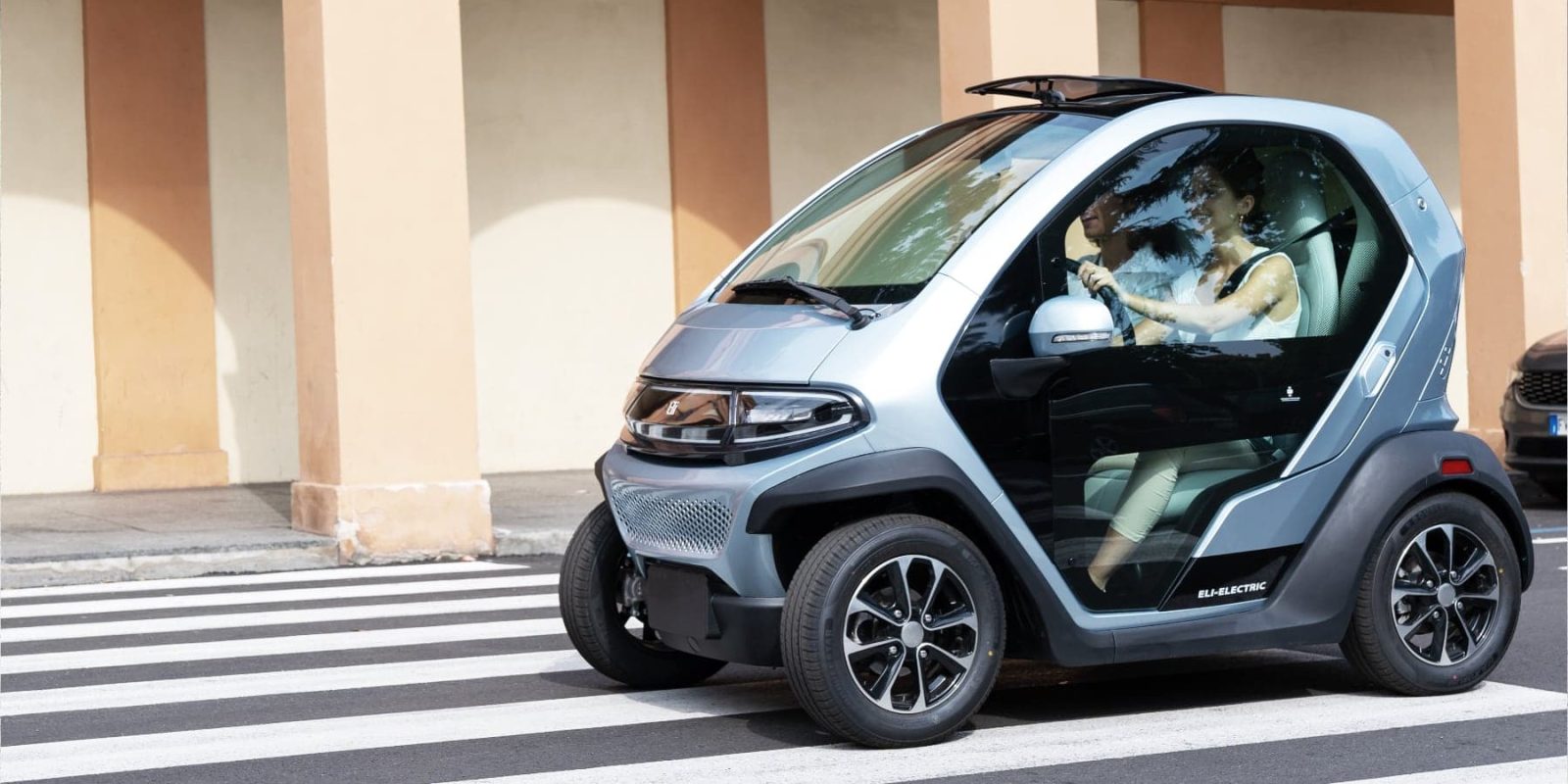
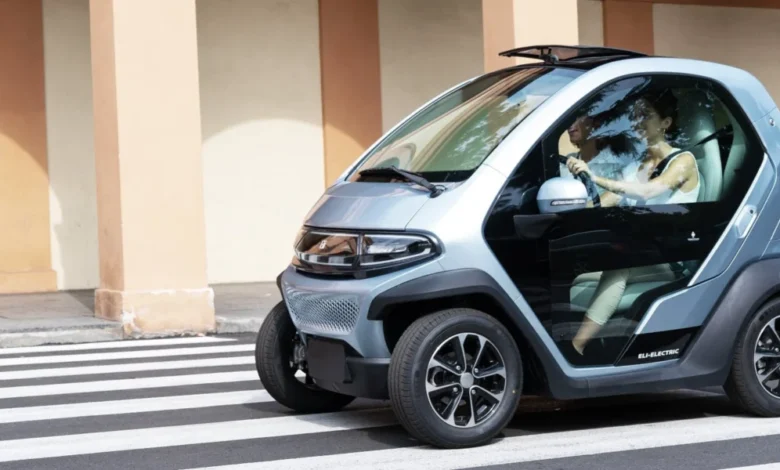
The original Eli ZERO, which entered the European market following initial test-riding phases and homologation efforts, operates strictly within the L6e category. While praised for its ergonomic two-seat layout, intuitive digital dashboard, and remarkably tight turning radius, its 45 km/h ceiling creates a notable speed differential when operating alongside standard commuter traffic on multi-lane urban thoroughfares. This speed differential has often forced drivers to meticulously plan routes to avoid ring roads and suburban arteries where traffic flows significantly faster.
Analyzing the Specifications and Anticipated Performance
While Eli Electric Vehicles has maintained a measured approach regarding the complete technical datasheet for the ZERO MX ahead of the official EICMA unveiling, preliminary indicators offer substantial insight. Official digital channels, including regional distributor portals such as Eli’s Italian web presence, have previously referenced high-performance configurations bearing striking similarities to the anticipated L7e architecture.
Current baseline projections suggest that an L7e-compliant Eli ZERO could achieve a top speed of approximately 85 kilometers per hour (53 miles per hour), aligning precisely with the regulatory ceiling of heavy quadricycles. Furthermore, promotional and developmental benchmarks have pointed toward a targeted driving range of up to 200 kilometers (124 miles) on a single charge, facilitated by optimized battery management systems and energy-dense lithium iron phosphate or nickel manganese cobalt chemistry.
Achieving a 50 mph top speed transforms the microcar value proposition. Commuters who previously found L6e vehicles impractical due to mandatory stretches of suburban expressway or fast-moving urban connectors would suddenly find a microcar viable for 80 percent of their daily transit requirements. Concurrently, the vehicle retains the core attribute that defines the microcar segment: a micro-footprint that allows multiple units to park perpendicular to curbs in spaces that would otherwise accommodate a single standard sedan or SUV.
The Mystery of the Race Edition and Design Language
Adding intrigue to the EICMA presentation is the introduction of the Eli ZERO MX Race Edition. Promotional artwork released via the company’s official Instagram channel depicts a dark-themed exterior punctuated by striking red accent lines and a visibly open-sided cabin configuration, departing from the fully enclosed glass-and-composite structure of the standard production model.
Industry analysts and automotive observers have noted that specialized styling packages in the micro-mobility sector often serve dual purposes. On one hand, they act as halo products designed to draw foot traffic at major exhibitions, testing public appetite for sportier aesthetics in a vehicle class traditionally marketed purely on utilitarian efficiency. On the other hand, specialized editions can preview upcoming modular options, such as alternative door configurations, performance-tuned suspension setups, or bespoke interior trim packages featuring heavily bolstered bucket seats.

It remains to be seen whether the Race Edition moniker denotes a genuine performance upgrade—such as higher torque output, recalibrated throttle mapping, or enhanced regenerative braking profiles—or if it represents an aesthetic trim level designed to appeal to younger, design-conscious urban demographics. The structural relationship between the core ZERO MX platform and the Race Edition variant will be formally clarified during the presentation events in Milan.
The EICMA Stage and Industry Context
The choice of EICMA (Esposizione Internazionale Ciclo Motociclo e Accessori) as the launchpad for the Eli ZERO MX underscores the shifting dynamics of the global mobility sector. Traditionally dominated by motorcycles, scooters, and internal combustion two-wheelers, the Milanese trade show has increasingly embraced light electric vehicles, micro-mobility solutions, and urban transport alternatives as legacy automotive boundaries blur.
Scheduled to run from November 3 to November 8 at the Fiera Milano exhibition center, Eli Electric Vehicles has secured Hall 22, Stand B40, as the focal point for its global reveal. Industry stakeholders, automotive journalists, and prospective fleet operators are expected to scrutinize the stand to determine production timelines, pricing structures, and initial target markets for the L7e rollout.
Market Implications and the Future of Urban Mobility
The introduction of a higher-speed microcar arrives at a critical juncture for urban planning and automotive manufacturing. Major metropolitan areas across Europe and North America continue to grapple with chronic traffic congestion, diminishing parking availability, and stringent carbon reduction mandates. Standard passenger vehicles, which average a footprint far in excess of daily occupancy needs, are increasingly viewed as inefficient tools for solo urban commuting.
However, consumer adoption of light electric vehicles has historically faced psychological and practical barriers, chief among them being range anxiety and infrastructure fears, coupled with the functional limitations of low-speed L6e vehicles. By bridging the performance gap—delivering speeds capable of keeping pace with suburban traffic while maintaining a fraction of the weight and physical dimensions of a standard compact car—manufacturers like Eli Electric Vehicles are attempting to redefine the threshold of acceptable daily transport.
If the production-ready Eli ZERO MX matches the anticipated performance metrics, it could serve as a bellwether for the heavy quadricycle segment. Success in this category would validate the thesis that consumers are willing to downsize their vehicles permanently, provided the hardware is versatile enough to handle diverse road typologies without sacrificing safety, comfort, or convenience. As the doors open at EICMA in Hall 22, the automotive community will gain its first definitive look at whether this tiny electric car can successfully conquer the fast lane.