ISpring Introduces the BRO900, a High-Capacity Seawater Desalination System for Boats, Yachts, and Marine Applications


For seasoned mariners, commercial crews, and coastal residents navigating the world’s oceans, a single immutable truth remains absolute: fresh water is as precious as gold. Whether a vessel is anchored in a secluded, remote cove, cruising between international marinas, or undertaking extensive, multi-week off-grid voyages, maintaining a reliable, high-volume source of potable drinking water is critical to survival, comfort, and operational efficiency. Historically, securing this vital resource while at sea has involved cumbersome storage arrays, strict rationing, and frequent port stops solely dedicated to replenishment.
Addressing these long-standing maritime challenges head-on, iSpring Water Systems—an established industry leader in advanced residential and commercial water filtration technologies—has announced the official launch of the BRO900. This professional-grade seawater desalination system brings the company’s decades of water treatment expertise directly into the marine sector. By combining robust, multi-stage industrial filtration with a compact, highly practical engineering design, the BRO900 transforms raw, high-salinity seawater into clean, safe, and great-tasting drinking water for crews, passengers, and comprehensive daily onboard applications.
The introduction of the BRO900 marks a significant corporate milestone for iSpring Water Systems, reflecting the brand’s strategic expansion into specialized, mission-critical aquatic applications. Scheduled for a global market debut on October 20, 2026, the new system underscores a broader corporate commitment to engineering reliable, innovative filtration solutions that empower individuals to access safe drinking water wherever their personal lives, commercial operations, or maritime adventures take them.
Engineering and Design: Advanced 5-Stage Filtration for Absolute Purity
At the core of the iSpring BRO900’s high-performance architecture is a rigorous, meticulously engineered 5-stage purification sequence designed to combat the complex contaminants present in marine environments. Seawater is notoriously difficult to treat due to its high concentration of dissolved total solids (TDS), suspended organic matter, microscopic pathogens, and industrial pollutants such as heavy metals and per- and polyfluoroalkyl substances (PFAS).
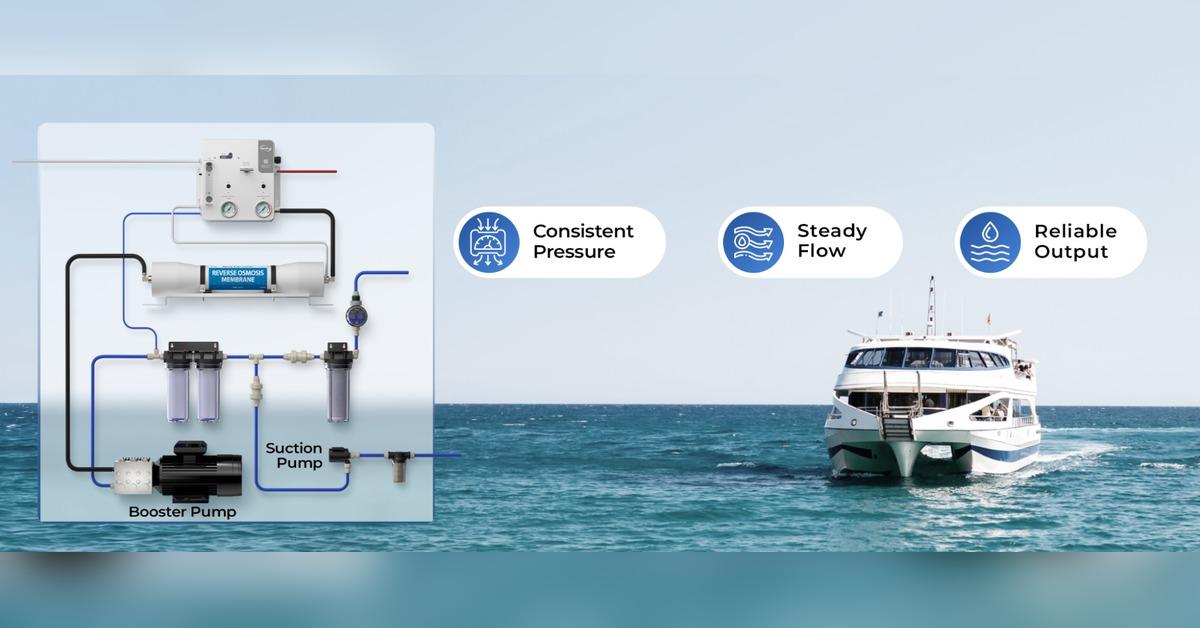
To ensure optimal water quality, the BRO900 integrates a multi-layered defense mechanism. The purification cycle begins with a durable stainless-steel mesh filter, which intercepts large particulates, marine debris, and macroscopic organic matter. The water then passes through a 20-micron polypropylene (PP) filter, followed by a finer 5-micron PP filter, systematically stripping away progressively smaller suspended sediments and silt that could otherwise compromise downstream components.

Once pre-filtered, the water encounters the cornerstone of the system: a specialized industrial-grade reverse osmosis (RO) membrane. Operating under intense pressure, this RO membrane acts as a formidable molecular barrier, successfully eliminating up to 99% of dissolved salts, heavy metals, PFAS, and chemical impurities. Finally, the purified water undergoes ultraviolet (UV) sterilization via a built-in LED UV module housed securely within the system’s primary control box. This final stage delivers an advanced layer of biological protection, actively neutralizing remaining bacteria, viruses, and residual microorganisms to guarantee that the final product meets the highest standards of safety and palatability.
Overcoming Marine Dynamics: Suction and High-Pressure Booster Pumps
Maintaining a consistent, uninterrupted flow of seawater into a desalination system while a vessel is underway presents unique hydrodynamic hurdles. As boats and yachts navigate changing sea states, alterations in vessel speed, wave action, and the physical rolling and pitching of the hull cause constant draft fluctuations. These movements can disrupt raw water intake, leading to pump cavitation, pressure drops, and system inefficiencies.
To counteract these variable maritime conditions, iSpring equipped the BRO900 with a dual-pump architecture comprising a dedicated suction pump and a high-pressure booster pump. The primary suction pump is engineered to draw sufficient volumes of raw seawater into the apparatus, ensuring a stable, uninterrupted flow even when the vessel is actively pitching and rolling in rough open water.
Once the water enters the system, the high-pressure booster pump elevates the fluid pressure to between 600 and 900 psi—with standard operating conditions typically optimized at 800 psi. This immense pressure is required to overcome the natural osmotic pressure of saltwater, forcing the fluid molecules through the specialized RO membrane. Working in tandem, these two pumps guarantee dependable, continuous water production across diverse sea states and geographic locations, giving navigators peace of mind during long blue-water passages.
Smart Controls and Precision Monitoring for Operators
The complexity of marine machinery often demands constant human oversight, but the iSpring BRO900 has been purposefully designed to streamline operations through an intuitive, centralized smart control box. The unit’s front-facing control panel features a comprehensive suite of real-time diagnostics, including a Total Dissolved Solids (TDS) digital display, an integrated RO flow meter, and dual precision pressure gauges that separately monitor raw intake pressure and high-pressure RO operation.

These diagnostic tools allow operators to closely track filtration performance and system health at a glance. Furthermore, the control panel houses dedicated suction and RO pressure regulators, enabling technicians and crew members to make precise pressure adjustments tailored to varying sea temperatures, ambient salinities, and regional water conditions. Independent switches for the suction and booster pumps provide an additional layer of operational flexibility, allowing crew members to isolate specific functions during startup, maintenance, or shutdown procedures.
Automated RO Membrane Flushing and Long-Term Durability
One of the most persistent operational challenges in marine desalination is membrane fouling. Over time, the heavy concentration of salts, minerals, and organic matter rejected by the RO membrane can accumulate on its surface, leading to scaling, biofilm formation, and biological growth. If left unmanaged, fouling rapidly degrades filtration efficiency, restricts water output, and drastically shortens the operational lifespan of the expensive RO membrane.
To mitigate this issue and minimize routine maintenance burdens for vessel owners, the iSpring BRO900 incorporates an automated membrane flushing system. This intelligent feature periodically rinses the RO membrane using previously filtered water, effectively washing away residual salt accumulation, preventing biological growth, and inhibiting mineral scaling. Users can easily configure the automated flusher to run on a set schedule—such as once a week—and customize the duration of each flush cycle based on usage intensity. For maximum versatility, the system also supports manual flushing commands, allowing operators to initiate a rinse cycle immediately after heavy use or prior to long periods of system storage.
Beyond internal filtration mechanics, the BRO900 is structurally engineered to survive the exceptionally harsh conditions of the marine environment. Seawater’s high salinity, combined with airborne salt spray, persistent humidity, and extreme ambient temperature fluctuations, creates a corrosive microclimate that can destroy unprotected metallic hardware in a matter of months. To combat this, iSpring fabricated the structural framework and internal plumbing of the BRO900 using marine-grade, corrosion-resistant materials. Additionally, the entire assembly is built with heavy-duty, vibration-dampening components designed to endure the constant mechanical stress, heavy vibrations, and violent impacts associated with navigating heavy seas and adverse weather.
Operational Impact: Extending Cruising Range and Reducing Weight Burdens
The introduction of the BRO900 carries profound economic and logistical implications for the broader marine industry, particularly regarding vessel autonomy and fuel efficiency. On long ocean passages and extended offshore expeditions, the requirement to carry massive volumes of pre-bottled or tank-stored freshwater has historically imposed severe limitations on vessel design and performance.
Storing hundreds or thousands of gallons of freshwater adds immense deadweight to a vessel. This heavy load not only consumes valuable interior and bilge space—which could otherwise be allocated to critical safety equipment, wiring, or auxiliary fuel reserves—but also degrades fuel economy. Increased displacement requires higher engine output, burning more fuel and directly restricting the vessel’s cruising radius.
By providing a compact, modular, and on-demand freshwater generation capacity, the iSpring BRO900 fundamentally alters this equation. Operating at peak efficiency, the system is capable of producing up to 900 gallons of pure, high-quality water per day. This massive output effortlessly covers everyday domestic and operational needs on board, including cooking, dishwashing, laundry, and personal hygiene. Consequently, vessel operators no longer need to sacrifice valuable cargo space for water storage tanks, nor are they forced to constantly calculate and enforce strict water rationing protocols during extended passages. The ability to generate fresh water on demand allows boats, yachts, and commercial craft to venture significantly farther offshore, unlocking true global cruising autonomy.
Market Launch Timeline and Special Promotional Details
The commercial launch of the iSpring BRO900 is officially set for October 20, 2026, representing a major strategic expansion for iSpring Water Systems as the company broadens its footprint from residential and light commercial water treatment into heavy-duty marine and off-grid infrastructure. Industry analysts note that the timing aligns with a growing global demand for advanced, self-sufficient off-grid technologies among recreational boaters, commercial maritime operators, and eco-tourism enterprises.
To commemorate the global market rollout of the BRO900, iSpring Water Systems has announced a special, limited-time introductory promotion. Beginning on the official launch date of October 20, 2026, and running through November 20, 2026, the company will offer a significant $1,000 direct discount on the purchase of the BRO900 system for early-adopting customers and marine outfitters. Industry stakeholders and vessel owners interested in securing the introductory pricing or reviewing technical specifications can access the promotion directly through the official iSpring Water Systems website.
As regulatory standards for marine safety tighten and the demand for autonomous off-grid living accelerates, innovations like the iSpring BRO900 demonstrate how industrial engineering can successfully tame the elements, turning the vast, unpotable oceans into a reliable, sustainable lifeline for modern mariners.
Related posts: