Colossal Biosciences Unveils Breakthrough AI Platform and Genetic Milestones to Bring Back the Extinct Dodo Bird

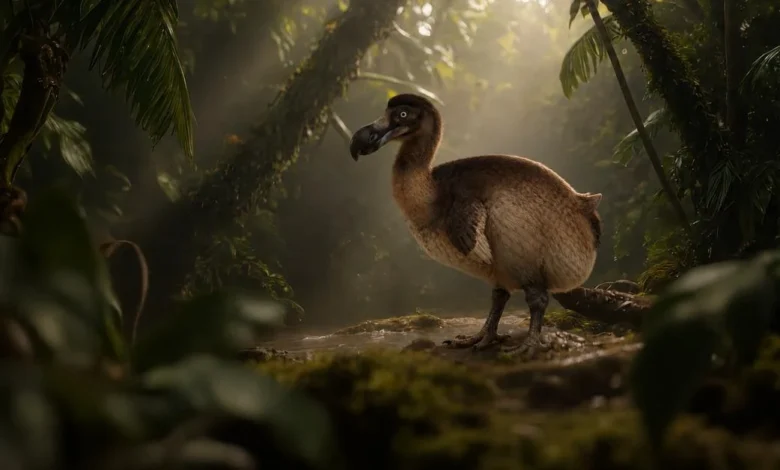
The dodo bird, long recognized globally as the ultimate symbol of permanent anthropogenic extinction, may soon make a scientifically engineered return to the natural world. Dallas-based biotechnology and genetic engineering firm Colossal Biosciences has announced a sweeping series of scientific breakthroughs that transition the concept of dodo de-extinction from speculative science fiction into actionable genetic production. Central to this monumental endeavor is the rollout of GenoMorph, a proprietary artificial intelligence platform engineered to decode the morphological evolution of the dodo, starting with its famously oversized and hooked beak.
The initiative marks a massive leap forward for the burgeoning field of de-extinction. While Colossal Biosciences has previously captured international headlines for its ambitious projects targeting the resurrection of the woolly mammoth and the dire wolf, the dodo presents a uniquely intricate biological puzzle. Unlike species with abundant, well-preserved genetic material, the dodo suffers from an exceptionally sparse and degraded genomic record. Overcoming this hurdle required the development of entirely novel computational tools, bridging the gap between ancient remnants of DNA and modern avian biology.
The Mechanism of De-Extinction: Decoding Regulatory DNA
To understand how Colossal plans to reconstruct the dodo, one must first look past structural genes and examine regulatory DNA—the sophisticated biological machinery that dictates how and when genes are expressed. In genetic terms, structural genes can be conceptualized as musical instruments, while regulatory DNA acts as the mixing board, controlling the volume, timing, and intensity of each instrument’s output. By altering these regulatory levels, identical genetic instruments can produce an entirely different biological outcome.
To reverse-engineer the dodo’s distinct anatomical profile, Colossal’s interdisciplinary team of geneticists, data scientists, and evolutionary biologists constructed a massive reference library. This database incorporates embryonic samples from living avian relatives—including chickens, quails, ducks, and pigeons—monitored across six distinct developmental stages. Researchers then paired this embryological data with high-resolution genome sequencing and CT-scanned skulls sourced from more than 70 distinct bird species, meticulously mapped across 541 anatomical points.
This vast trove of data was fed into GenoMorph. The AI platform analyzed the complex correlations between genetic switches and physical traits, successfully flagging approximately 2,300 candidate regulatory switches directly tied to avian beak size and shape.
"De-extinction is as much a data problem as a biology problem," stated Ben Lamm, CEO and co-founder of Colossal Biosciences. "Because so few dodo genomes survive, we cannot rely on the population-level comparisons available for many living species. Our GenoMorph platform provides another path: it learns how regulatory DNA shapes living birds, then identifies the genetic switches that may have contributed to the dodo’s distinctive anatomy. This is more than a solution for the dodo. It provides a repeatable approach for extinct species whose genomic records are similarly limited."
Because surviving dodo genetic samples are fragmented and scarce, traditional sequencing methods are wholly inadequate. GenoMorph successfully bypasses this limitation by reverse-engineering the rules of development from living species and applying those predictive algorithms to the gaps in the dodo’s ancient code. Furthermore, Colossal leveraged a sophisticated genome-assembly technique initially designed for its dire wolf project—a methodology recently published in the peer-reviewed journal Cell Genomics—to systematically slot stray fragments of ancient dodo DNA back into their proper places.
Hardware and Laboratory Milestones: From Theory to Practice
While computational modeling forms the neurological foundation of the project, physical infrastructure and cellular engineering are required to bring the dodo to life. Colossal has made substantial headway on the biological hardware front at its specialized facilities.
The company’s breeding colony of Nicobar pigeons—scientifically recognized as the dodo’s closest living relative—has steadily expanded to 36 birds housed in a controlled Texas environment. Crucially, research teams have successfully harvested germ cells from the eggs of these Nicobar pigeons. These primordial germ cells possess the capacity to develop into functional sperm and egg cells, establishing the critical biological vehicle required to pass genetic edits down to subsequent generations.
In tandem with the pigeon colony, Colossal researchers have successfully hatched chimeric chickens—birds carrying laboratory-grown stem cells integrated into their developing bodies. This milestone proves that exogenous cells can survive, integrate, and function within a developing avian host, validating a core hypothesis of the lab’s reproductive pipeline.
Additionally, the team developed and successfully tested a novel lipid-nanoparticle delivery system. These microscopic fat bubbles serve as targeted couriers, safely ferrying gene-editing payloads directly into developing avian embryos. The delivery mechanism has already demonstrated high efficacy across multiple test species, including chickens, rock doves, and ducks.
"It establishes a repeatable framework for connecting ancient genomes to extinct traits," noted Dr. Beth Shapiro, Chief Science Officer at Colossal Biosciences and a leading paleogenetist renowned for her work on ancient DNA.
With the AI platform functioning as the reading framework, the Nicobar pigeon colony serving as the living surrogate foundation, and advanced lipid-nanoparticles acting as the delivery apparatus, Colossal has effectively assembled a fully functional pipeline for avian de-extinction. The top candidate genetic edits identified by GenoMorph are currently undergoing rigorous laboratory testing, with the most promising modifications slated for targeted insertion into Nicobar pigeon cells.
Historical Context and Timeline of the Dodo
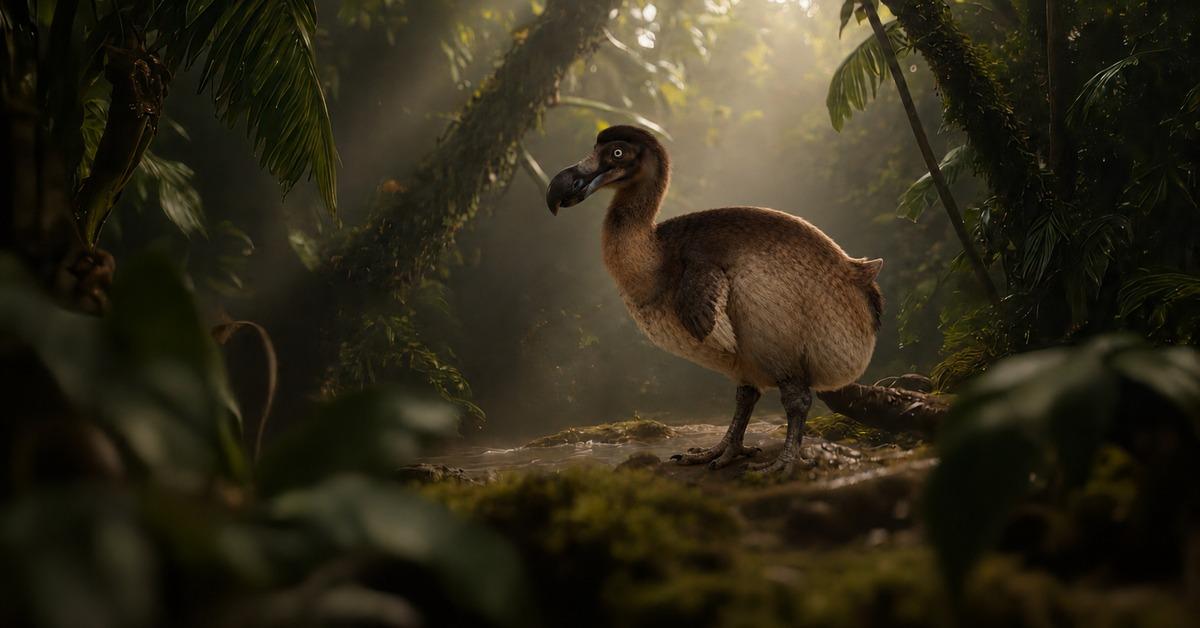
The dodo (Raphus cucullatus) holds a unique, almost mythological status in human history and ecological consciousness. Endemic to the island of Mauritius in the Indian Ocean, a remote landmass isolated from mammalian predators, the flightless pigeon relative evolved in the absence of fear toward other species.
Historical records indicate that the dodo was first encountered by Dutch sailors under the command of Admiral Wybrand van Warwijck in 1598. Standing roughly three feet tall and weighing up to 50 pounds, the docile bird quickly became a convenient source of fresh meat for mariners navigating trade routes across the Indian Ocean. Concurrently, human colonizers introduced invasive species—including rats, pigs, cats, and macaques—which eagerly preyed upon dodo eggs left unprotected in ground-level nests.
The combined pressures of overhunting, habitat destruction, and invasive predation precipitated a rapid demographic collapse. The last confirmed sighting of a living dodo occurred in the late 1660s, roughly 70 to 80 years after humanity’s first documented contact with the species. Ever since, the term "dodo" has served universally as a cultural shorthand for absolute permanence, extinction, and evolutionary failure.
Efforts to study the creature have historically been hampered by a severe lack of physical specimens. Because the species vanished before the advent of modern scientific cataloging, complete skeletal remains are exceptionally rare, and soft-tissue preservation is virtually nonexistent, leaving modern geneticists to extract degraded DNA fragments from museum subfossils.
Broader Scientific Implications and Environmental Impact
While capturing global headlines, Colossal Biosciences’ dodo initiative extends far beyond the emotional resonance of resurrecting a famous historical icon. Conservation scientists and geneticists point out that the methodologies being forged in Colossal’s laboratories carry profound implications for contemporary conservation biology.
As global biodiversity faces an unprecedented crisis—often termed the Earth’s sixth mass extinction event—thousands of endangered species are experiencing severe population bottlenecks, leading to depleted genetic diversity. The computational frameworks engineered for GenoMorph, combined with advanced cellular editing techniques for avian species, provide an emergency toolkit for conservationists battling to save critically endangered birds on the brink of collapse.
Furthermore, the successful execution of avian de-extinction opens the door to ecological restoration projects. Reintroducing functionally equivalent organisms or genetically restored proxies into native habitats could help repair damaged ecosystems that have suffered cascading ecological failures following the loss of their keystone species. In the case of Mauritius, restoring a dodo-like herbivore and seed disperser could aid in the regeneration of endemic flora species whose reproductive cycles were historically tied to the bird’s digestive tract.
However, the initiative has also sparked vigorous debate within the broader scientific and ethical communities. Critics and bioethicists frequently question the allocation of substantial financial resources toward de-extinction projects, arguing that capital would be better deployed protecting existing, intact ecosystems and preventing the ongoing loss of living biodiversity. Concerns have also been raised regarding the welfare of proxy animals, the stability of engineered genomes in wild environments, and the philosophical implications of manufacturing synthetic versions of lost organisms.
In response, Colossal maintains that its technological developments are not mutually exclusive with traditional conservation. The company emphasizes that the tools built to resurrect extinct species are explicitly designed to be dual-use, offering immediate, scalable applications for disease resistance, genetic rescue, and habitat restoration among endangered contemporary fauna.
For more than three centuries, the dodo has stood as an unalterable monument to human-induced ecological destruction—a permanent entry in the ledger of lost life. Through the convergence of artificial intelligence, high-throughput embryology, and precise gene editing, Colossal Biosciences is systematically rewriting that narrative, turning what was once considered an immutable historical tragedy into an engineering challenge with a visible finish line.