The Anatomy of a Global Energy Shock
The conflict, which escalated throughout early 2026, has created a volatility in global oil and gas markets that has not been witnessed since the energy crises of the 1970s. With a substantial portion of the world’s seaborne oil transiting through the Strait of Hormuz daily, the military standoff has effectively weaponized energy supply lines.
The resulting price spikes have functioned as an inadvertent, brutal tax on fossil-fuel dependency. While some observers initially predicted that the surge in prices would lead to a desperate, unbridled return to coal-fired power generation, the reality on the ground has proven more complex. Analysis by Carbon Brief indicates that while coal demand is indeed forecasted to rise by approximately 1.2% this year, this uptick is dwarfed by the dramatic, involuntary contraction in oil and gas consumption.

Chronology of the 2026 Energy Shift
The timeline of this shift began in early 2026, when initial skirmishes in the Gulf threatened to destabilize global supply chains. By the end of Q1, the International Energy Agency (IEA) was already beginning to revise its outlooks.
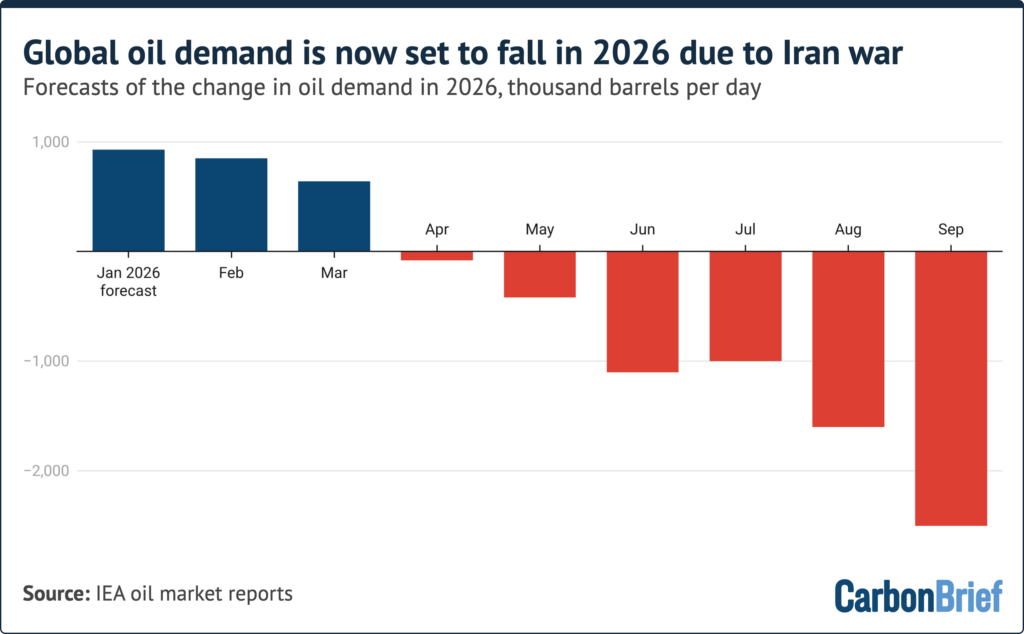
- January 2026: The IEA projected a rise in oil demand of 930,000 barrels per day (bpd), assuming a relatively stable geopolitical environment.
- March–May 2026: As the Hormuz crisis intensified and spread to secondary flashpoints, such as Yemen, shipping insurance premiums skyrocketed and major carriers began rerouting vessels, causing immediate supply chain delays.
- July 2026: The IEA issued a revised forecast, signaling a 0.6% drop in global gas demand, reflecting the severe price pressure that rendered many industrial applications of gas economically unviable.
- September 2026: Updated data confirmed a projected 2.5 million bpd drop in oil demand—a staggering reduction equivalent to roughly 2.4% of 2025 levels.
Data-Driven Market Realities
The interplay between coal, oil, and gas reveals a global economy struggling to adapt. The 1.2% rise in coal demand, while noteworthy, is largely a result of temporary switching in power sectors where gas-to-coal substitution was physically possible. However, the constraints on this shift are severe. Infrastructure limitations, including the lack of dual-fuel capability in many modern power plants, have prevented a wholesale return to coal.
Furthermore, a significant portion of the increase in coal demand is attributable to factors independent of the Hormuz crisis. These include a strong El Niño event, which has simultaneously pushed up electricity demand for cooling purposes while severely depressing hydroelectric power output. In China, which remains the world’s largest coal consumer, inefficiencies—specifically the "wasted" wind and solar power due to grid bottlenecks—have necessitated a higher reliance on coal to maintain baseload stability.
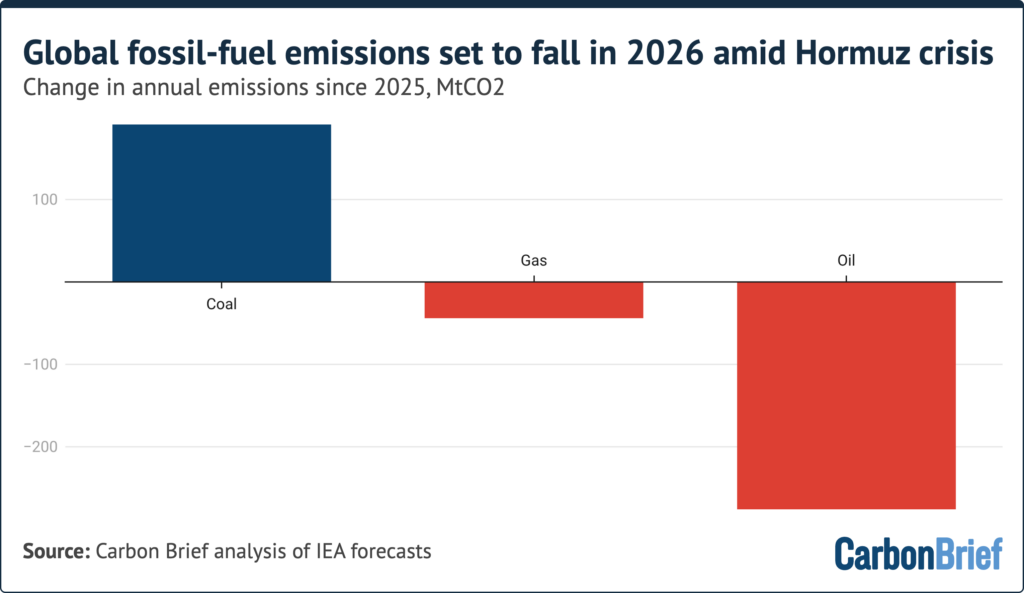
Conversely, the decline in oil demand is structural and, according to many energy analysts, potentially permanent. The "demand destruction" caused by prolonged high prices has accelerated the adoption of electric vehicles (EVs) in major markets. Record-breaking EV market shares in China, Europe, and emerging economies across Southeast Asia demonstrate that when fossil-fuel prices become prohibitive, both consumers and governments prioritize electrification as a hedge against future volatility.
Official Responses and Economic Implications
The International Energy Agency has highlighted the interdependent nature of the 2026 energy landscape. In its latest reports, the agency notes that while coal demand might see a short-term resurgence if gas prices remain at historical highs, the long-term outlook for hydrocarbons is increasingly pessimistic.
Governments in developing nations, particularly in Asia, have signaled a strategic pivot. The high cost of importing liquefied natural gas (LNG)—which spiked to record levels during the height of the crisis—has forced a reevaluation of energy security policies. Many nations that were previously committed to rapid expansion of gas-fired power are now redirecting capital toward domestic clean energy sources, such as solar, wind, and battery storage. This shift is not merely environmental; it is a defensive economic measure designed to decouple national grids from the instability of Middle Eastern supply chains.
The "Permanent Destruction" of Demand
A critical takeaway from the 2026 crisis is the concept of "permanent demand destruction." Sverre Alvik, vice president at the consultancy DNV, has noted that every month the conflict continues, the structural reliance on oil erodes further. Infrastructure built to bypass the current crisis—such as new EV charging networks or decentralized renewable energy grids—will not be dismantled when the geopolitical situation stabilizes.
The IEA’s previous forecast, which suggested that global oil demand might not peak until 2030, is now facing intense scrutiny. Current trends suggest that global oil consumption may remain effectively flat for the next two years, significantly pulling forward the expected date of peak fossil-fuel demand.
Broader Implications for Climate Policy
While the reduction in emissions—a projected 0.5% drop in 2026—is a product of crisis rather than deliberate policy, the consequences for the climate are substantial. Because fossil fuels currently account for roughly two-thirds of all global greenhouse gas emissions, even a marginal contraction in their use has an outsized impact on the total carbon budget.
However, the volatility inherent in this transition poses risks. If the energy crisis leads to a disorderly phase-out of fossil fuels without sufficient investment in reliable clean energy alternatives, the result could be severe economic contraction and social instability. The challenge for policymakers, therefore, is to capture the momentum created by the current energy shock and institutionalize the shift toward renewables.
The 2026 experience serves as a case study in the vulnerability of global energy markets. The crisis has demonstrated that the traditional reliance on centralized, geographically concentrated energy sources is a liability in a multipolar world. As nations scramble to secure their energy future, the emphasis is shifting from the efficiency of globalized trade to the resilience of local, renewable-based energy systems.
Future Outlook
As we look toward 2027, the trajectory of global emissions will likely depend on three factors: the duration of the Hormuz conflict, the speed of renewable energy deployment, and the ability of major economies to manage the inflationary pressures of the energy transition.

The data suggests that we are entering a new phase of the energy transition, characterized by a move away from the high-cost, high-risk hydrocarbon model. While the transition will remain fraught with political and economic tension, the structural changes observed in 2026 indicate that the peak of the fossil-fuel era may be significantly closer than previously anticipated. The "return to coal" that many feared has been revealed as a localized, temporary anomaly, overshadowed by a broader, more persistent move toward electrification and energy independence.
Ultimately, the 2026 emissions data offers a grim irony: the most significant decline in fossil-fuel use in recent memory was not achieved through climate legislation, but through the hard, unforgiving reality of geopolitical conflict. The lesson for the coming decade is clear: the energy transition is no longer a matter of environmental choice; it is an economic and security imperative that will define the global order for the foreseeable future.