The legislative push to adopt permanent daylight saving time (DST) across the United States has moved from a fringe proposal to a significant point of contention in Washington, D.C. While proponents argue that the shift would provide a much-needed boost to the economy and mental health by extending evening light, new research suggests that this transition could impose a hidden, heavy toll on the nation’s youth. A comprehensive study led by the University of Washington indicates that making daylight saving time permanent could result in at least 2 billion additional school commutes occurring in complete darkness, significantly heightening safety risks and disrupting the biological rhythms of millions of children.
The debate, which has seen nineteen states pass legislation in anticipation of federal action, now faces a critical roadblock in the U.S. Senate. Lawmakers and researchers are increasingly focused on the implications for morning commute safety and the physiological necessity of early-day sunlight. The conflict centers on a simple astronomical reality: an hour of light gained in the evening must be borrowed from the morning. During the winter months—from November through March—this shift would delay sunrise, pushing the start of the school day into the pre-dawn darkness for a vast majority of the country.
A Chronology of the Legislative Push
The movement to end the twice-yearly ritual of "springing forward" and "falling back" has gained significant traction over the last several years. The current system of switching clocks was established to maximize daylight during working hours, but critics have long argued that the transition is a relic of an era that no longer serves modern society.
In 2022, the U.S. Senate passed the Sunshine Protection Act by unanimous consent, a move that signaled widespread bipartisan support. However, the bill stalled in the House of Representatives. By the summer of 2024, the momentum had shifted, with the House introducing its own versions of the legislation. While nineteen states—including Washington, Florida, and California—have passed bills to adopt permanent DST, these measures are contingent upon Congress amending the Uniform Time Act of 1966. This federal authorization is the final hurdle, yet the scientific community is now calling for a pause, citing the potential for significant public health and safety consequences.
Quantifying the Darkness: The University of Washington Study
To understand the tangible impact of this policy shift, researchers at the University of Washington conducted an exhaustive analysis of school schedules and geographic data across 14 of the 19 states that have already approved permanent DST measures. By synthesizing student enrollment figures, individual school start times, and precise geographic coordinates, the team modeled the transition from the current system to a permanent DST regime.
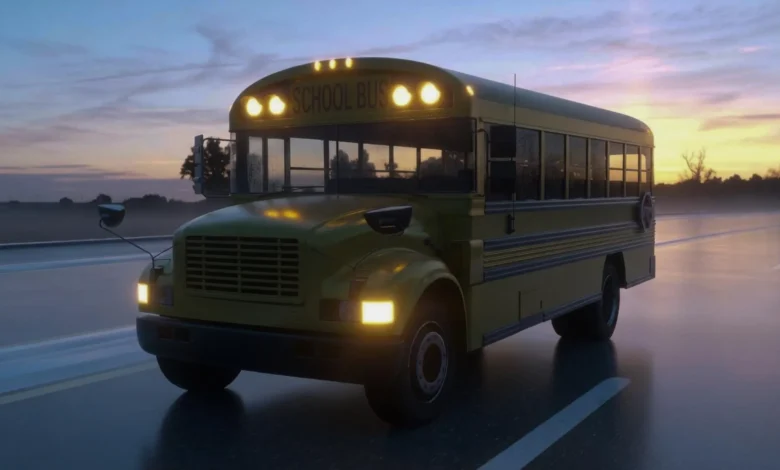
The findings are stark. In the state of Washington alone, the shift would result in nearly 35 million additional school trips conducted in the dark. The impact is even more pronounced in other regions; for instance, the state of Georgia would see approximately 71 million additional dark commutes. When these figures were extrapolated to the national level, the researchers determined that at least 2 billion extra trips to school would occur before sunrise.
These numbers, however, are likely conservative. The researchers based their model on an assumed school departure time of 8 a.m. Given that many districts across the country begin their days earlier, or offer pre-school programs, clubs, and breakfast services, the actual number of children traversing roads in the dark is likely significantly higher than the 2 billion estimate.
The Safety Implications for Pedestrians
The dangers associated with low-visibility commutes are well-documented in traffic safety literature. A study published on October 29 in the journal Current Biology found that fatal crashes involving school-aged pedestrians are roughly twice as likely to occur during dark mornings compared to daylight hours.
The increased risk stems from a combination of factors: reduced reaction times for drivers, lower visibility of students crossing streets, and the general increase in traffic volume as morning commutes begin. For districts located on the western edges of time zones—where the sun rises later by default—the change could be particularly hazardous. In towns like Forks, Washington, where sunrise is already delayed, the addition of an hour of darkness would extend the period of peak traffic vulnerability well into the middle of the school morning.
Biological Rhythms and the "Sunshine Destruction" Argument
Beyond the immediate risk of physical harm, researchers warn of the broader physiological implications of losing morning sunlight. Dr. Horacio de la Iglesia, a biology professor at the University of Washington and senior author of the study, has been a vocal critic of the terminology used to support the legislation.
"It’s called the ‘Sunshine Protection Act’ because you get an extra hour of light at the end of the day. But you will take that hour from the morning. You could call it the ‘Sunshine Destruction Act,’" de la Iglesia stated.
This concern is grounded in chronobiology—the study of internal biological clocks. Human circadian rhythms are deeply influenced by exposure to morning sunlight, which helps synchronize internal clocks to the 24-hour cycle. This synchronization regulates sleep quality, mood, appetite, and cognitive performance. When children are deprived of morning light, their internal clocks may drift, leading to chronic sleep debt and potential long-term impacts on mental health.
Guadalupe Rodríguez Ferrante, a postdoctoral researcher and lead author of the study, emphasized the inequity of the impact. "When we send kids to school in the dark, we are depriving them of an opportunity to get that morning daylight," Ferrante explained. "We were asking what the cost for these children is. We wanted actual numbers, a real number of kids based on the geographic location of each school."
The Conflict with School Start Time Reform
The proposed shift to permanent DST also creates a paradox for school districts currently attempting to align start times with the biological needs of teenagers. Many districts have spent years moving high school start times later to accommodate the natural "delayed phase" of adolescent sleep cycles.
By pushing the morning into darkness, permanent DST could negate the benefits of later start times. If schools start later, but the sun rises even later, the result remains a dark commute. This creates a difficult policy trade-off. Some proponents of permanent DST suggest that districts could simply delay school start times further to avoid the darkness. However, this logic fails to account for the systemic ripple effects.
As de la Iglesia notes, if schools delay their start times to accommodate the sun, parents must delay their own work schedules, and the entire rhythm of the economy would shift accordingly. "If we do that, you will end up going to work later. And everything is going to get delayed," he said. "You will get out of work an hour later, and you will miss the opportunity to enjoy your evening light. And essentially, we’re just going to be realigning everybody to solar time. That, by definition, is Standard Time."
Broader Societal Implications
The research underscores that the debate over the clock is not merely a matter of preference or convenience; it is a complex intersection of public safety, child development, and economic planning. The findings have prompted calls for a more rigorous evaluation of how the legislation would affect different demographics.
While the convenience of a lighter evening is an attractive proposition for many, the cost—measured in millions of dark commutes and the potential disruption of adolescent health—remains a subject of intense scrutiny. As the U.S. Senate continues to weigh the legislation, the evidence provided by the University of Washington team serves as a critical reminder that simple policy fixes can have complex, far-reaching, and occasionally harmful consequences for the most vulnerable members of society.
The study, which included contributions from a diverse team of researchers including high school student Daniel Zhang and several undergraduates, emphasizes that the data is not just theoretical. It is an invitation for lawmakers to look at the granular, local impacts of federal decisions. Whether or not Congress proceeds with the Sunshine Protection Act, the conversation has now shifted toward a more nuanced understanding of how our relationship with the sun defines the rhythm of the American school day.
As the legislative session progresses, the focus remains on whether the perceived benefits of permanent daylight saving time can truly justify the risks posed to the morning routine of the nation’s students. With safety and biology on the line, the final decision will likely require a careful balancing act that the current legislative language may not yet satisfy.