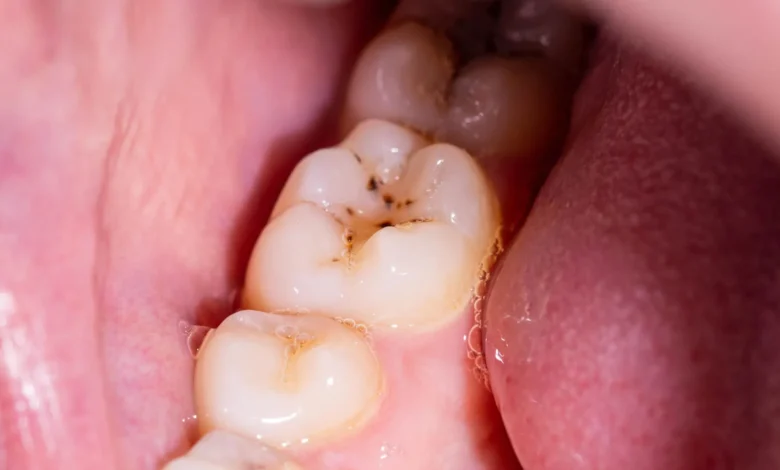
For decades, the field of restorative dentistry has been governed by a frustrating biological reality: once tooth enamel is lost, it is gone forever. Unlike bones, which possess the capacity to knit themselves back together after a fracture, or skin, which constantly replaces its cells, human enamel is devoid of living cells. Once the protective, mineralized outer layer of the tooth is worn away by acidic erosion or physical trauma, the body has no mechanism to replace it. This limitation has forced dentists to rely on artificial materials like resins, ceramics, and metal alloys to patch the damage. However, a groundbreaking discovery by researchers at the University of Nottingham’s School of Pharmacy and the Department of Chemical and Environmental Engineering has introduced a potential paradigm shift. By developing a specialized, protein-based gel capable of inducing the growth of new, structurally sound enamel, scientists are moving toward a future where teeth may be repaired rather than just patched.
The Science of Epitaxial Mineralization
The innovation, recently detailed in the journal Nature Communications, centers on a sophisticated understanding of how teeth form during human development. The research team sought to replicate the biological "blueprints" that guide the formation of enamel in early childhood. Unlike traditional fluoride treatments, which focus on remineralizing existing enamel by hardening the surface, this new gel acts as a scaffold.
The gel contains synthetic proteins that mimic the characteristics of amelogenins—the naturally occurring proteins responsible for organizing mineral ions during the initial growth of a tooth. When applied to a damaged tooth surface, the gel acts as a chemical magnet, drawing calcium and phosphate ions from the patient’s own saliva. Through a process known as epitaxial mineralization, these ions are organized into a precise crystalline structure.
In materials science, epitaxy refers to the growth of a crystal layer that maintains the same orientation as the underlying substrate. By guiding these ions to align perfectly with the original, healthy enamel, the gel ensures that the newly synthesized material is not merely a "plug" or a temporary coating, but an integrated extension of the tooth itself. This structural integrity is critical; the hardness of natural enamel is derived from the exact, dense packing of these mineral crystals. By recreating this architecture, the gel restores the physical resilience required to withstand the daily mechanical stresses of mastication.
Addressing the Crisis of Oral Health
The clinical implications of this research are significant, particularly given the global prevalence of dental decay and erosion. According to the World Health Organization (WHO), oral diseases affect nearly 3.5 billion people worldwide. Dental caries, or tooth decay, remains the most common health condition globally. In many cases, the progression of decay is exacerbated by the exposure of dentin, the softer, porous layer beneath the enamel.
When enamel erodes, it exposes the thousands of microscopic tubules within the dentin that lead directly to the tooth’s nerve endings. This exposure is the primary driver of dentin hypersensitivity, a painful condition triggered by temperature changes, sweetness, or acidity. Current treatments for sensitivity often involve temporary desensitizing agents that clog these tubules. The new University of Nottingham gel, however, offers a restorative solution by fostering the growth of a protective, enamel-like layer directly over the exposed dentin. By sealing these channels with genuine, mineralized tissue, the treatment could potentially offer a permanent resolution to chronic sensitivity rather than a temporary anesthetic effect.
Chronology of the Discovery and Path to Market
The development of this technology has been a multi-year project involving interdisciplinary collaboration between pharmaceutical scientists and chemical engineers. The research began with the fundamental question of why natural enamel fails to regenerate. Following years of laboratory experiments to isolate the necessary proteins and test their efficacy in mimicking natural crystal growth, the team transitioned to simulated "real-life" testing.
The team subjected the regenerated material to rigorous bench testing, replicating the abrasive and chemical environments of the human mouth. The material was exposed to continuous brushing cycles, acidic beverages, and chewing simulations. The data indicated that the synthetic enamel performed with mechanical properties comparable to natural teeth.
Following the publication of their findings, the researchers moved swiftly toward commercialization. They founded a spin-out company, Mintech-Bio, to manage the intellectual property and regulatory pathways. The current timeline suggests that an initial product—likely targeting clinical dental settings—could be available to practitioners as early as next year, pending final validation and regulatory approvals.
Perspectives from the Research Leadership
The lead author of the study, Dr. Abshar Hasan, emphasized the significance of the material’s structural performance. "Dental enamel has a unique structure, which gives enamel its remarkable properties that protect our teeth throughout life against physical, chemical, and thermal insults," Dr. Hasan stated. "When our material is applied to demineralized or eroded enamel, or exposed dentine, the material promotes the growth of crystals in an integrated and organized manner, recovering the architecture of our natural healthy enamel."
Professor Alvaro Mata, who oversees the project as the Chair in Biomedical Engineering & Biomaterials at the University of Nottingham, highlighted the strategic focus on usability. "We are very excited because the technology has been designed with the clinician and patient in mind," said Professor Mata. "It is safe, can be easily and rapidly applied, and it is scalable." By designing the gel to be applied in a manner similar to existing, widely used fluoride varnishes, the team has ensured that the barrier to entry for dentists will be minimal. If the application process mirrors established workflows, the technology could be integrated into routine check-ups without requiring extensive retraining for dental staff.
Implications for Future Dental Practice
The broader implications of this technology extend beyond simple cavity repair. If the material proves successful in human clinical trials, it could fundamentally change the trajectory of preventative dentistry. Currently, when a tooth reaches a certain level of decay, dentists must remove the diseased tissue and replace it with restorative materials like composite resins or silver amalgam. While effective, these materials do not bond with the tooth in a biological sense, often leading to secondary decay at the margins of the filling over time.
By shifting the focus from "restoration through replacement" to "restoration through regeneration," the industry may see a significant reduction in the need for invasive drilling. Furthermore, the link between oral health and systemic wellness—including well-documented correlations between periodontal health and cardiovascular disease, diabetes, and complications in pregnancy—underscores the importance of this advancement. Improving the quality of enamel and reducing the prevalence of chronic dentin exposure could lead to improved health outcomes that extend well beyond the dental chair.
Challenges and Future Considerations
Despite the optimism surrounding the publication, the transition from laboratory success to patient care is fraught with hurdles. The scientific community remains cautious, noting that while in vitro tests provide essential data on structural integrity, the complex environment of the human oral cavity—influenced by diet, oral microbiome diversity, and varying levels of salivary pH—can significantly affect long-term material stability.
Clinical trials will be the next critical milestone. These trials will need to demonstrate that the regenerated layer remains intact over years, rather than months, and that it maintains its protective function against a diverse range of patient habits. The researchers are fully aware of these requirements and are currently navigating the regulatory landscape to ensure that the material meets the safety and efficacy standards required for medical-grade dental devices.
A New Era for Oral Medicine
The ability to regrow enamel represents a "holy grail" in dental science. For over a century, the profession has accepted the loss of enamel as a permanent disability of the human body. If the work by the University of Nottingham team successfully moves into the commercial market, it will mark the first time that dentistry has been able to offer a biological reversal of enamel erosion.
As Mintech-Bio prepares for its product launch, the global dental community will be watching closely. Should the technology prove as effective in vivo as it has been in the laboratory, the impact on public health could be transformative. By moving from the management of decay to the biological repair of teeth, the field of dentistry is standing on the precipice of a new era—one where the phrase "tooth loss" may eventually be relegated to the history books, replaced by a future of regeneration and lasting dental health.