The Dawn of Precision Medicine: International Guidelines Establish Framework for Life-Saving Phage Therapy in the Fight Against Antibiotic Resistance

For decades, the global medical community has been locked in an escalating arms race against multidrug-resistant organisms. As conventional antibiotics lose their efficacy due to the evolutionary adaptation of bacteria, the prospect of returning to a pre-antibiotic era—where minor infections could once again become fatal—has transitioned from a distant fear to an urgent public health crisis. Now, an international consortium of experts has unveiled the first globally coordinated clinical guidelines for personalized phage therapy, a revolutionary treatment modality that leverages natural, bacteria-killing viruses to neutralize recalcitrant infections.
This landmark development, published in the journal Nature Medicine, represents a significant shift in how medicine approaches complex, treatment-resistant bacterial colonization. By establishing rigorous standards for the selection, production, and administration of bacteriophages, this framework offers a lifeline to patients who have exhausted all standard therapeutic options.
The Mechanism: Nature’s Precision Weaponry
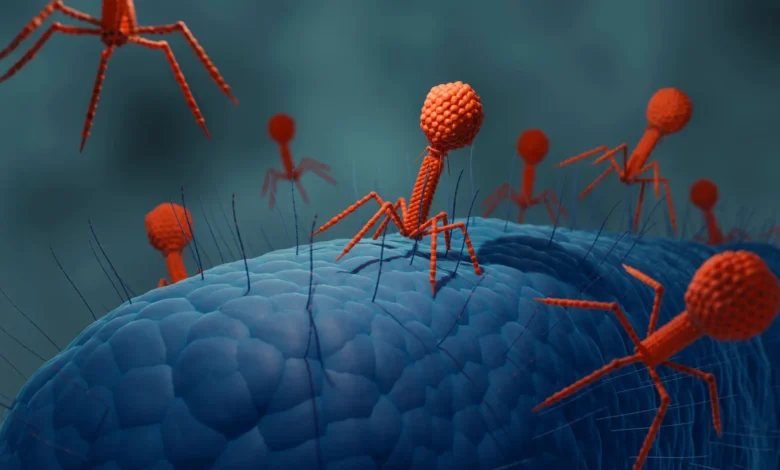
Bacteriophages, or phages, are viruses that have evolved over billions of years to target and eradicate specific bacterial species. Unlike broad-spectrum antibiotics, which often decimate beneficial gut flora alongside the target pathogen, phages operate with surgical precision. They identify and latch onto specific receptors on the surface of a bacterium, inject their genetic material, and hijack the cell’s machinery to replicate. This process concludes with the lysis—or bursting—of the bacterial cell, effectively destroying the pathogen while leaving the host’s healthy tissues and microbiome largely intact.
However, this precision is a double-edged sword. Because a specific phage may only recognize one particular strain of a bacterial species, the therapeutic success of the treatment is contingent upon a perfect "match" between the virus and the pathogen infecting the patient. This requirement for individualization has historically deterred widespread clinical adoption, as it necessitates rapid diagnostic capabilities and a highly specialized manufacturing pipeline.
Chronology and the Path to Standardization
The journey toward these international guidelines was marked by years of fragmented, localized efforts. In the past, phage therapy was often relegated to "compassionate use" cases, where desperate physicians would secure experimental clearance for individual patients without a standardized methodology.
The current effort, spearheaded by the German Society for Infectious Diseases (DGI) and the German Center for Infection Research (DZIF), sought to bridge this gap. The project spanned several years, involving an exhaustive consensus-building process. Key milestones included:
- 2023-2024: Intensive deliberation among 20 professional organizations and 18 international experts, including regulatory bodies such as the European Medicines Agency (EMA) and various national health authorities.
- January 2026: Formal validation of the guidelines under the Association of the Scientific Medical Societies in Germany (AWMF) framework.
- February 2026: Implementation of these guidelines at the Frankfurt University Medical Center, marking the first time a major clinical institution adopted the full suite of standardized procedures for routine patient care.
- 2026–2030: The established validity period for the current guidelines, with an annual review cycle mandated to incorporate new clinical data.
The resulting document contains over 60 actionable recommendations, covering everything from the sterile manufacturing of phages in a pharmacy setting to the legal documentation required for cross-border collaboration between laboratories.
Clinical Evidence and Empirical Observations
While controlled clinical trials—the gold standard of medicine—are still in the developmental phase, the body of observational data is rapidly expanding. A notable case series from Belgium involving 100 patients serves as a critical proof-of-concept. In that cohort, 77 percent of participants showed clinical improvement, and 61 percent achieved microbiological clearance of the targeted bacteria.
These figures are particularly striking given the profile of the patients involved, most of whom suffered from chronic, deep-seated infections that had failed to respond to months or years of aggressive antibiotic therapy. Such infections, often involving pathogens like Pseudomonas aeruginosa or Staphylococcus aureus, are frequently associated with biofilm formation—a protective layer that prevents conventional drugs from reaching the bacteria. Phages, which can penetrate these biofilms and multiply within them, offer a mechanistic advantage that traditional chemistry simply cannot match.
The Logistics of a "Phage Match"
The operational success of this therapy hinges on the infrastructure of clinical microbiology laboratories. Under the new guidelines, the "phage match" process is prioritized as a high-speed diagnostic workflow. When a patient is identified as a candidate, specialized laboratories must conduct susceptibility testing to determine which phages are active against the patient’s specific bacterial isolate.
Dr. Annika Claßen of the University Hospital Cologne, who led the development of these guidelines, emphasizes that the infrastructure is as important as the medicine itself. "The standardization of quality criteria for the production of phages for personalized use is an essential prerequisite for reliable treatments," Claßen stated. The guidelines mandate that these processes be documented in centralized registries, ensuring that every administration of a phage treatment contributes to a broader, global database that can be used to refine future therapies.
Institutional Adoption: The Frankfurt Model
The Frankfurt University Medical Center currently stands as the vanguard of this new approach. Since February 2026, the hospital has utilized the DGI-approved framework to treat ten patients. According to PD Dr. Silvia Würstle, the lead author of the guidelines, the framework provides a necessary layer of safety and accountability that was previously absent.
The delivery methods utilized in these cases underscore the versatility of the therapy. Depending on the site of the infection, doctors have administered phages intravenously for systemic infections, through inhalation for respiratory complications, or via sterile hydrogels for localized wounds. This adaptability is vital for treating the diverse array of infections—from cystic fibrosis-related lung colonization to prosthetic joint infections—that are currently being targeted.
Broader Implications for Global Health
The adoption of these guidelines is likely to have significant implications for the global pharmaceutical industry and regulatory landscape. By creating a standardized, repeatable pathway for personalized therapy, the guidelines lower the barrier to entry for hospitals wishing to establish their own phage programs.
However, experts remain cautious. The guidelines explicitly state that phage therapy is not a replacement for traditional antibiotics but rather an essential adjunct. The strategy is to reserve phage therapy for cases where antibiotic resistance is documented or where the patient is unable to tolerate standard medications. This "stewardship" approach is designed to prevent the emergence of "phage resistance," a theoretical phenomenon where bacteria might evolve to evade the viruses, just as they have evolved to evade antibiotics.
Furthermore, the integration of networks like PhageNET DZIF illustrates the future of medical collaboration. By connecting labs, pharmacists, and clinicians, the network ensures that a successful treatment in one part of the world can inform the protocols used in another.
Future Outlook and Scientific Challenges
Despite the optimism surrounding this initiative, the path forward is not without challenges. The primary obstacle remains the lack of large-scale, double-blind, randomized controlled trials. While the observational evidence is compelling, researchers must still determine optimal dosing, the potential for immune system interference, and the long-term safety profile of repeated phage administration.
The scientific community is currently turning its attention toward the "pharmacokinetics" of phages—understanding exactly how long they survive in the bloodstream and how they are cleared by the liver and spleen. These questions are being addressed in the ongoing work at various research centers globally, supported by the momentum created by the new guidelines.
Ultimately, the standardization of phage therapy marks the end of an era of trial-and-error in this field. By transforming a biological curiosity into a regulated, systematic medical practice, the international medical community has equipped itself with a powerful, precision-engineered tool to address the most persistent infections of the 21st century. As the world faces an era of increasing antibiotic failure, the ability to "match" a virus to a pathogen may well prove to be the most significant medical advancement in the history of infectious disease management.