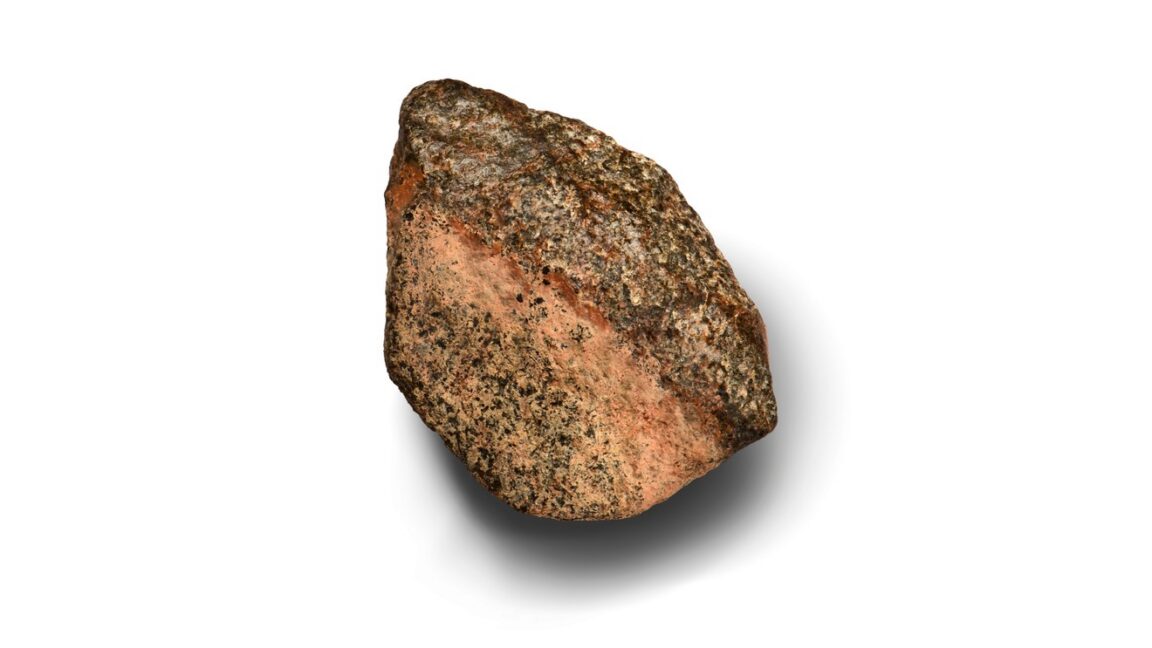
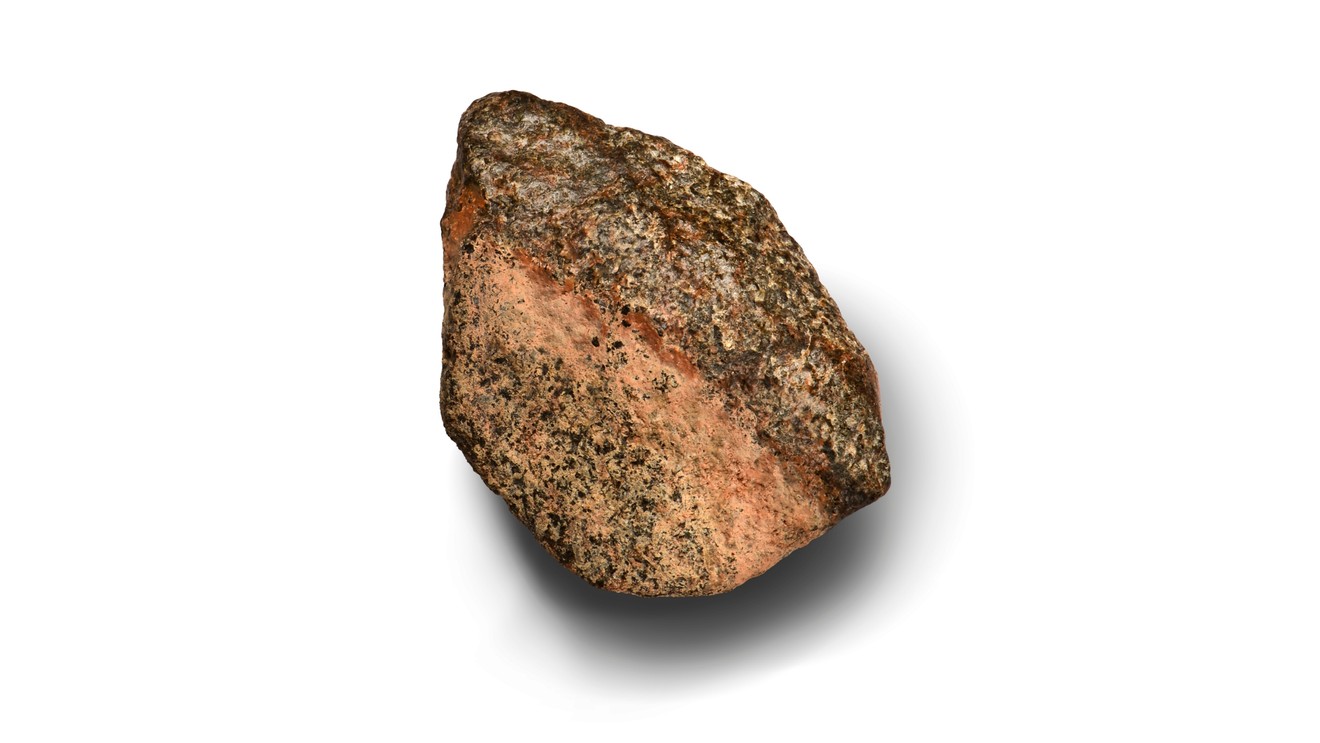
The discovery of a Martian meteorite in the Sahara Desert has provided planetary scientists with a rare, preserved window into the early history of the Red Planet. Known as Teghaza 001, this igneous rock, unearthed in Mali in 2022, dates back at least 4.1 billion years, offering a glimpse into a time when Mars was a geologically active world with a functional hydrosphere. This find is significant because the vast majority of Martian meteorites recovered on Earth—including the well-known shergottites, nakhlites, and chassignites—are less than 2.4 billion years old. Until now, only two other specimens, the Antarctic find Allan Hills 84001 and the composite rock known as Black Beauty, have offered such a deep, ancient perspective on the planet’s crust.
The Mechanics of Martian Ejection
To understand why ancient Martian rocks are so scarce, one must consider the extreme physical conditions required to move material from the Martian surface to Earth. A meteorite is not merely a piece of rock; it is a survivor of a violent cataclysm. The process begins with a massive asteroid or comet impact on Mars, which creates an explosion powerful enough to launch debris at speeds exceeding the planet’s escape velocity.
NASA planetary scientist Yang Liu, who led the team analyzing Teghaza 001, suggests that the Martian surface acts as a natural filter. If an impact occurs in loose, unconsolidated sediment or "powder," the material lacks the structural integrity to survive the high-pressure shock of the launch and the subsequent transit through the vacuum of space. Consequently, the Martian meteorites currently in human possession are biased toward hard, igneous rocks. While "Black Beauty" (NWA 7034) is a notable exception due to its composition as a breccia—a collection of varied rock fragments cemented together—Teghaza 001 stands out as a singular, intact piece of igneous crust, providing a more pristine record of its original formation environment.
Chronology of Discovery and Classification
The journey of Teghaza 001 from the Sahara to the laboratory was facilitated by the global desert meteorite trade. The specimen, consisting of eight individual stones with a combined mass of just under 800 grams, was identified by private collectors who recognized the stone’s distinct appearance against the sandy backdrop of the desert.
The process of scientific validation began when a sample was submitted to the University of New Mexico. Planetary scientists Carl Agee and Karen Ziegler conducted oxygen isotope analysis, a gold-standard diagnostic tool in meteoritics. Because every planetary body in the Solar System possesses a unique, characteristic oxygen isotope signature, these measurements confirmed the sample’s Martian origin.
Initially, the rock was classified as a shergottite, but subtle anomalies prompted a deeper investigation. Researchers noted peculiar internal mineral alterations—where the interior of certain grains showed signs of weathering while the exterior remained pristine—which is the inverse of typical terrestrial weathering. Furthermore, the presence of manganese-rich material, initially dismissed as terrestrial contamination, eventually led to a comparative analysis with the Black Beauty meteorite. This realization shifted the focus of the study toward a more nuanced, deeper understanding of the rock’s mineralogy.
Mineralogical Insights: A Slow-Cooled Origin
Teghaza 001 is primarily composed of feldspar, a silicate mineral ubiquitous in the crusts of terrestrial planets, interspersed with darker pyroxene crystals. The grain size of these minerals, reaching up to a millimeter in diameter, serves as a geological clock for the cooling rate of the magma.
Laboratory simulations and comparative studies with lunar highland rocks suggest that the magma from which Teghaza 001 solidified did not erupt onto the surface as lava. Instead, it cooled slowly within the Martian crust, losing heat at a rate of approximately 0.01° Celsius per year. This deep-crustal crystallization indicates that 4.1 billion years ago, the Martian subsurface was a thermally active environment, shielded from the immediate cooling effects of the surface atmosphere.
Hydrothermal Activity and the Early Hydrosphere
The dating of Teghaza 001 was performed using multi-faceted geochronological techniques, including the analysis of zircon grains, phosphate minerals, and rubidium-strontium dating. All methods yielded a remarkably consistent age of approximately 4.11 billion years.
The stability of zircon grains under thermal stress is a crucial detail; the impact that launched the rock into space was not sufficient to reset these internal clocks. Instead, the team discovered evidence of a secondary event: the percolation of hot water through the rock. The presence of sodium-rich rims on feldspar grains and sodium trapped within the zircons indicates that the rock was subjected to hydrothermal fluids shortly after its formation.
Furthermore, the sample is enriched in oxygen-18, a heavy oxygen isotope. Because low-temperature reactions between surface water and crustal rock produce minerals rich in this isotope, the data suggests that early Mars possessed a robust, active hydrosphere. The magma that formed Teghaza 001 likely interacted with these crustal fluids as it cooled, implying that the planet was far more dynamic than previously assumed. This finding supports the hypothesis that the early Martian crust provided potentially habitable, water-rich niches.
Mantle Reservoirs and Early Evolution
Beyond its surface implications, Teghaza 001 offers a window into the Martian mantle. Trace element ratios, such as the zirconium-to-titanium ratio, do not align with any previously studied Martian meteorites. Based on melting models, the magma source for this rock originated at depths exceeding 160 kilometers, where the mineral garnet remains stable.
This discovery challenges current models of Martian mantle evolution. It was previously thought that the Martian mantle separated into three to five distinct reservoirs as the early magma ocean solidified roughly 4.5 billion years ago. Teghaza 001, however, does not fit into these existing reservoir categories, suggesting that the interior of Mars was undergoing complex, localized chemical differentiation in the first few hundred million years of its history.
Implications for Future Exploration
The study of Teghaza 001, published in the journal Science, highlights a significant limitation in current planetary science: the lack of geological context for our existing samples. While orbital mapping can correlate the rock’s chemical signature to regions in the southern highlands—specifically the area northwest of the Hellas impact basin—the resolution is limited to roughly 100-meter patches.

The scientific community views this finding as a catalyst for future missions. The samples currently being collected by the Perseverance rover in the Jezero Crater are intended to address this exact knowledge gap. By collecting rocks in their original geological setting, scientists hope to move beyond the "blind" analysis of meteorites.
If samples from terrains as ancient as the source of Teghaza 001 can be returned to Earth, the potential for discovery is immense. Such evidence would likely revolutionize our understanding of the early Solar System, providing a definitive timeline for the presence of water, the stability of the crust, and the potential for prebiotic chemistry on Mars. As researchers continue to analyze the 800 grams of Teghaza 001, it remains a solitary but vital ambassador from a time when the Red Planet was, perhaps, a much closer cousin to the blue one.
Related posts: