The Night the Heavens Changed: How Tycho’s Supernova Shattered the Medieval View of the Cosmos

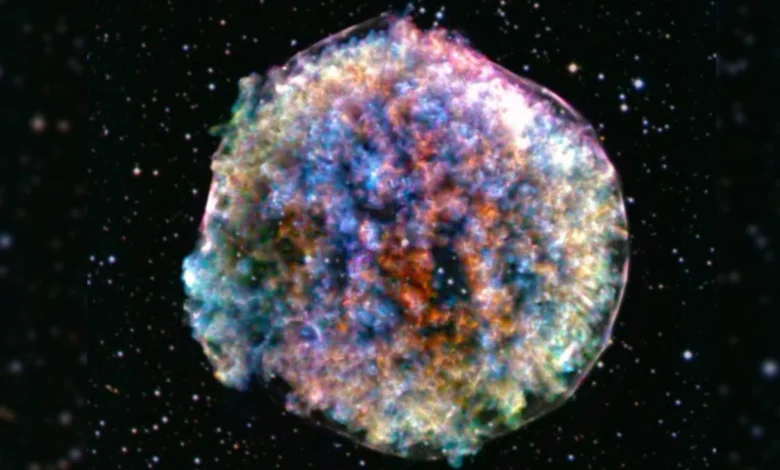
On November 6, 1572, a German astronomer named Wolfgang Schuler looked toward the constellation Cassiopeia and witnessed a celestial anomaly that would fundamentally alter humanity’s understanding of the universe. A brilliant, previously unseen "star" had appeared in the night sky, radiating with an intensity that rivaled the planet Venus. For observers of the 16th century, this was not merely an astronomical curiosity; it was a profound ontological crisis. The appearance of this guest star, later designated SN 1572, challenged the foundational Aristotelian dogma that the heavens were immutable, eternal, and unchanging.
While Schuler was among the first to document the event, it is the Danish nobleman and astronomer Tycho Brahe who is most indelibly linked to its discovery. Brahe’s systematic, rigorous observation of the phenomenon allowed him to prove that the object was located far beyond the orbit of the Moon—placing it deep within the realm of the "fixed" stars. This discovery served as a critical precursor to the Scientific Revolution, providing empirical evidence that the universe was dynamic and subject to transformation.
A Chronology of the Discovery and Observation
The appearance of SN 1572 was not a subtle event. Historical records indicate that the star reached its peak luminosity in late 1572, becoming so bright that it was clearly visible to the naked eye, even during the daylight hours. For roughly two weeks, the star remained a fixture of the daytime sky, a terrifying and awe-inspiring sight for a populace accustomed to a static firmament.
Following its initial burst, the star began a long, slow decline. It remained visible to the naked eye for approximately 16 months, finally fading from view in March 1574. During this period, astronomers across Europe scrambled to document its position and fluctuations. Brahe, operating from his observatory in Denmark, utilized his unparalleled instrumentation to measure the star’s parallax. By demonstrating that the object showed no detectable shift against the background stars, he mathematically confirmed that it could not be a meteorological phenomenon or a comet within the Earth’s atmosphere.
In 1573, Brahe published his seminal work, De Stella Nova (On the New Star). The text was a methodical catalog of his observations and a direct challenge to the prevailing cosmological models of the time. By the time the star vanished, the consensus among the intellectual elite had begun to shift; the "perfect" and "unchanging" heavens were revealed to be as susceptible to change as the Earth itself.
The Science of a Type Ia Supernova
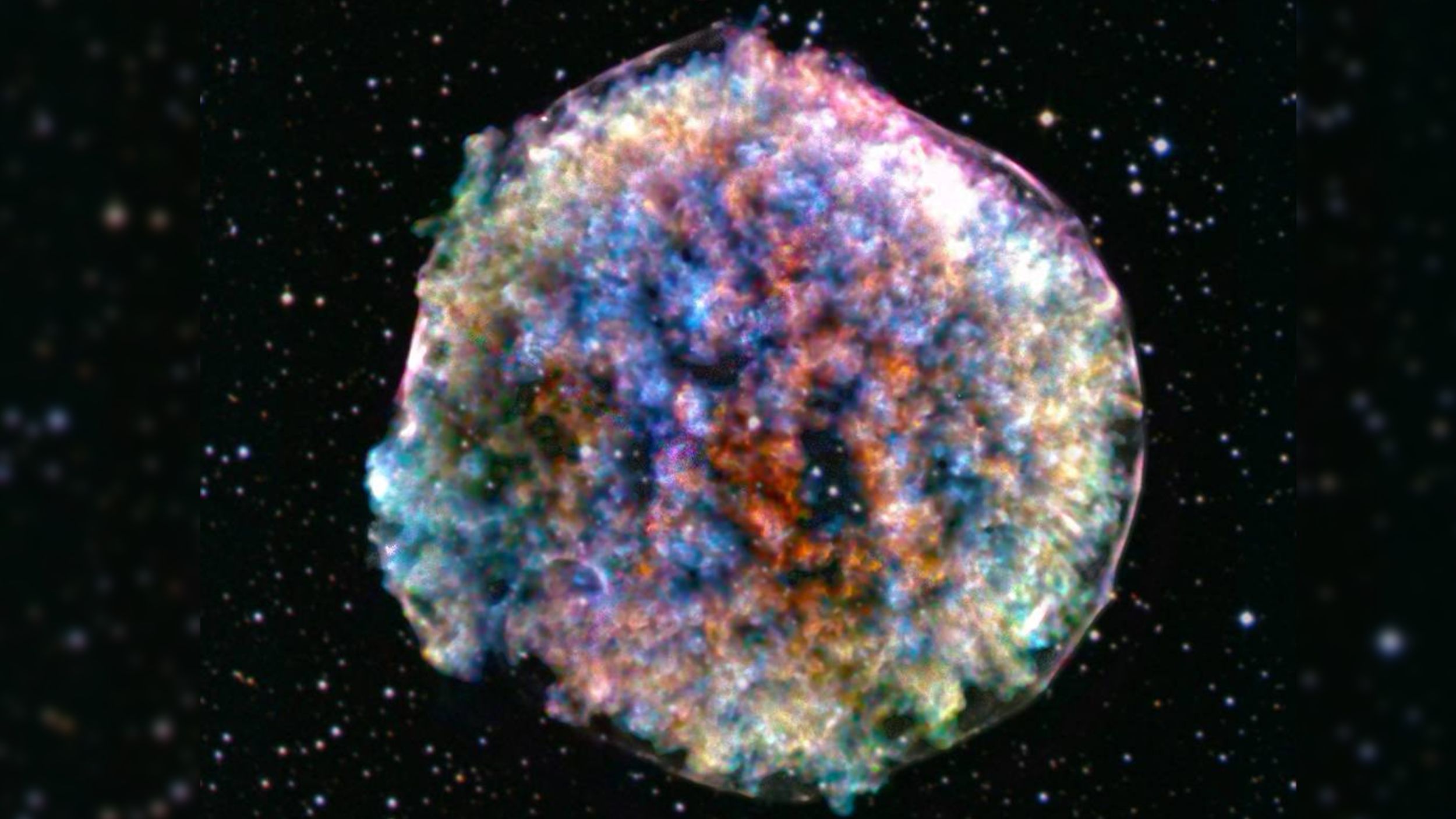
Modern astrophysics has retroactively classified the Tycho supernova as a Type Ia event. This specific category of stellar explosion occurs in binary systems—a pair of stars orbiting a common center of mass. In this scenario, one of the stars is a white dwarf, the dense, collapsed remnant of a sun-like star. The white dwarf siphons material from its companion, gradually accumulating mass until it reaches a critical limit, known as the Chandrasekhar limit. Once this threshold is surpassed, the white dwarf undergoes a runaway thermonuclear explosion, obliterating itself in a violent release of energy.
The distance to the remnant of this explosion is estimated to be approximately 13,000 light-years from Earth. Because of this vast distance, the light from the cataclysmic event took 13,000 years to reach our solar system. When Schuler and Brahe observed the light in 1572, they were witnessing a relic of a past that occurred long before the rise of modern civilization.
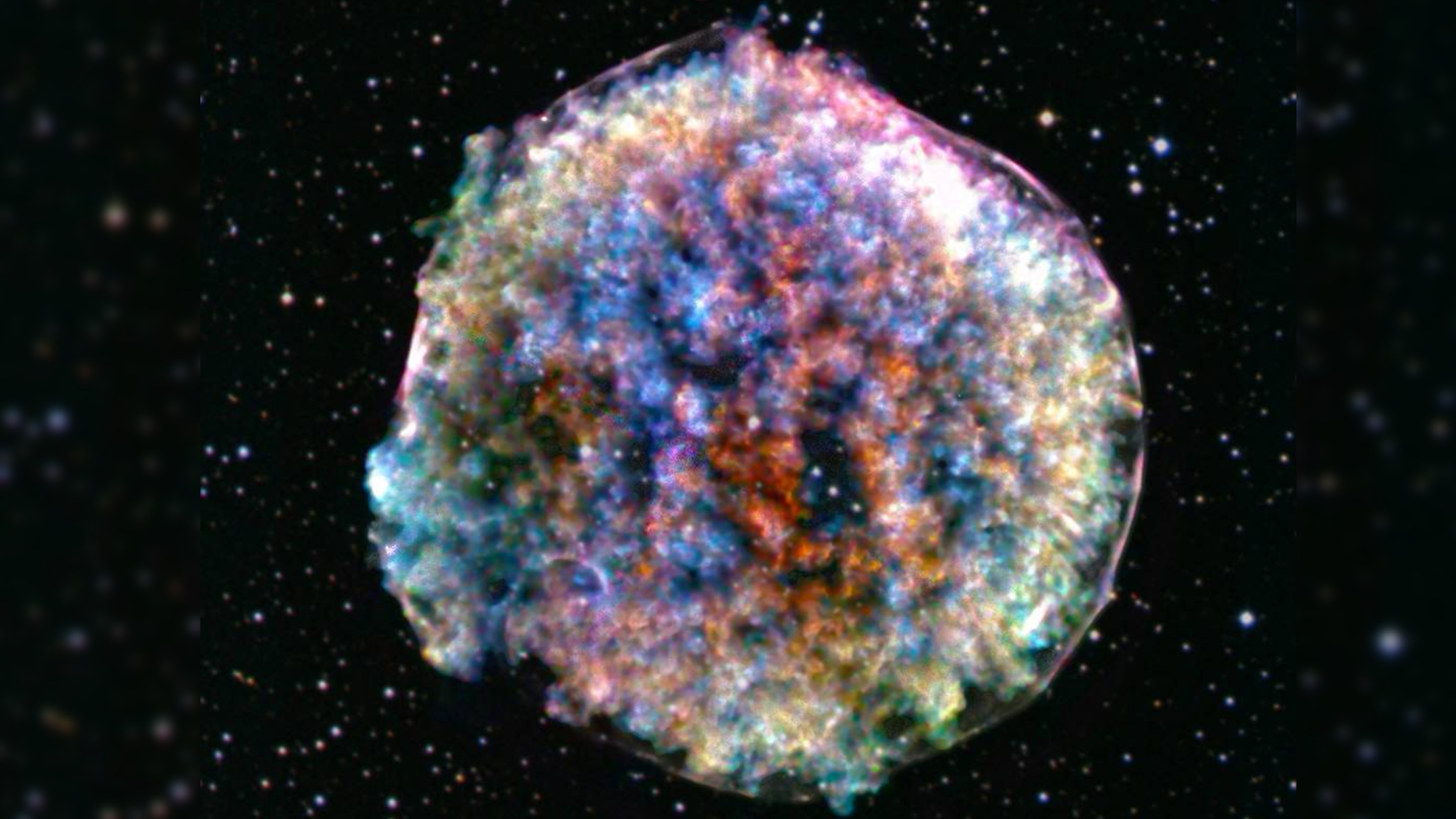
The remnant of the explosion, now studied extensively by the Chandra X-ray Observatory and other space-based assets, continues to expand into the surrounding interstellar medium. The shock wave from the blast moves at hypersonic speeds, heating interstellar gas to millions of degrees and emitting intense X-ray radiation. Analyzing these remnants has allowed scientists to reconstruct the chemical composition of the progenitor star, providing a window into the life cycles of stars and the enrichment of the galaxy with heavy elements.
The Philosophical and Scientific Implications
The historical significance of SN 1572 cannot be overstated. During the 16th century, the dominant worldview was heavily influenced by the philosophy of Aristotle and the geocentric model of Ptolemy. These frameworks posited that the universe was divided into two distinct regions: the "sublunary" sphere (everything below the Moon), which was characterized by change, decay, and corruption; and the "superlunary" or celestial sphere (everything above the Moon), which was considered perfect, divine, and immutable.
The appearance of a "new" star provided empirical proof that the celestial sphere was not immune to change. It acted as a catalyst for the transition from medieval natural philosophy to modern science. When the heavens themselves showed they could host birth and death, the entire hierarchy of the universe was brought into question. This observation encouraged future thinkers, including Johannes Kepler and Galileo Galilei, to pursue more rigorous, evidence-based inquiry into the nature of the cosmos, eventually leading to the abandonment of geocentrism in favor of heliocentrism.
Looking Toward the Future: The Blaze Star
The legacy of Tycho’s Supernova continues to inform modern astronomical research. Scientists today are applying the lessons learned from the 1572 event to predict and observe similar phenomena. A current point of interest is the recurring nova T Coronae Borealis, commonly referred to as the "Blaze Star."
Unlike a supernova, which marks the permanent destruction of a star, a nova is a surface-level eruption on a white dwarf that can occur periodically. T Coronae Borealis is a binary system that undergoes these outbursts roughly every 80 years. As it nears the expected time for its next eruption, astronomers are monitoring the system with high-precision instruments. Such events provide a rare opportunity to study the physics of stellar accretion and explosion in real-time, echoing the sense of wonder and intellectual urgency that defined the work of astronomers in the 16th century.
Analysis of Modern Data Sets
The ability to use 16th-century records to inform 21st-century science is a testament to the accuracy of early observers like Brahe. In a 2004 study led by astronomer Alex Filippenko, researchers analyzed the historical accounts of the star’s light curve—the way its brightness changed over time. By comparing these records to modern models of Type Ia supernova light curves, the team was able to confirm the nature of the explosion with a high degree of confidence.
This integration of historical data with contemporary astrophysics highlights the continuity of the scientific method. The observations recorded by human eyes in 1572 remain a vital dataset, demonstrating that scientific inquiry is a cumulative process. Whether through the naked eye of a Renaissance astronomer or the sophisticated sensors of a space telescope, the human drive to categorize and understand the transient nature of the universe remains a defining characteristic of our species.
As we continue to scan the night sky for the next "new star," we do so with the awareness that the cosmos is a dynamic, evolving environment. The story of SN 1572 serves as a reminder that every flicker in the darkness carries the potential to dismantle old paradigms and ignite new eras of discovery. The "changed sky" that greeted observers in 1572 was not a sign of chaos, but a vital piece of the puzzle in understanding our place in a universe that is constantly in flux.