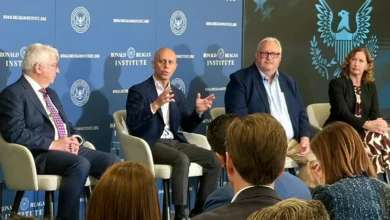
In a modern classroom at Sam Houston State University, Hiranya K. Nath, a Distinguished Professor of Economics, recently implemented a pedagogical experiment that starkly illuminated a systemic deficiency in contemporary education. Rather than assigning a traditional essay or a test on Federal Reserve monetary policy, Nath tasked his students with acting as financial journalists. They were required to draft three high-level, substantive questions for a senior official from the Federal Reserve. The catch: the grade would be determined solely by the quality and depth of the questions, not by any provided answers.
The result was an immediate, visible shift in student behavior. Pupils who had spent weeks confidently reciting textbook definitions of macroeconomic concepts suddenly hesitated. The exercise effectively paralyzed those accustomed to the "banking model" of education—where the teacher deposits knowledge and the student withdraws it for exams—and forced them into a state of intellectual discomfort. This pedagogical shift revealed an unsettling reality: while the American education system is world-class at training students to provide correct answers, it is failing to equip them with the foundational skill of formulating meaningful inquiries.
The Historical Context of the Answer-First Model
For nearly a century, the U.S. educational model has prioritized the transmission of facts. This framework was largely forged in the industrial era, a time when information was finite and access to knowledge was guarded by institutions, encyclopedias, and physical libraries. In this environment, the ability to memorize, synthesize, and reproduce information was a significant competitive advantage. Standardized testing regimes—which gained momentum following the No Child Left Behind Act of 2001 and subsequent reforms—reinforced this by rewarding precision and binary correctness.
Success in this system is quantifiable. A student who can identify the interest rate adjustments of the Fed to combat inflation is viewed as having "mastered" the material. However, this mastery is increasingly obsolete in an age of instantaneous, algorithmically generated information. As of 2026, the proliferation of sophisticated artificial intelligence tools has rendered the act of retrieving basic facts a triviality. When a student can ask a large language model to explain quantitative easing in seconds, the value of the student’s own ability to explain that same concept diminishes significantly.
Data on Information Literacy and Cognitive Demand
Recent studies on classroom engagement suggest that the current focus on "answer-oriented" learning is contributing to a crisis in critical thinking. According to data from the National Assessment of Educational Progress (NAEP), while basic proficiency in core subjects has fluctuated, the ability of students to engage in "higher-order" cognitive tasks—such as evaluating source credibility or formulating original research questions—has remained stagnant or declined.
Further, longitudinal research from organizations like the Partnership for 21st Century Skills indicates that the "knowledge gap" is no longer the primary hurdle for graduates entering the workforce. Instead, the "inquiry gap" has emerged as the defining barrier. Employers in sectors ranging from finance to technology report that recent graduates are adept at following instructions but struggle when presented with ill-defined, "messy" problems that require iterative questioning to resolve.

The Rise of AI and the New Cognitive Hierarchy
The integration of artificial intelligence into the academic workflow has accelerated the urgency of this curriculum shift. AI excels at executing tasks where the parameters are clearly defined. It can summarize, classify, and calculate with superhuman speed. However, AI cannot replace the human capacity for discernment—the ability to identify which questions are worth asking in a given context.
The implications for the labor market are profound. As routine cognitive tasks are increasingly automated, the value of labor is shifting toward "human-centric" skills: ethical judgment, contextual awareness, and the framing of complex, ambiguous problems. In the current economic climate, the person who knows the answer is becoming less valuable than the person who knows how to interrogate the data to determine if the answer is accurate, biased, or relevant.
Chronology of Educational Policy Shifts
- 1980s–1990s: The rise of high-stakes testing, focusing on standardized outcomes to hold school districts accountable.
- 2001: Implementation of the No Child Left Behind Act, cementing the focus on rote metrics and factual recall.
- 2015–2020: Growing recognition by education researchers of the "21st-century skills" gap, leading to calls for project-based learning.
- 2023–2025: The rapid public adoption of Generative AI, creating an "inflection point" where the traditional test-and-answer model faces existential pressure.
- 2026: Educators like Nath are increasingly moving toward assessment models that prioritize inquiry-based learning, signaling a potential shift in university pedagogy.
Institutional Responses and the Path Forward
Several leading universities have begun to pilot curricula that prioritize "question-storming" over traditional lecture-based modules. These programs emphasize that the quality of an AI output is strictly limited by the quality of the prompt—a digital manifestation of the Socratic principle that a well-framed question contains the seeds of the solution.
Critics of this transition argue that foundational knowledge remains a prerequisite for critical thinking; one cannot ask good questions about macroeconomics without first understanding the basic vocabulary of the field. However, proponents argue that the two are not mutually exclusive. By integrating inquiry into the earliest stages of learning, students can treat knowledge as a dynamic tool rather than a static repository.
Broader Implications for Society
The implications of this shift extend far beyond the classroom. A citizenry trained only to provide answers is susceptible to misinformation and binary thinking. In an era of political polarization and complex global challenges—such as climate change and systemic economic instability—the ability to ask "why," "how," and "what if" is essential for the preservation of a functional democracy.
Innovation, by definition, is the product of questioning the status quo. If the education system continues to effectively discourage questioning in favor of standardizing responses, the U.S. risks losing its competitive edge in global innovation. The transition from an answer-based culture to a question-based one requires a fundamental restructuring of how we measure intelligence and success.
Ultimately, the future of work and civic life will not be defined by those who can provide the fastest, most accurate responses to settled questions. It will be defined by those who possess the intellectual courage to look at an increasingly complex, uncertain world and ask the questions that have yet to be answered. The education sector stands at a crossroads: it can continue to refine an industrial-era model that prepares students for a world that no longer exists, or it can pivot toward a model that teaches the most vital human skill of all—the art of inquiry.