The Silent Bell: How Declining Enrollment and Budgetary Crises are Forcing Widespread School Closures Across America

As the first bell of the 2026 academic year rang across the Vallejo City Unified School District in California, the sound was muted by the weight of a deepening institutional crisis. For fifth-grader Penny Núñez-Brandão, the morning was not defined by the excitement of new school supplies or the reunion of classmates, but by a hollow sense of displacement. Scanning the playground at Glen Cove Elementary, she realized her social circle had been fractured by the district’s aggressive consolidation strategy. Her experience is a microcosm of a national phenomenon: as U.S. birth rates plummet and federal pandemic-era funding evaporates, school districts are increasingly resorting to the shuttering of campuses to stave off insolvency.
A National Crisis of Shrinking Classrooms
The closure of 1,156 schools during the 2025-2026 academic year marks a significant inflection point in American public education, representing the highest volume of campus closures since the onset of the COVID-19 pandemic. According to an extensive analysis of federal data conducted by Stanford University’s Big Local News, this trend is accelerating. While school closures have historically been viewed as a last-resort measure, they are now becoming a normalized feature of district management.

The primary driver of this trend is a persistent, long-term decline in public school enrollment. Nationwide, public school enrollment dropped by approximately 1.4 million students—roughly 3 percent—between the fall of 2019 and 2024. This contraction is fueled by a confluence of factors: record-low birth rates, a shift toward private and charter school options, and the rise of homeschooling. Crucially, research indicates that the rate of school closures is currently lagging behind the rate of enrollment decline, suggesting that the "closure cliff" is only in its early stages.
The Vallejo Case Study: A Chronology of Retrenchment
Vallejo, a working-class district near San Francisco, serves as a stark example of how historical economic instability can collide with current demographic shifts. Once a hub of naval industry, the city has struggled to regain its footing since the closure of its local naval base in the 1990s. The school district’s enrollment has been halved over the last two decades, sliding from nearly 18,000 students in 2006 to approximately 9,300 today.
The district’s financial trajectory has been fraught with volatility. In the early 2000s, mismanagement brought the district to the brink of bankruptcy, necessitating a $60 million state-funded bailout. The district remained under state-mandated financial receivership until the summer of 2024, just as Superintendent Rubén Aurelio took the helm.

Facing a staggering $36 million deficit, the administration began a series of drastic interventions:
- Early 2025: The district shuttered two K-8 schools and announced plans for further consolidation.
- Late 2025: The school board approved the closure of three additional elementary schools, bringing the total number of campus closures to five—a full quarter of the district’s elementary school infrastructure—in just over a year.
- Ongoing: The district has initiated deep staff layoffs, impacting up to one-third of all positions, while simultaneously attempting to relocate programs to maintain some semblance of operational continuity.
The Myth of Fiscal Solvency
While district leaders often frame school closures as a necessary "right-sizing" of infrastructure, research from the Stanford University Graduate School of Education suggests these moves rarely produce the intended financial windfall. The logistical costs associated with consolidation—including the provision of busing for displaced students, severance packages for terminated personnel, and the ongoing security costs for shuttered, empty buildings—often cannibalize the projected savings.
"Closing schools is often viewed as a panacea, but it frequently triggers a downward spiral," noted one education policy analyst. In Vallejo, the impact is visible: families are opting to leave the district entirely, either by moving to neighboring jurisdictions or shifting to private and charter alternatives. When families flee, the district loses the per-pupil funding attached to each student, creating a vicious cycle of further revenue loss and further closures.

The Human Cost: Displacement and Instability
For parents like Kimberly Núñez-Brandão, the instability is exhausting. Her daughter’s experience—being moved from one school to another, only to find the new environment overwhelmed by 32 students and an inexperienced staff—is a common complaint. The psychological and academic toll on students is well-documented; researchers at the University of Chicago Consortium on School Research have found that displaced students often suffer long-term declines in reading and math proficiency, particularly when the transition forces them into lower-performing schools.
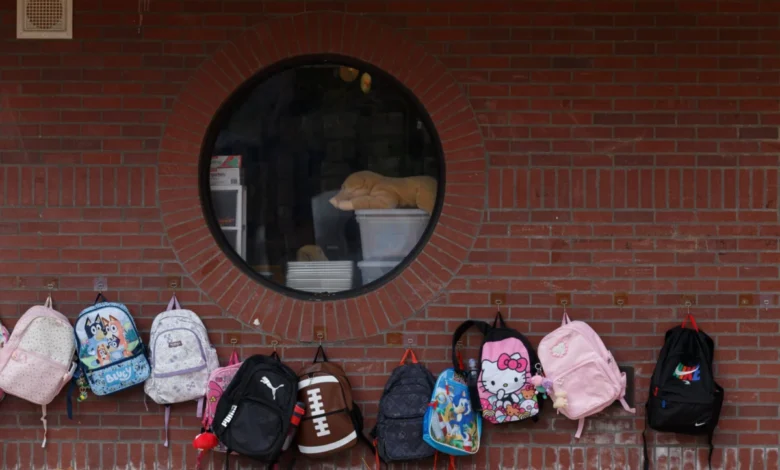
The disruption is not merely academic. The loss of community hubs often severs the vital connection between schools and the neighborhoods they serve. In the hallways of the now-vacant Pennycook Elementary, the remnants of the recent past—children’s coats left on hooks, personal items on desks—serve as a poignant reminder of the abruptness of the closures.
Official Responses and Strategic Pivot
Superintendent Rubén Aurelio maintains that the district has little choice. "We’re not just closing schools to close schools," Aurelio stated. "We’re right-sizing a district that was built for significantly more kids. If we’re going to improve outcomes for the children we still have, we need to concentrate our limited resources."

To combat the exodus of students, the district is attempting to innovate. This includes the planned introduction of a Tagalog-language immersion program, intended to appeal to the significant Filipino population in the Bay Area, and the renovation of existing facilities to improve the learning environment. Furthermore, the district has begun tightening transfer policies, making it more difficult for families to move their children into neighboring school systems.
However, industry experts are skeptical that these measures will be sufficient. Lydia Rainey, a research principal at the Center on Reinventing Public Education, argues that the expectation for enrollment to "bounce back" is dangerous wishful thinking. With state budgets constrained and federal support for education in a state of flux, the fiscal reality is unlikely to improve in the near term.
Implications for the Future
The Vallejo experience provides a sobering preview of what many large urban and suburban districts across the U.S. will face by 2030. Reports from organizations like Bellwether and WestEd estimate that declining enrollment could result in an $11.5 billion annual loss in state revenue for public schools by the end of the decade.

The strategy of "right-sizing" poses a systemic risk. As districts consolidate, they risk becoming "hollowed out"—offering fewer programs, larger class sizes, and less stability, which in turn drives away the very families the district needs to survive. The resignation of Penny Núñez-Brandão’s teacher in October—forcing the school to rely on a long-term substitute—highlights the fragility of these remaining institutions.
For the students, the lesson is one of impermanence. As families weigh their options, the future of the public school system in districts like Vallejo remains precarious, caught between the mathematical necessity of budget cuts and the foundational mission of providing a stable, high-quality education. The era of the neighborhood school, once a bedrock of the American community, is increasingly being challenged by the cold, hard math of declining demographics.
Related posts: