Bridging the Divide: How the American Service Fellowship is Reshaping Public Leadership at Harvard Kennedy School

The landscape of American public service is undergoing a significant transformation as the Harvard Kennedy School (HKS) introduces a pioneering initiative designed to integrate the unique, battle-tested perspectives of veterans and mid-career professionals into the heart of academic policy-making. Launched in July 2025, the American Service Fellowship program represents a deliberate, structural effort to diversify the voices within the halls of academia, offering $100,000 in financial support to 50 select fellows pursuing a one-year, on-campus mid-career Master in Public Administration (MC/MPA). By bridging the gap between military service, grassroots governance, and elite policy education, the program seeks to foster a new generation of leaders capable of navigating an increasingly polarized national environment.
The Genesis of a New Service Pipeline
The American Service Fellowship was conceived as a response to the growing recognition that the most effective public policy is forged at the intersection of disparate lived experiences. For decades, the Kennedy School—like many elite institutions—has faced criticism for a lack of socioeconomic and professional diversity, often skewing toward high-ranking officials and traditional policy tracks.
The current cohort, which began their studies in the fall of 2026, was curated to disrupt this pattern. Half of the 50 fellowships are explicitly designated for military veterans, reservists, and active-duty personnel, with a specific focus on mid-level service members who often possess the most direct, granular experience with policy implementation. The remaining spots are distributed among a wide array of public servants, including tribal leaders, municipal government officials, law enforcement officers, and representatives from volunteer organizations such as the Peace Corps and AmeriCorps.

Voices from the Field: A Study in Perspective
The program’s success is anchored by the diverse trajectories of its inaugural fellows, individuals whose professional backgrounds suggest a radical departure from the traditional academic profile.
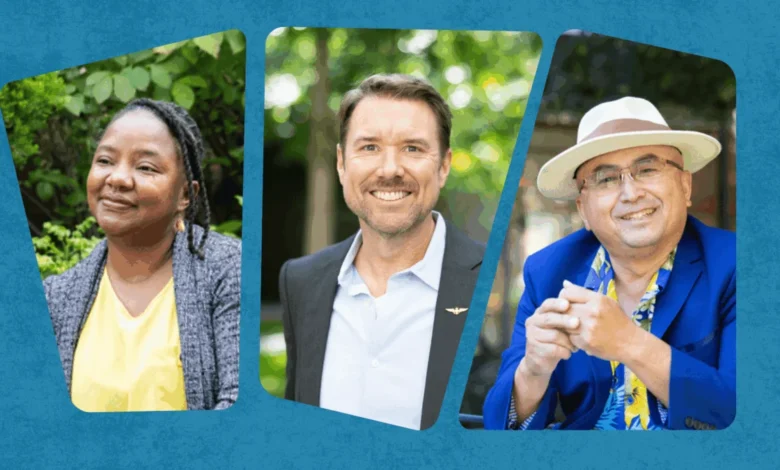
Shannon Jackson, a Navy veteran who dedicated 28 years to global health system strengthening, views her time at Harvard as an essential evolution of her career. "We need veterans in programs like this because we bring something that other people may not," Jackson notes. Her transition from military logistics and health systems to local economic development in San Antonio, Texas, highlights the program’s intent: to translate operational expertise into sustainable domestic policy.
This sentiment is echoed by fellow cohort member Joe Newhouse, a former jet pilot and a Republican state senator from Oklahoma. Newhouse’s presence at HKS challenges the common perception of the university as an ideological monolith. "I come from an area and background that is right of center, so I wasn’t sure how I’d be treated or how my ideas would be respected," Newhouse admits. However, he describes his experience as "the complete opposite" of his expectations, noting that the exposure to faculty with contrasting political ideologies has enriched his understanding of public service.
For Chuepheng "Ping" Lo, the fellowship represents a culmination of a lifelong commitment to the United States. A Laotian immigrant who served two decades in the Army and spent six years at the Defense Counterintelligence and Security Agency, Lo represents the demographic depth the program aims to capture. Initially hesitant about returning to school at 57, Lo views the fellowship as a "golden ticket," providing him with the resources to pursue his interest in civil service reform, a topic he believes requires the unique, cross-functional perspective that only a diverse cohort can provide.

Strategic Objectives and Institutional Impact
Dean Jeremy Weinstein of the Harvard Kennedy School has framed the fellowship as a core component of the university’s mission to cultivate a "truly representative" set of ideas. The program is not merely a scholarship; it is a strategic attempt to ensure that the future of U.S. governance is shaped by individuals who understand the nuances of the American experience across all 50 states.
"Many veterans are looking for what the next iteration of their public service looks like," says Weinstein. By providing a platform for these professionals to engage in rigorous academic inquiry, the program aims to act as a bridge between the ethos of military sacrifice and the complexities of civilian policy-making. The goal is to build a pipeline of graduates who are not only prepared for senior leadership but are also deeply embedded in the realities of state and local government.
Data from the inaugural cohort supports the ambition of this initiative. The participants hail from every region of the country, ensuring that urban, rural, and suburban perspectives are represented in the classroom. This geographic diversity is critical for an institution aiming to solve problems that vary drastically from the federal level down to the municipal level.
Implications for Public Policy and Civil Service
The implications of the American Service Fellowship extend far beyond the HKS campus. As the United States faces a crisis of trust in public institutions, the infusion of practitioners—those who have managed crises, led personnel in austere environments, and navigated bureaucratic hurdles—into the academic dialogue is expected to produce more pragmatic policy outcomes.
Historical data on military-to-civilian transitions shows that veterans are uniquely positioned to navigate complex, multi-stakeholder environments. However, they have historically been underrepresented in the high-level policy circles that dictate national strategy. By formalizing this pipeline, HKS is creating a mechanism to ensure that the lessons learned on the front lines of defense and local government are codified into the next generation of American governance.
Furthermore, the program’s emphasis on "mid-career" professionals addresses a significant gap in the public sector. Many senior-level policy programs cater to those just entering the workforce or those already at the top of their field. By targeting the mid-career demographic, the program captures individuals who are at the peak of their practical knowledge but are still in a position to shape policy for decades to come.
A Timeline of Integration
The launch of the program in July 2025 followed an intensive year-long planning phase that involved consultation with military leadership, veteran service organizations, and academic experts in public administration. The first semester, which commenced in late 2026, has already seen the formation of tight-knit bonds between fellows, many of whom share the commonality of having served, regardless of the sector or the specific nature of their mission.
The school plans to evaluate the impact of the program by tracking the career trajectories of the fellows post-graduation. Key performance indicators will include the number of fellows returning to public service roles, their success in driving policy innovation, and their ability to foster collaborative, cross-sector relationships.
Conclusion: The "Marriage" of Perspectives
The ultimate success of the American Service Fellowship will be measured by its ability to create a "better marriage" of perspectives, as Shannon Jackson described. In a polarized era, the capacity to listen to and learn from those with diametrically opposed life experiences is the most valuable skill a public servant can possess.
By intentionally mixing the backgrounds of its students—placing the combat veteran alongside the city councilor, and the counterintelligence officer alongside the non-profit volunteer—Harvard Kennedy School is attempting to recreate the mosaic of the United States within its walls. If the first months of the inaugural cohort are any indication, the program is not only succeeding in its logistical goals but is also effectively shifting the culture of the institution toward one that values the "ethic of service" above partisan divide.
As these 50 fellows conclude their studies and return to their respective sectors, their collective impact on the American landscape remains to be seen. However, the precedent set by this fellowship suggests a move toward a more integrated, pragmatic, and diverse model of public leadership, one that prioritizes the collective good over the ideological friction that has defined recent American political discourse. In the view of the program’s architects, the future of the republic depends on the ability to translate such a diverse set of experiences into a cohesive vision for the nation.
Related posts: