The 2026 Midterm Elections Deliver a Historic Blue Wave That Reshapes American Education Policy and Shifts Congressional Power

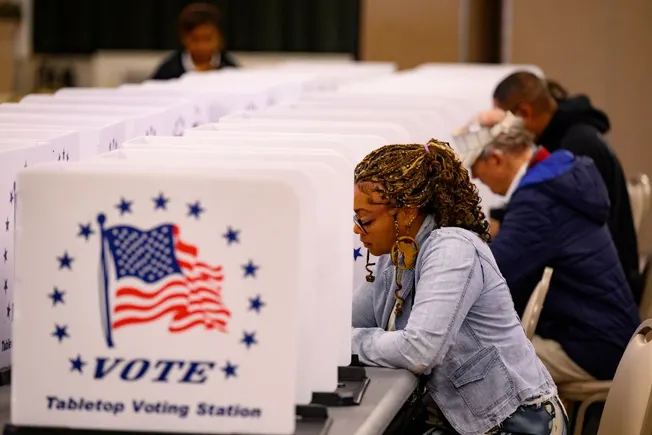
The political landscape of the United States underwent a profound transformation following the 2026 midterm elections, culminating in a historic "blue wave" that granted the Democratic Party control of Congress. Beyond the federal legislature, the sweeping electoral shift saw voters successfully flip gubernatorial seats in traditionally reliable Republican strongholds and cast consequential ballots on a myriad of localized and state-level education issues. This seismic shift has already begun to alter the trajectory of public policy, governance, and institutional accountability across the nation, setting the stage for a dramatic pivot in both federal oversight and state-level educational priorities as the country looks toward 2027.
The immediate aftermath of the election demonstrated how quickly the shifting balance of power would manifest in governance. At the federal level, the transition of congressional control has empowered Democratic lawmakers to assert aggressive oversight over executive agencies. Representative Bobby Scott of Virginia wasted no time utilizing this newly acquired leverage, dispatching formal warning letters to the heads of various federal bodies—most notably U.S. Secretary of Education Linda McMahon. In his correspondence, Scott explicitly warned agency leadership to preserve all institutional records, communications, and data, cautioning that failure to comply with federal transparency standards could result in severe criminal penalties. This preemptive move signals an era of intense congressional scrutiny directed at federal education policies implemented by the previous administration.
State-Level Power Shifts and Gubernatorial Victories
While congressional changes grabbed national headlines, the most tangible impacts on everyday citizens are likely to unfold at the state level. In a series of notable electoral upsets, voters in several historically conservative states crossed party lines to elect Democratic governors. Races in Georgia, Iowa, Nevada, Ohio, and Texas all resulted in Democratic gubernatorial victories. These shifts carry profound implications for state education leadership, potentially halting or reversing conservative-led district takeovers, altering the composition of state boards of education, and redefining the relationship between state capitals and local school districts.
Concurrently, Democrats captured majorities in several critical state legislative chambers. Legislative control shifted in states such as Georgia, Minnesota, Michigan, North Carolina, Texas, and Wisconsin. In these legislative battlegrounds, the newly empowered Democratic majorities are poised to challenge existing statutes concerning curriculum development, teacher compensation, school funding formulas, and parental rights legislation. The electoral outcomes reflect a fractured electorate where local economic anxieties and public school funding concerns frequently outweighed broader partisan alignments.
National education organizations were quick to interpret the results as a collective mandate from the American public. In a statement released on November 3, National Education Association (NEA) President Princess Moss articulated the sentiments of millions of educators and public school advocates. "Across the nation, most Americans want the same thing—a more affordable future, strong public schools and safer communities," Moss said. "Tonight, voters came together across race, place and gender and sent a clear message and mandate: put working families, students and educators first and deliver for our communities, not billionaires and corporations."
Ballot Measures Reveal Complex Social and Cultural Divides
Despite the broader Democratic victories, the 2026 midterms also highlighted deep ideological divisions regarding social policy within America’s educational institutions. While party control shifted, voters in multiple states utilized direct democracy through ballot initiatives to enact socially conservative policies, particularly concerning transgender youth and school athletics.
In Arizona, voters overwhelmingly approved Proposition 318. The measure mandates that all public schools, charter institutions, and athletic associations strictly restrict sports participation and access to intimate facilities, such as locker rooms and restrooms, based strictly on biological sex assigned at birth. This legislative victory for proponents of traditional sex-segregated spaces effectively bars transgender students from competing on sports teams that align with their gender identity and restricts their access to corresponding private spaces.
A nearly identical measure, Initiative 442, appeared on the ballot in Nebraska and passed by a comfortable margin. Voters in Washington state also approved a similar sports participation measure, demonstrating that concerns over competitive fairness and traditional facility access transcend traditional red-versus-blue state lines. Civil rights organizations and LGBTQ+ advocates expressed deep disappointment over these outcomes, promising ongoing legal challenges to protect vulnerable student populations from discrimination, while proponents argued the measures are necessary to protect the integrity of female athletics and student privacy.
A Renewed Push for Early Childhood Education
In stark contrast to the contentious debates surrounding transgender student access, early childhood education emerged as a unifying theme of triumph for progressive gubernatorial candidates. According to a comprehensive analysis published by New America, a nonpartisan public policy think tax, early care and education were front and center in numerous successful gubernatorial campaigns, signaling robust bipartisan or public support for foundational educational investments.
In Georgia, Democratic Governor-elect Keisha Lance Bottoms built a significant portion of her platform on expanding educational access, aggressively pushing for mandatory kindergarten and universal preschool for all 4-year-olds. Economists and early childhood advocates have long argued that such investments yield long-term cognitive and economic benefits, a sentiment that clearly resonated with Georgia voters.
Meanwhile, in Wisconsin, David Crowley achieved a historic milestone by winning election as the state’s first Black governor. Crowley campaigned heavily on a comprehensive plan to institute universal early childhood education for children aged five and younger, aiming to alleviate the crippling child care cost burdens facing modern working families. In New Mexico, Governor-elect Deb Haaland pledged to aggressively expand the universal child care infrastructure originally established by her popular Democratic predecessor, Michelle Lujan Grisham. These concurrent victories suggest that early childhood care and education will be a primary legislative battleground and investment priority in the coming years.
Private School Choice Versus Public School Funding
Perhaps the most contentious ideological battleground of the 2026 midterms involved the fierce debate over private school choice programs, universal voucher systems, and public education funding. Over the preceding several years, the expansion of private school choice—often championed by conservative lawmakers as a mechanism to grant low-income and middle-class families alternatives to failing public systems—had been a major policy victory for the Republican Party. However, the 2026 election cycle brought a sharp electoral and legislative pushback.
Critics of private school choice, heavily supported by public school advocacy groups and labor unions, argued successfully that taxpayer-funded voucher programs deplete vital resources from public school systems while lacking adequate transparency and accountability standards for student academic outcomes. Conversely, supporters maintained that such programs empower families by introducing free-market principles into education, allowing parents to tailor their children’s schooling to their specific needs.
The electoral results emboldened opponents of voucher programs. Randi Weingarten, president of the American Federation of Teachers (AFT), celebrated the outcomes in a fiery statement on November 3. "In race after race, those who supported public schools and rejected private school vouchers triumphed—statewide in Texas, Iowa, Michigan and Ohio, and in countless congressional districts and school board races," Weingarten declared.
The backlash against privatization translated directly into legislative victories for public school funding proponents. In Texas, Governor-elect Gina Hinojosa—drawing on her extensive background as a former member of the Austin Independent School District board of trustees—made public school defense a central pillar of her campaign. Hinojosa openly criticized the diversion of public funds to private alternatives, telling cheering supporters on election night, "The days of treating our public schools like they are for sale are over."
In Minnesota, voters took matters into their own hands by approving a groundbreaking constitutional amendment designed to permanently increase state funding allocations for school districts without resorting to increases in individual income or property taxes. Scheduled to take effect on July 1, 2027, the amendment will increase state contributions to school districts by approximately $33 per student annually. To put this into perspective, under the newly approved formula, the Minneapolis Public School District would have received an estimated $3 million in state funding during previous fiscal cycles, rather than the $2 million to which it was traditionally appropriated. Fiscal analysts note that while $33 per student may appear modest at an individual level, the cumulative state injection represents a significant structural boost for cash-strapped urban and rural school districts alike.
Fact-Based Analysis and Broader Implications
The 2026 midterm elections have fundamentally altered the architecture of American education policy, creating a complex patchwork of progressive state-level investments and conservative cultural restrictions. The transition of power in Congress and key statehouses guarantees that the coming years will be defined by fierce institutional conflicts over federal oversight, civil rights protections, and the allocation of taxpayer dollars.
As newly elected governors and legislators take the oath of office in early 2027, they will inherit systems grappling with teacher shortages, post-pandemic academic recovery, and deep cultural polarization. The mandate delivered by voters—emphasizing affordable living, strong public institutions, and community-first governance—will be tested immediately as these leaders attempt to translate campaign rhetoric into actionable legislation. Whether these historic shifts can bridge the deep ideological divides among American parents and educators remains the defining question for the nation’s schools as they navigate the remainder of the decade.
Related posts: