Lucid Struggles with Inventory Management and Delivery Logistics as CEO Admits to Misplacing Vehicles During Q3 Earnings Call


The electric vehicle sector is no stranger to manufacturing hurdles, supply chain bottlenecks, and scaling pressures. However, luxury electric vehicle manufacturer Lucid Group faced an unprecedented spotlight during its recent third-quarter earnings call when executive leadership made a startling disclosure
regarding internal operations. CEO Silvio Napoli candidly admitted that, as recently as the summer months, the company frequently lost track of its own finished inventory, struggling to locate and deliver vehicles to eager customers within a reasonable timeframe. This administrative blind spot directly contributed to canceled orders and mounting frustration among buyers, underscoring deep-seated logistical inefficiencies within an organization already navigating a challenging macroeconomic climate for electric vehicles.
The admission highlights a stark operational contrast between Lucid’s current production scale and the growing pains experienced by industry pioneers like Tesla years prior. While automotive logistics typically involve sophisticated tracking software, real-time telemetry, and streamlined distribution networks, Lucid’s early execution faltered at the final hurdle. As the company works to course-correct under new leadership, industry analysts and financial stakeholders are closely examining how inventory mismanagement compounded existing production and financial pressures throughout the fiscal year.
Financial Strain and Inventory Bloat: The Path to Q3 2026
To understand the gravity of Lucid’s logistical missteps, one must examine the broader financial and production trajectory of the company leading up to the third quarter of 2026. During the first half of the year, Lucid manufactured significantly more vehicles than it successfully handed over to consumers. Official corporate reporting revealed a stark production-to-delivery gap: the automaker built 3,228 more vehicles than it delivered in the first six months of the year alone.
This widening gap culminated in a bloated inventory profile on the company’s balance sheet. By the end of June, Lucid’s finished goods inventory swelled to an imposing $1.38 billion. The accumulation of unsold vehicles sitting idle in transit lots and storage facilities forced management to pump the brakes on manufacturing lines, implementing strategic production adjustments to prevent further capital immobilization.
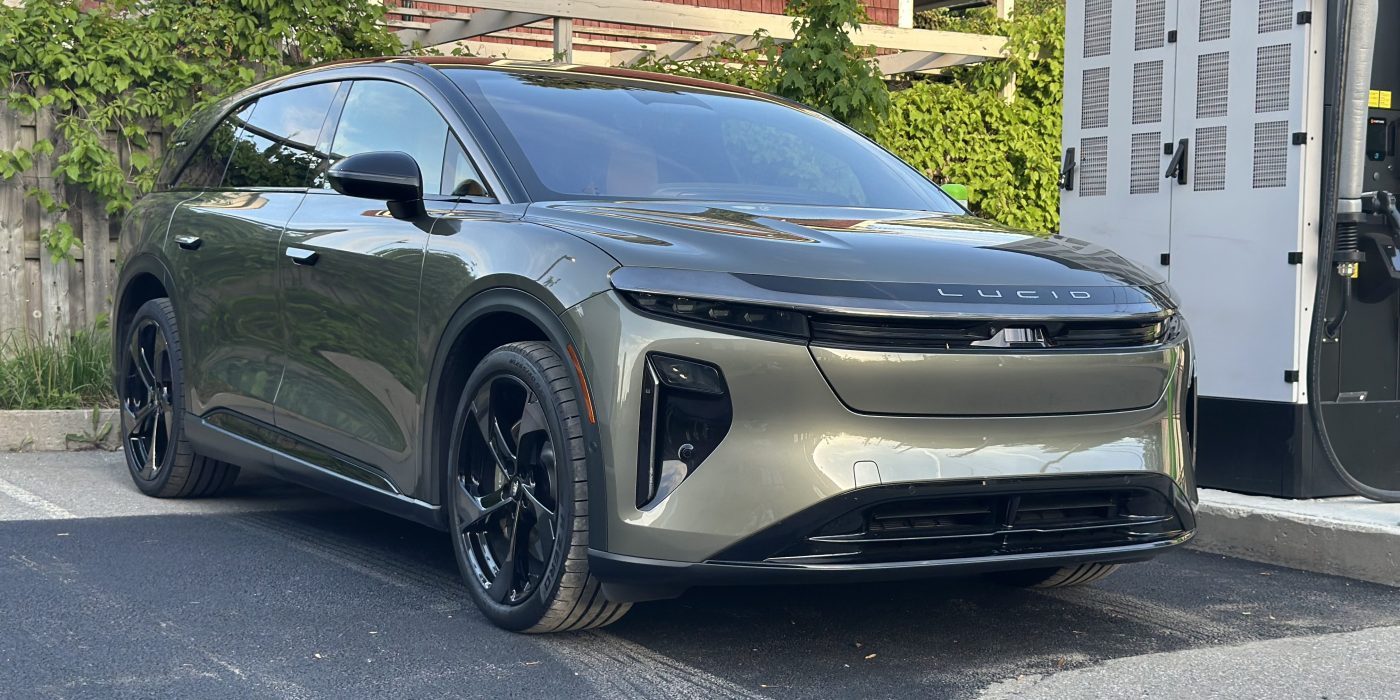
The consequences of this inventory bloat extended beyond balance sheet optics; it actively impaired sales conversion. Prospective buyers who committed to purchasing high-end models like the Lucid Air or the newer Lucid Gravity SUV faced inexplicable delays. When an order was placed, internal teams frequently required up to two weeks simply to locate the assigned vehicle within the distribution network. For luxury consumers accustomed to immediate gratification and white-glove service, these protracted delays proved unacceptable. Consequently, a measurable percentage of buyers cancelled their orders and sought alternatives among competing luxury electric vehicle brands.
Recognizing the unsustainable nature of these operational friction points, Lucid’s executive team instituted corrective measures heading into the third quarter. Production numbers were intentionally scaled back to 2,954 vehicles in Q3, a tactical reduction designed to allow the existing inventory backlog to clear. Concurrently, newly appointed Chief Financial Officer Alexander De Bock reported positive movement on the balance sheet, noting that finished goods inventory decreased by nearly 15% during the quarter, settling at $1.22 billion by September 30. Deliveries for the quarter reached 3,806 vehicles, signaling a modest improvement in throughput despite a 7% year-over-year decline in total delivery volume.
Parallels to Industry History: Tesla and Delivery Logistics Hell
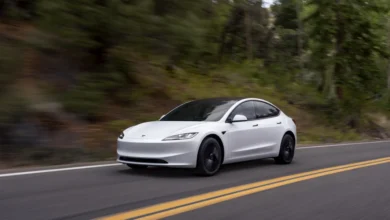
Lucid’s current struggle with distribution logistics draws inevitable comparisons to the historic growing pains experienced by Tesla during its monumental Model 3 production ramp in 2018. At the time, Tesla was rapidly scaling manufacturing operations to reach unprecedented volumes, transitioning from boutique manufacturing to mass-market production.
By the third quarter of 2018, Tesla was producing approximately 4,000 Model 3 vehicles every single week—a volume that surpasses Lucid’s entire quarterly delivery output today. As vehicle output surged past regional distribution capacities, Tesla encountered a severe operational bottleneck that shifted the primary challenge from factory assembly lines to outbound logistics.
In September 2018, Tesla Chief Executive Elon Musk famously characterized the crisis on social media, declaring that the company had transitioned "from production hell to delivery logistics hell." The bottleneck manifested as an acute shortage of specialized car carrier trailers required to transport finished vehicles from factory lots to regional delivery hubs. The crisis forced Tesla to innovate under duress, prompting the automaker to begin building its own car carrier trucks, deploying door-to-door delivery pilots, and mobilizing corporate employees and enthusiastic vehicle owners to assist at delivery centers.
The logistical friction escalated further as regulatory deadlines approached. In November 2018, facing the imminent phase-out of the federal electric vehicle tax credit for buyers, Tesla undertook aggressive measures to accelerate transit times. The company acquired external trucking companies, locked down exclusive contracts with major freight haulers, and systematically rerouted vehicle shipments away from congested rail networks toward direct over-the-road trucking routes. These interventions ultimately enabled Tesla to achieve a then-record quarter of 83,500 total deliveries, proving that distribution efficiency is just as critical to commercial survival as manufacturing capability.
International markets presented parallel trials. When the Model 3 officially debuted in Europe in February 2019, initial maritime shipments arriving at the port of Zeebrugge in Belgium encountered severe administrative and logistical delays during offloading and preparation. Recognizing that external contractors were failing to process vehicles at the necessary velocity, Tesla swiftly terminated its port-preparation contracts and assumed direct operational control of the facility. By treating delivery speed as a core commercial driver rather than an administrative afterthought, Tesla successfully streamlined European distribution, culminating in record-breaking delivery milestones across Scandinavian markets within weeks.
Corporate Accountability and Leadership Restructuring
The candor exhibited by Lucid CEO Silvio Napoli during the third-quarter earnings call represents a notable departure from conventional corporate public relations. In an industry where executives frequently attribute declining sales or sluggish delivery metrics to softening consumer demand or macroeconomic headwinds, Napoli openly acknowledged internal operational failures.
By admitting that the company lacked basic visibility over vehicle locations during the summer months, Napoli brought transparency to a persistent bottleneck that had previously baffled market analysts. Industry observers noted that while Lucid’s engineering prowess—exemplified by the acclaimed Lucid Air sedan and the expanding footprint of the Lucid Gravity SUV—has consistently earned critical praise, the enterprise has historically struggled with operational execution in non-manufacturing domains.
To address these vulnerabilities, Lucid established a dedicated commercial team tasked with synchronizing manufacturing output with real-time sales data. Under the revised operational framework, sales personnel are granted immediate visibility into vehicle availability, ensuring that a customer inquiring about a specific configuration on any given day can be matched with an accessible, shippable vehicle instantly. This structural realignment aims to eliminate the administrative lag that previously caused prospective buyers to walk away from completed sales.

Broader Market Implications for the Luxury EV Sector
The logistical missteps encountered by Lucid highlight systemic challenges inherent in scaling high-end electric vehicle manufacturing. Unlike mass-market legacy automakers with century-old dealer networks and deeply entrenched supply chains, startup and scale-up EV manufacturers must build both the product and the distribution ecosystem concurrently.
Financial analysts point out that capital efficiency remains a paramount concern for emerging automakers. With Lucid expending substantial capital resources relative to its delivery volume—spending hundreds of thousands of dollars per delivered unit during its initial scaling phases—every lost sale due to administrative friction represents a disproportionate financial blow. The inability to seamlessly bridge the gap between completed manufacturing and final customer handover directly impacts cash flow generation, inventory valuation, and investor confidence.
Furthermore, the competitive landscape of the luxury electric vehicle market leaves little margin for operational error. Consumers evaluating six-figure luxury vehicles demand an exceptionally frictionless purchasing experience. When administrative delays force a buyer to wait weeks simply to locate a physical vehicle that has already rolled off the assembly line, brand loyalty is severely tested.
Future Outlook and Strategic Priorities
As Lucid navigates the remainder of the fiscal year and looks toward future growth, the primary directive established by leadership is operational discipline. The successful reduction of finished goods inventory by nearly 15% in the third quarter indicates that the company is regaining control over its distribution pipeline and aligning production targets with genuine market absorption rates.
The integration of the new commercial oversight team and improved inventory tracking software represents a foundational step toward stabilizing operational metrics. However, maintaining momentum will require sustained execution as the company continues to ramp up production of the Lucid Gravity SUV and expands its global retail footprint.
Ultimately, Lucid’s recent disclosures serve as a cautionary case study in modern automotive manufacturing. While technological innovation, vehicle range, and luxury amenities remain vital prerequisites for success in the electric vehicle transition, the foundational mechanics of supply chain visibility, inventory tracking, and delivery logistics remain equally decisive factors in determining which automotive companies ultimately achieve long-term commercial viability.