This record-breaking valuation reflects a complex convergence of manufacturing costs, shifting consumer preferences toward larger vehicle segments, and a gradual reduction in the aggressive discounting strategies that characterized the pre-pandemic automotive landscape. As the average Manufacturer’s Suggested Retail Price (MSRP) also climbed to $52,933 in October—a 2.4 percent increase year-over-year—industry experts are looking closer at how these sustained price hikes are reshaping the accessibility of personal transportation for the average household.
A Chronology of Rising Costs
The trajectory toward the $51,000 mark has been a steady climb over the last several years. During the period between 2020 and 2022, the automotive industry experienced a supply-side shock characterized by global semiconductor shortages and logistical bottlenecks. These factors significantly curtailed inventory, giving manufacturers little incentive to offer rebates or discounts. Consequently, prices began to decouple from historical norms.
By early 2024, the average price of a new car had settled into a high-plateau range, hovering between $48,000 and $49,000. Throughout 2025 and into 2026, despite a normalization in supply chains and inventory levels, prices failed to revert to previous levels. Instead, a shift in product mix—where automakers prioritized high-margin, feature-heavy SUVs and trucks—ensured that the "average" price remained on an upward trajectory. The October 2026 data serves as the latest confirmation that the industry has successfully transitioned to a higher pricing equilibrium, one that appears resistant to significant downward pressure.
The Dominance of Large-Format Vehicles
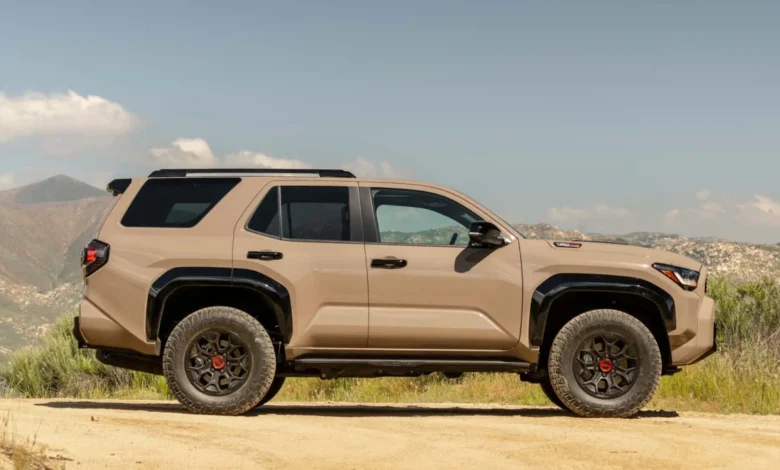
The primary driver behind the record-high ATP is a fundamental change in what American consumers are choosing to park in their driveways. The market has become increasingly bifurcated, with a massive volume shift toward mid-size SUVs and full-size pickup trucks. In October 2026, mid-size SUVs claimed the title of the highest-volume vehicle segment in the country, displacing compact SUVs. This segment alone saw a year-over-year sales volume increase of nearly 10 percent.
The financial impact of this preference is substantial. The average transaction price for a mid-size SUV reached $50,570, while full-size pickup trucks commanded a significantly higher average of $67,912. When combined, these segments, alongside compact and subcompact SUVs and the remaining compact car market, accounted for over 64 percent of all new-vehicle sales.
Even the historically "affordable" segments have not been spared from this inflationary trend. Compact cars, often viewed as the entry-point for new-car buyers, now carry an average transaction price of $28,030—a 3.4 percent increase from October 2025. This rise in entry-level pricing poses a significant barrier to entry for first-time buyers and those on fixed incomes, effectively pushing a portion of the market toward the used vehicle sector.
The Paradox of Electric Vehicle Pricing
The electric vehicle (EV) market currently occupies a unique position in the broader pricing discussion. While the average transaction price for an EV rose to $56,220 in October 2026—a 1 percent increase month-over-month—this figure is actually 2.7 percent lower than the average recorded in October 2025.

This counter-trend is largely attributed to aggressive manufacturer incentives. Electric vehicles are currently seeing discounts and financial support packages averaging 11.3 percent of the transaction price, which is nearly double the industry-wide incentive average of 6.8 percent for conventional internal combustion engine (ICE) vehicles. Automakers are increasingly leveraging these discounts to stimulate demand and clear inventory, a strategy that is notably less prevalent among manufacturers of popular, high-demand gasoline-powered SUVs.
Tesla, the market leader in the EV space, recorded an average transaction price of $54,194. Interestingly, this figure was bolstered by the final run of the Cybertruck, which saw 1,914 units sold in October—the highest monthly volume for the vehicle in over a year. With an average transaction price of approximately $92,380, the Cybertruck continues to exert an outsized influence on Tesla’s ATP, demonstrating how low-volume, high-price specialty vehicles can sway broader market statistics.
Official Responses and Industry Outlook
While manufacturers have not issued broad statements regarding the $51,000 milestone, analysts at major financial firms and automotive research groups suggest that the pricing environment is unlikely to soften in the near term. The current strategy among major OEMs (Original Equipment Manufacturers) emphasizes "value over volume." By focusing production on higher-trim levels and optional equipment packages, manufacturers are able to maintain profitability even if total unit sales remain flat or experience slight dips.
Furthermore, the lack of widespread discounting suggests that the "dealer markup" culture of the early 2020s has been largely replaced by a "factory-option" culture. Instead of paying premiums over MSRP for scarce inventory, consumers are paying higher prices for vehicles that come factory-equipped with advanced driver-assistance systems, premium infotainment packages, and sophisticated interior materials.
Economic Implications for the Consumer
The persistence of vehicle prices above the $51,000 mark has profound implications for consumer finance. With interest rates remaining a factor in the cost of borrowing, the monthly payment for a new vehicle has ballooned. For many consumers, this has necessitated longer loan terms—often extending to 72 or 84 months—to keep monthly payments within manageable limits.
Economists are concerned that the rising cost of transportation, a necessity for most American households, is contributing to a "wealth gap" in the automotive market. As new cars move further out of reach for the median-income household, the demand for high-quality used vehicles continues to surge, which in turn puts upward pressure on the used-car market. This cycle effectively keeps the entire automotive ecosystem operating at a higher cost-of-living index than in years past.
A Look Ahead
As the industry moves toward the close of the 2026 calendar year, all indicators point to a continuation of this high-price reality. Without a significant shift in consumer demand back toward smaller, less-equipped, or more affordable vehicle platforms, the average price is unlikely to see a sharp decline.
The data from Kelley Blue Book confirms that the automotive landscape has been fundamentally altered. The "average" car is now a high-tech, large-format vehicle that carries a premium price tag. For the average consumer, this means that the decision-making process for a new vehicle purchase has become a more significant financial event than it was just a decade ago. While manufacturers are seeing the benefits of this transition in their quarterly earnings reports, the broader impact on American mobility remains a critical area of focus for economists and industry analysts alike. As we head into 2027, the question remains whether market saturation or changing economic conditions will eventually force a cooling of these record-breaking prices, or if the $51,000+ average is simply the new cost of doing business in the American automotive market.