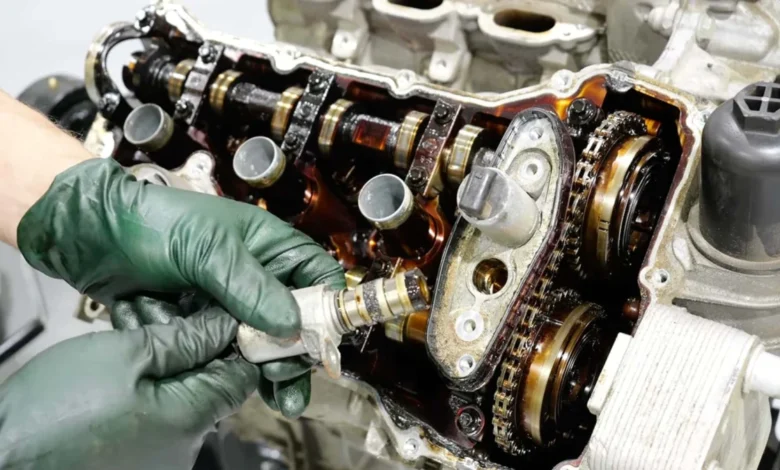
The longevity of a modern internal combustion engine is dictated by a symbiotic relationship between advanced engineering and rigorous owner compliance with manufacturer-specified maintenance intervals. When this balance is disrupted, particularly through the omission of critical services such as oil changes, the results are often catastrophic. A recent teardown performed by the automotive diagnostics channel I Do Cars has provided a stark, visual case study of this reality, involving a 2021 Lincoln Aviator equipped with the automaker’s 3.0-liter twin-turbocharged EcoBoost V6 engine. With only 70,000 miles recorded on the odometer, the powerplant—a unit typically engineered for high performance and durability—suffered a complete mechanical collapse, serving as a cautionary tale for luxury vehicle owners.
The Anatomy of an Engine Failure
The Lincoln Aviator’s 3.0-liter EcoBoost engine is a sophisticated piece of machinery, utilizing direct injection and twin turbochargers to deliver robust power. However, these complex systems are inherently sensitive to the quality and state of the engine lubricant. During the teardown process, the mechanics identified systemic issues that trace back to a failure in the oil lubrication cycle.
Upon initial inspection of the engine’s internal components, it became evident that the oil had not been replaced according to the manufacturer’s recommended schedule. The presence of significant "oil varnish"—a sticky, dark residue formed when old oil oxidizes and breaks down under heat—was pervasive throughout the cylinder head and block. This varnish is a telltale sign of long-term thermal breakdown, often caused by the oil being left in the engine far beyond its effective service life.
Furthermore, the variable cam timing (VCT) solenoids, which are critical for optimizing engine performance and efficiency, were found to be heavily obstructed by debris. The internal oil screens, designed to filter out contaminants before they reach the delicate actuators, were completely packed with sludge. When these screens become clogged, the engine’s timing system loses its ability to adjust the camshafts precisely, leading to poor performance, misfires, and, in severe cases, the eventual mechanical failure of the valve train.
A Chronology of Neglect
While the specific history of this vehicle remains partially opaque, the service records associated with the 2021 Lincoln Aviator revealed significant gaps in maintenance. In the automotive industry, a "gap" in service history is often a red flag for prospective buyers and mechanics alike. It suggests that the vehicle was operated for extended periods without the necessary fluid exchanges required to keep internal friction at bay.
Beyond the lack of oil changes, the service record indicated that the vehicle had undergone extensive repairs prior to the final engine failure. This suggests a pattern of reactive rather than proactive maintenance. When a vehicle undergoes frequent major repairs early in its lifecycle, it often points to a cumulative effect of deferred maintenance, where failing components put undue stress on other, healthy parts of the system. By the time the engine reached the 70,000-mile mark, the internal wear had progressed beyond the point of repair, necessitating a complete replacement of the powertrain.
The Role of Oil in Modern EcoBoost Technology
The EcoBoost platform, which has become the backbone of the Ford and Lincoln lineups, relies heavily on high-pressure oil systems to manage its turbochargers and timing components. Unlike naturally aspirated engines of the past, the 3.0-liter EcoBoost uses oil not just for lubrication, but as a hydraulic fluid for complex engine management systems.
When oil degrades, its viscosity changes, and its ability to dissipate heat diminishes. In a twin-turbocharged application, the oil is subjected to extreme temperatures, especially near the turbocharger bearings. If the oil is not changed, the heat causes it to "coke" or turn into solid deposits. These deposits act as abrasives within the engine. The teardown revealed silvery metallic flakes in the oil filter housing and the oil pan—a clear indication that the main bearings and connecting rod bearings were experiencing metal-to-metal contact. At this stage, the engine is effectively self-destructing from the inside out.
Data and Implications for Luxury Vehicle Ownership
The average cost of maintaining a luxury crossover like the Lincoln Aviator is significantly higher than that of a mass-market vehicle, yet the consequences of skipping service are proportionally more severe. Modern engines are built with tighter tolerances to meet stringent emissions and fuel economy standards. These tight tolerances leave almost no room for degraded oil.
Industry data consistently shows that engines failing before 100,000 miles are almost exclusively the result of either manufacturing defects or extreme maintenance neglect. In this instance, the absence of damage to the pistons and valves—which would have occurred had there been a timing belt or chain failure—reinforces the conclusion that the failure was lubrication-related. The valve train remained largely intact, suggesting the engine did not suffer a catastrophic "event" such as a broken timing component, but rather a slow, grinding decline caused by excessive friction and contamination.
Broader Industry Perspective
Automotive experts generally agree that the "maintenance-free" era is a myth. While vehicles now feature sophisticated oil-life monitoring systems, these algorithms are designed to track oil degradation based on driving habits, not to replace the need for physical oil changes.
In many cases, luxury vehicle owners may be misled by the high performance of their vehicles, assuming that if the car feels powerful and responsive, it is healthy. However, internal damage often occurs silently. By the time a driver notices a drop in performance or an illuminated check engine light, the internal damage to the bearings and the VCT system may already be irreparable.
The incident highlights a growing concern in the pre-owned vehicle market: the "service history gap." As vehicles become more complex, the cost of engine replacement continues to rise, often exceeding the resale value of a vehicle that is only a few years old. For a 2021 model year vehicle, an engine failure of this magnitude can effectively total the car, turning a premium asset into a liability.
Recommendations for Vehicle Longevity
To avoid such outcomes, automotive professionals emphasize a "proactive" maintenance strategy:
- Strict Adherence to Intervals: Follow the manufacturer’s oil change intervals precisely. If the vehicle is used for short trips, towing, or in extreme climates, consider shortening the interval by 20% to 30%.
- Oil Quality Matters: Use the specific synthetic oil grade recommended in the owner’s manual. These engines are designed for specific viscosity levels that provide the necessary flow for the turbochargers and VCT system.
- Monitor the Oil-Life System: Use the vehicle’s onboard monitoring, but treat it as a secondary guide. If the car has sat for long periods, perform an oil change based on time, not just mileage.
- Listen for Auditory Cues: Subtle changes in engine noise, such as ticking or tapping at idle, can often indicate early signs of oil pressure issues or VCT solenoid trouble. Addressing these early can save the entire engine.
Conclusion: A Lesson in Mechanical Stewardship
The case of the 2021 Lincoln Aviator serves as a vital reminder that engineering prowess is no substitute for human responsibility. The 3.0-liter EcoBoost engine is capable of delivering hundreds of thousands of miles of reliable service when provided with clean, high-quality oil. Conversely, when starved of this fundamental requirement, even the most advanced powertrain will succumb to the realities of friction and heat.
As the automotive industry moves toward increasingly complex powertrain solutions, the importance of maintenance education remains paramount. For owners of modern, high-performance vehicles, the path to longevity is simple: regular, documented maintenance is the most effective insurance policy against the premature death of the vehicle. Neglecting the basics may offer short-term financial savings, but as this case clearly demonstrates, it carries the high, long-term cost of total engine failure.