Anduril Industries Unveils Advanced Infrared Space Sensor to Eliminate Blind Spots in Orbital Surveillance

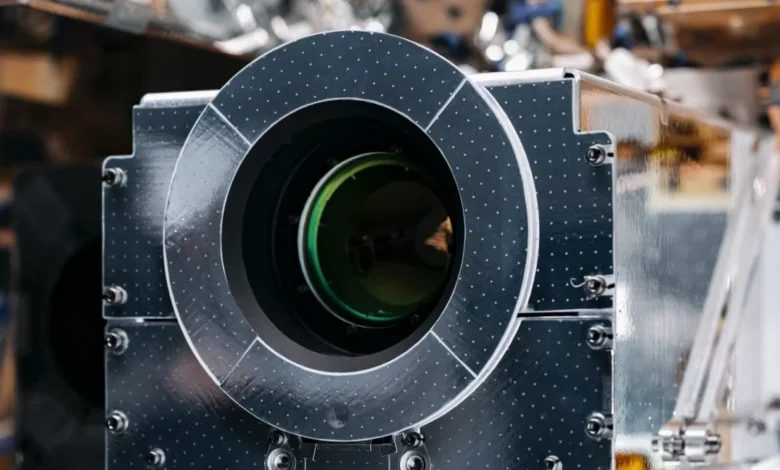
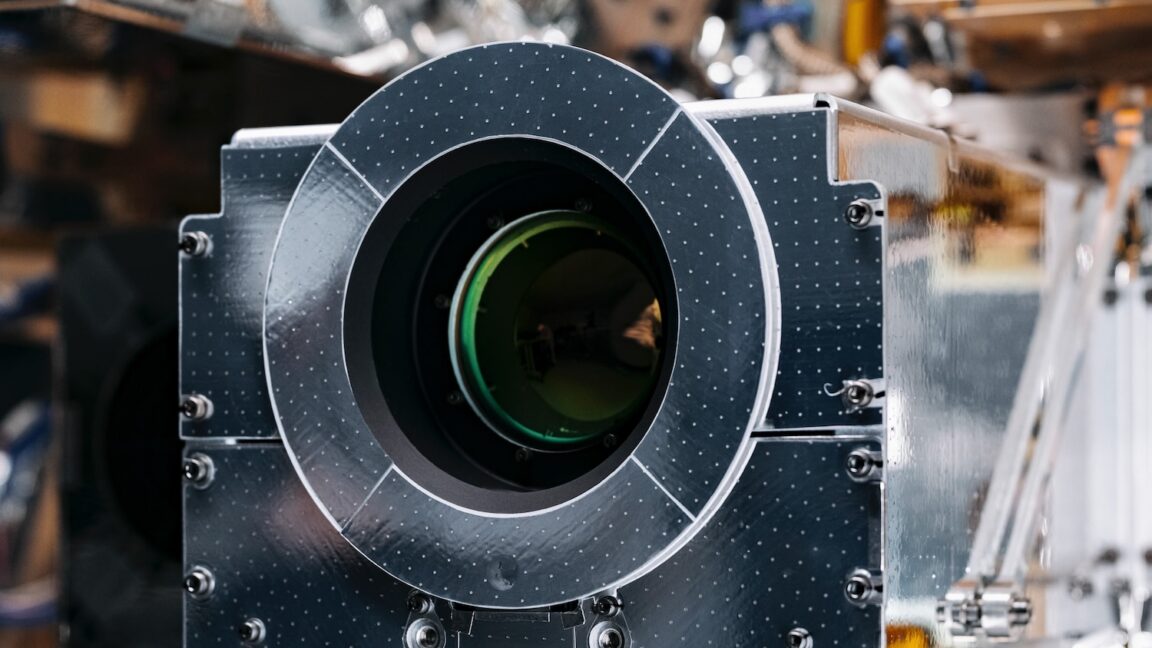
The emergence of a new long-wave infrared (LWIR) sensing capability by defense technology firm Anduril Industries marks a significant shift in space domain awareness (SDA). By successfully deploying and testing an advanced infrared sensor aboard the Anduril-216 spacecraft, the company has demonstrated an ability to track resident space objects (RSOs) even when they are obscured by the Earth’s shadow. This technological leap addresses a persistent vulnerability in the United States’ orbital surveillance network: the inability to maintain continuous custody of maneuvering satellites during periods of solar eclipse.
For decades, the tracking of objects in orbit has relied heavily on ground-based radar and optical telescopes. While these systems are effective under optimal lighting and atmospheric conditions, they have historically struggled to maintain a persistent watch on objects once they enter the Earth’s shadow. During these eclipse periods, satellites that utilize thermal-based maneuvering or simply radiate heat become effectively invisible to traditional visible-light sensors. The Anduril-216 mission, developed in collaboration with satellite manufacturer Apex Space, aims to close this intelligence gap.
Bridging the Gap in Space Domain Awareness
The fundamental challenge in space situational awareness is the sheer volume of traffic in low-Earth orbit (LEO). As the number of commercial and state-sponsored satellites increases, the risk of collision and the potential for clandestine maneuvers have necessitated a more robust monitoring infrastructure. The US military, particularly the Space Force, has long expressed concern over "dark" satellites—objects that perform unexpected maneuvers while outside the field of view of conventional ground sensors.
Anduril’s approach involves adapting the sophisticated imaging technology it originally developed for terrestrial autonomous weapons systems. By shrinking these high-performance sensors and integrating them into a modular space platform, the company has created a system capable of detecting the thermal signatures of spacecraft regardless of ambient sunlight.
"It provides a unique capability for us to witness when an adversary or other resident space objects are maneuvering during those eclipse periods, where in the past we’ve been fairly blind," said a spokesperson for the project, identified as Thurn. This capability for "resolved and unresolved imagery" means the sensor can not only track the position of an object but, under the right proximity conditions, potentially provide detailed inspection data to identify specific satellite characteristics.
A Modular Approach to Satellite Development
The Anduril-216 mission serves as a proof-of-concept for a business model that diverges from traditional prime contracting. Rather than attempting to build its own satellite buses from the ground up, Anduril has opted to partner with specialized manufacturers like Apex Space. By integrating its proprietary sensor and compute modules onto third-party platforms, Anduril can iterate rapidly, deploying mission-specific hardware without the lead times associated with traditional aerospace manufacturing.
This modular strategy reflects a broader trend in the NewSpace industry: the shift toward commoditized bus architectures. By separating the satellite platform (the bus) from the payload (the sensor and computer), companies can focus their capital and research on the mission-critical hardware that provides the competitive edge. According to company leadership, this is a permanent strategic pivot. Anduril has no current intention of establishing a dedicated satellite production line, preferring instead to act as a mission-payload integrator that can adapt to evolving threats.
The Role of Edge Computing in Orbit
The technical prowess of the Anduril-216 mission is not limited to its infrared optics. A critical component of the platform is its onboard compute module. In traditional satellite operations, raw data is transmitted to ground stations, where analysts and high-powered servers process the imagery to determine the trajectory of detected objects. This process is often hampered by latency and the finite bandwidth of space-to-ground data links.
The Anduril-216 system is designed to perform data fusion at the "edge"—in this case, in the vacuum of space. By fusing data from infrared and visible-light imagers on-site, the satellite can generate its own tracking solutions. This autonomous capability allows the system to identify, track, and report on anomalies in real-time, providing immediate actionable intelligence to military commanders without requiring constant ground-based intervention. This reduction in the "sensor-to-shooter" timeline is a critical requirement for modern, high-intensity orbital defense.
Implications for Future Cislunar Operations
While the initial testing of the sensor is focused on LEO, the long-term roadmap for the technology extends far beyond the immediate vicinity of Earth. Anduril has indicated that the sensors are scalable for use in higher orbits, including the strategically significant cislunar space. As nations move toward more permanent lunar presence, the need for surveillance between Earth and the Moon—a vast and difficult region to monitor—will grow.
The release of a sample image—a high-resolution infrared view of the Moon hovering above the Earth’s horizon—served as a visual demonstration of the sensor’s precision. While the company characterizes this as a "taste" of the system’s potential, industry observers suggest that the resolution and sensitivity shown in the initial test indicate that the system could play a vital role in future lunar mission support, navigation, and monitoring of lunar-bound traffic.
Economic and Strategic Outlook
As of late 2026, Anduril’s business model remains focused on the "data-as-a-service" approach. Rather than selling the satellites as hardware to the government, the company is positioning itself as a data provider. By maintaining ownership of the sensor assets, Anduril can provide the US military with space domain awareness data, essentially selling the "answer" (the location and behavior of objects) rather than the "tool" (the satellite itself).
This approach has distinct advantages. It allows the military to procure capabilities as an operational expense rather than a capital investment, providing the flexibility to shift to newer, upgraded sensor modules as the technology matures. While the company noted that they are not currently operating as a "merchant supplier" for these systems, they acknowledged that this stance is subject to change as the demand for space-based surveillance evolves.
Strategic Context: The New Space Race
The development of the Anduril-216 comes at a time of heightened geopolitical sensitivity regarding space. International norms regarding orbital behavior are currently being rewritten as states increase their capabilities for rendezvous and proximity operations (RPO). The ability of one satellite to approach another, either for refueling or maintenance—or for inspection and interference—is a capability that requires sophisticated monitoring.
The reliance on ground-based tracking, which is subject to atmospheric distortion and geographic limitations, is increasingly viewed as insufficient by the US Department of Defense. In 2025 and 2026, several policy papers and budget requests from the Space Force have emphasized the need for "proliferated space-based sensing." By deploying smaller, cheaper, and more capable sensors into orbit, the US aims to create a resilient mesh of surveillance that cannot be easily disabled or circumvented by an adversary.
Anduril’s entry into this space reinforces the role of non-traditional defense contractors in driving innovation. By leveraging commercial-off-the-shelf components and agile software development cycles, firms like Anduril are forcing a faster pace of development that legacy contractors are struggling to match.
Looking Ahead
The success of the Anduril-216 mission serves as a milestone for the integration of high-fidelity, autonomous sensors into the orbital landscape. As the company continues to refine its tracking algorithms and expand its network of sensors, the "blind spots" that have defined orbital monitoring for decades may soon become a relic of the past.
The next phase of the project will likely involve the integration of these sensors into larger, more complex networks. If the data provided by these sensors proves to be as reliable and consistent as initial reports suggest, it will likely lead to deeper integration with the military’s command-and-control infrastructure. For now, the focus remains on proving the reliability of the system in the harsh environment of space—a task the company seems to have accomplished with its latest demonstration.
As the mission matures, the aerospace industry will be watching closely to see if other firms follow the Anduril model of modular, payload-centric integration. The ability to pivot, adapt, and deploy within months rather than years may well be the defining characteristic of the next era of space dominance, ensuring that when it comes to the vast reaches of orbit, the ability to see clearly is the ultimate advantage.