The human endeavor to transcend the confines of Earth and traverse the 239,000 miles to the lunar surface remains one of the most defining chapters in the history of the 20th century. While the geopolitical tensions of the Cold War fueled the initial race, the narrative has evolved into a testament to human ingenuity and collective ambition. On November 10, 2026, PBS will broadcast an immersive theatrical experience that captures this spirit, merging historical rigor with the emotional resonance of a live orchestral performance. The production, titled We Chose to Go to the Moon, offers a unique perspective on the Apollo program, shifting the focus from the mechanical achievements of NASA to the personal stories of those who facilitated the mission.
The Genesis of a Lunar Ambition
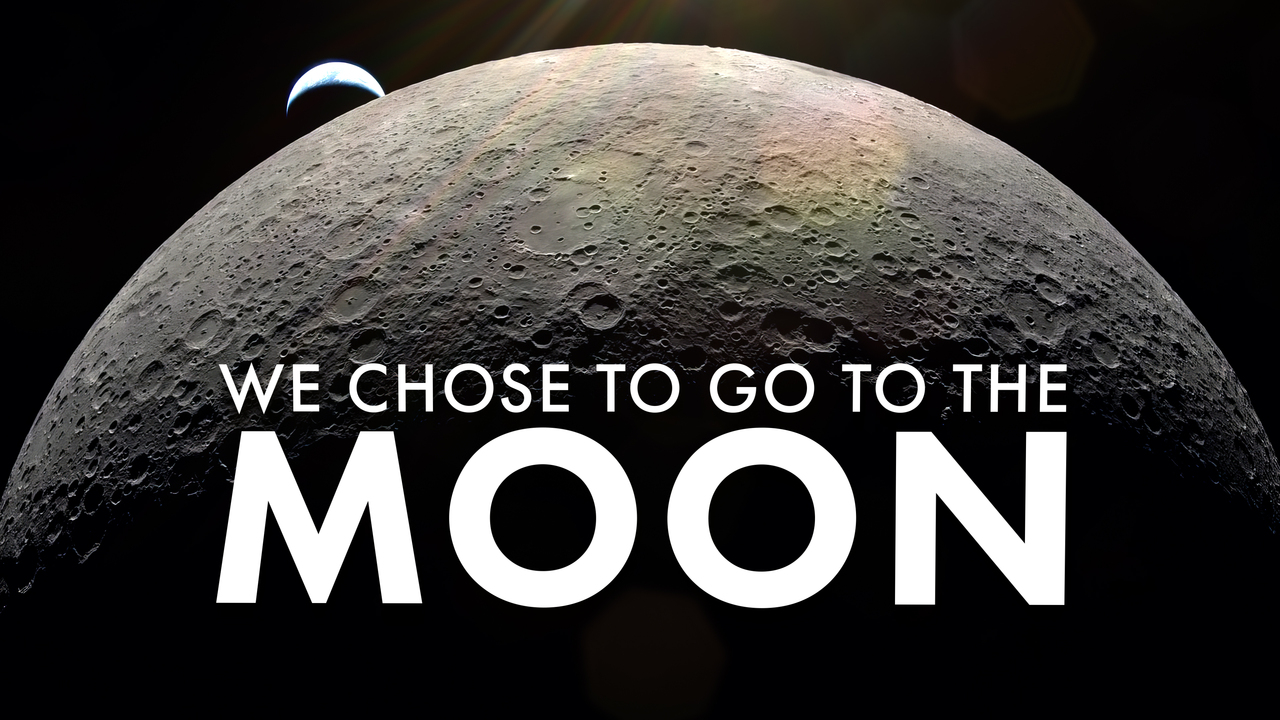
The title of this production is drawn directly from President John F. Kennedy’s landmark speech at Rice University on September 12, 1962. Facing a nation deeply invested in the outcome of the space race, Kennedy articulated a vision that transcended mere technological competition. His assertion that the United States would reach the moon "not because they are easy, but because they are hard" serves as the foundational premise for the show.
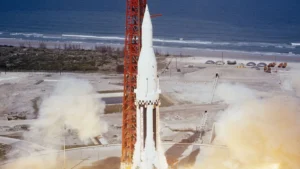
This declaration was not merely a political statement but a strategic mobilization of American resources. At the time of the address, the U.S. space program was still in its relative infancy, having only recently achieved crewed suborbital flight. The commitment to land a man on the moon before the end of the decade required a massive scaling of the aerospace industry, the development of the Saturn V launch vehicle, and the invention of entirely new disciplines in computer science and navigation.
Chronology of the Apollo Achievement
To understand the significance of the upcoming broadcast, it is essential to place the Apollo program within its historical timeline:
- 1961: President Kennedy addresses Congress, proposing the national goal of landing a man on the moon and returning him safely to Earth.
- 1962: The "We choose to go to the moon" address at Rice University galvanizes public and scientific support.
- 1967: The tragedy of Apollo 1, which claimed the lives of astronauts Virgil "Gus" Grissom, Ed White, and Roger Chaffee during a pre-launch test, forces a total redesign of the command module.
- 1968: Apollo 8 becomes the first crewed spacecraft to orbit the moon, providing the iconic "Earthrise" photograph.
- 1969: Apollo 11 achieves the first human lunar landing on July 20, with Neil Armstrong and Buzz Aldrin becoming the first humans to set foot on the lunar surface.
- 1972: The Apollo program concludes with the Apollo 17 mission, the final time humans walked on the moon.
- 2026: The broadcast of this production aligns with the renewed lunar interest sparked by the Artemis program, specifically the Artemis II mission.
A Living Documentary: The Carnegie Hall Production
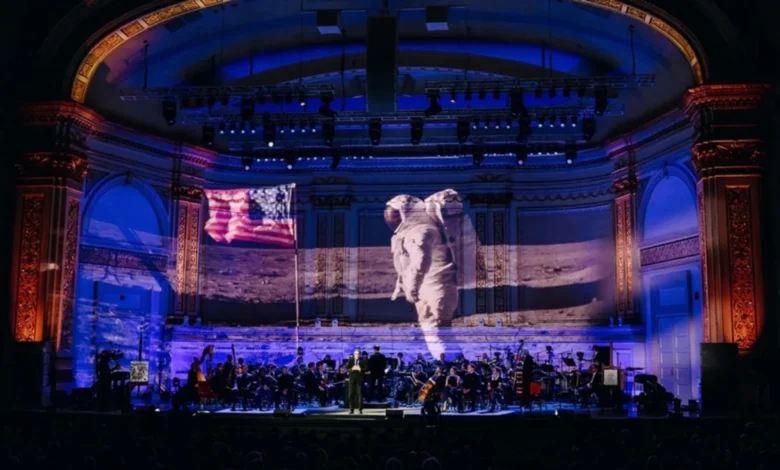
Created and narrated by cultural historian John Monsky, the production is part of his "American History Unbound" series. Unlike a traditional documentary, the show utilizes a "living documentary" format, integrating archival news footage, personal audio recordings, and contemporary musical arrangements. The production was recorded at Carnegie Hall in April 2026, a timing that strategically intersected with the launch of the Artemis II mission—the first crewed mission to orbit the moon in over half a century.
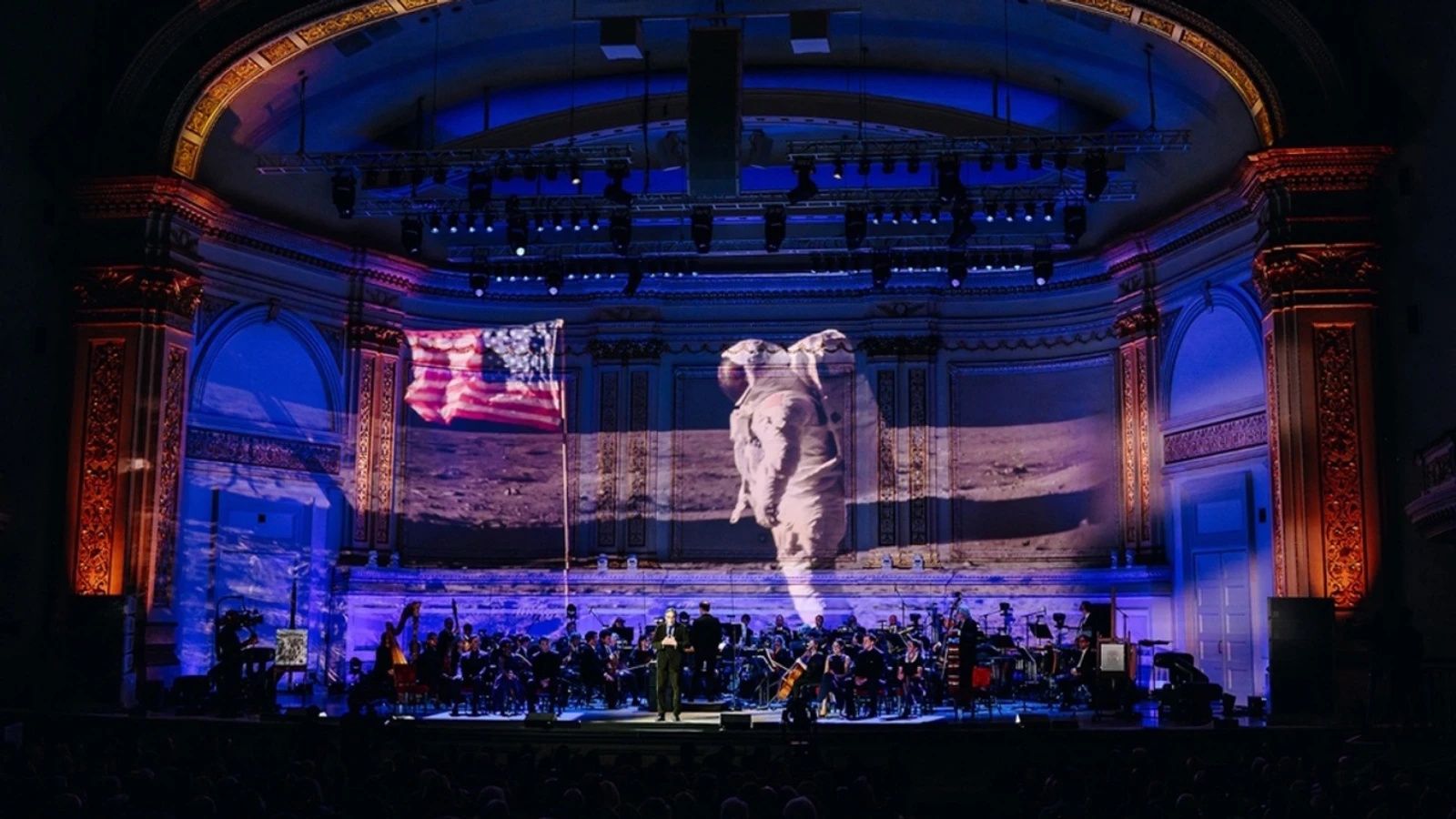
The performance features the Orchestra of St. Luke’s, led by conductor Kimberly Grigsby, and includes vocal performances by Broadway veterans such as Shonica Gooden, Adam Kantor, Elena Shaddow, and David St. Louis. The musical curation is thematic rather than chronological, utilizing iconic tracks such as David Bowie’s "Space Oddity," Elton John’s "Rocket Man," and Simon & Garfunkel’s "The Sound of Silence" to anchor the emotional weight of the historical narrative.
Perspectives from Mission Control and Beyond
One of the core strengths of the presentation is its emphasis on the "unsung heroes" of the space program. While history books often center on the primary astronauts—Neil Armstrong, Buzz Aldrin, Michael Collins, and Ed White—Monsky’s narrative expands the scope to include the families of the astronauts and the thousands of engineers, mathematicians, and support staff at Mission Control in Houston.
The production incorporates spoken-word vignettes performed by a cast including Skylar Astin, Elizabeth Gillies, and Joy Woods. These segments provide human-scale reflections on the immense pressure of the era. Actor and director Ron Howard, known for his work on the film Apollo 13, provides the introduction, bridging the gap between cinematic dramatization and the historical reality of the mission.
Viewing Information and Accessibility
The broadcast is scheduled for 8:00 p.m. ET and PT on November 10, 2026, across the PBS network. For those who prefer digital access, the program will be available for streaming on PBS.org and via the PBS app. The app is compatible with a wide range of hardware, including Apple TV, Roku, Amazon Fire TV, and various smart TV platforms from manufacturers such as Samsung, VIZIO, and LG.
For international audiences, accessing PBS content can present challenges due to regional licensing and geo-blocking restrictions. Viewers located outside the United States may find that streaming services are restricted to domestic IP addresses. In such cases, some users utilize Virtual Private Network (VPN) services to facilitate access. It is important to note that the use of such services must comply with the terms and conditions set forth by the service provider and that access is subject to local broadcasting laws.
Analysis: The Lasting Impact of the Space Race
The enduring fascination with the Apollo era, as evidenced by the production of this show, speaks to a broader cultural desire to reconcile our past achievements with our current technological trajectory. The space race was not merely a competition for lunar dominance; it was a catalyst for technological advancement that fundamentally altered the global economy. The development of integrated circuits, telecommunications satellites, and advanced materials science during the 1960s provided the bedrock for the modern digital age.
From a sociological perspective, the Apollo era represents a rare moment of sustained national unity around a scientific objective. By revisiting these stories through the lens of music and theater, the production seeks to reclaim the sense of wonder that defined that era. In an age where space exploration has shifted toward commercial entities and international partnerships, the reminder of the singular, high-stakes nature of the 1960s missions provides necessary context for contemporary observers.
Future Implications for Space Exploration
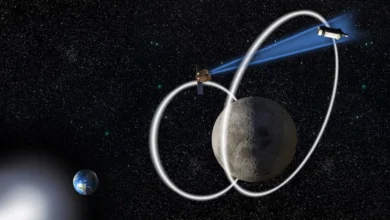
The convergence of this production with the Artemis II mission highlights the cyclical nature of space policy. While the 1960s were characterized by a bilateral struggle for prestige, the 2020s are defined by the return to the moon as a base for deep-space exploration, including potential crewed missions to Mars.
The lessons learned during the Apollo program—particularly regarding risk management, interdisciplinary collaboration, and the importance of public transparency—remain relevant to the modern aerospace industry. As NASA and its international partners prepare for a long-term presence on the lunar surface, the historical reflections offered in We Chose to Go to the Moon serve as both a retrospective tribute and a reminder of the foundational principles that allow humanity to operate in extreme environments.
Ultimately, the production is a synthesis of art and history, aiming to educate a new generation on the scale of the challenge that was overcome in 1969. By humanizing the figures behind the headlines, it creates a bridge between the clinical precision of orbital mechanics and the visceral, often messy, reality of human courage. Whether through the lens of a historian or the melody of a classic song, the story of the lunar landing continues to serve as a benchmark for what can be achieved when scientific ambition is matched by national resolve.
As viewers tune in on November 10, they are invited not just to watch a documentary, but to participate in a commemoration of a time when the impossible was, through sheer determination and the acceptance of significant risk, made reality. The narrative of the Apollo program continues to evolve, and this performance stands as a significant addition to the collection of artistic tributes dedicated to the first steps humanity took away from its home planet.