The automotive industry has increasingly moved toward smaller, turbocharged three-cylinder powerplants as manufacturers strive to meet tightening emissions regulations and fuel economy mandates. Among these is General Motors’ 1.2-liter LIH engine, a compact unit designed for efficiency and packaging flexibility. However, a recent deep-dive inspection of a 2021 Chevrolet Trailblazer by the YouTube channel I Do Cars has brought to light significant durability concerns regarding the engine’s internal timing belt architecture. With 84,000 miles on the odometer, the vehicle’s engine suffered a catastrophic failure, providing a rare and stark look at the consequences of internal belt degradation.
The Mechanics of the Failure
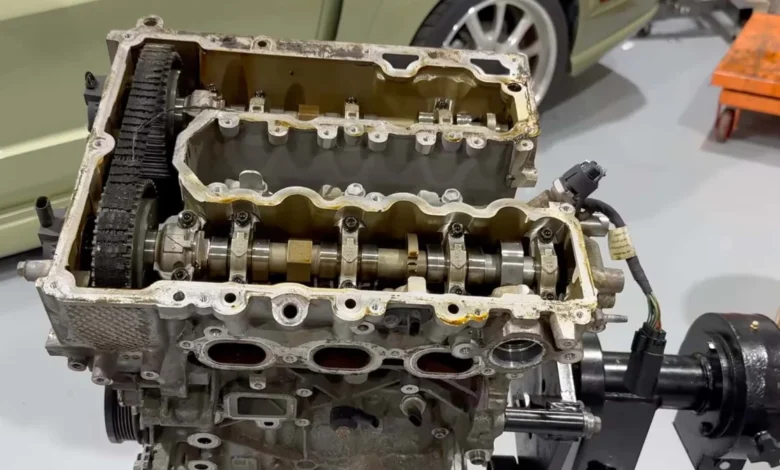
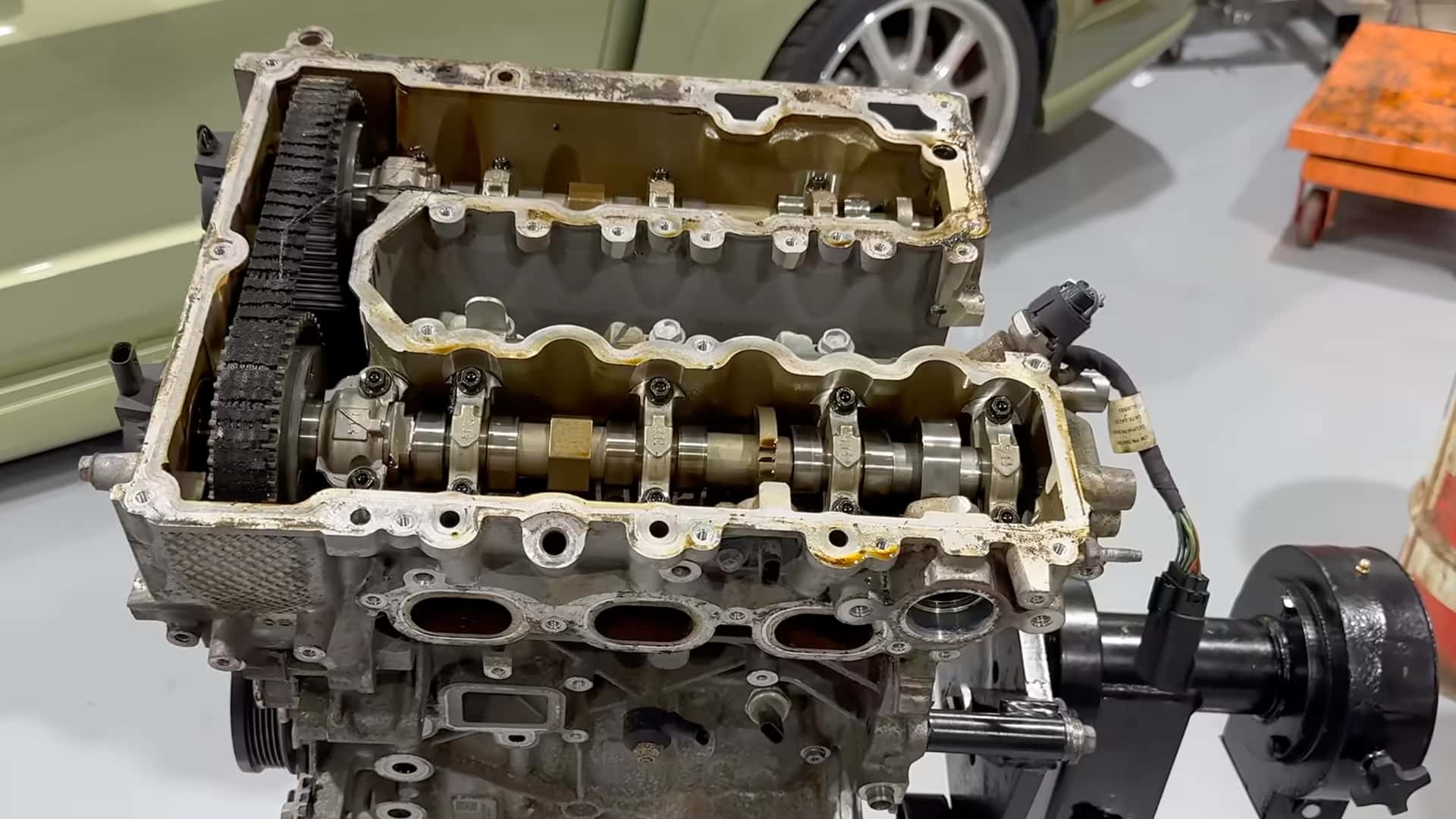
The teardown, which gained rapid attention upon its release on November 15, revealed a grim internal state. Upon removing the valve cover, the technician discovered that the timing belt—a component designed to operate within the engine’s oil environment—had suffered a structural failure. The belt teeth had shredded, releasing debris into the oiling system. This debris was subsequently drawn into the oil pickup screen, creating a dense, "emulsified" clog that severely restricted oil flow throughout the engine.
The loss of oil pressure, combined with the mechanical failure of the timing sequence, led to immediate and irreparable damage. As the timing belt failed, the synchronization between the crankshaft and the camshafts was lost. This caused the pistons to strike the open valves, resulting in bent valves across all three cylinders. Furthermore, the internal inspection of the cylinder head showed significant gouging on the camshaft lobes, indicating that the lack of oil pressure had caused metal-on-metal friction at critical contact points. While the bottom end of the engine—specifically the cylinder bores and rod bearings—showed signs of wear but remained largely intact, the damage to the valvetrain rendered the entire engine assembly non-viable.
The Lifecycle of the LIH Engine
The 1.2-liter LIH engine is a cornerstone of GM’s modern small-car strategy. It is currently utilized in several key models within the GM portfolio, including the 2026 Chevrolet Trailblazer, the 2026 Chevrolet Trax, the Buick Encore GX, and the Chevrolet Envista. Given the engine’s widespread deployment across these high-volume vehicles, the findings from this specific teardown have prompted a broader conversation regarding maintenance intervals and the long-term reliability of "wet" timing belt systems.
General Motors currently lists the replacement interval for the LIH oil pump drive belt and the timing belt at 150,000 miles or 15 years, whichever comes first. However, the condition of the engine at 84,000 miles suggests that this manufacturer-recommended interval may be overly optimistic under real-world driving conditions. The technician noted that the vehicle’s history included prior repair work, leading to speculation that the engine might have been replaced or serviced previously, though the exact history of the engine remains inconclusive. Nevertheless, the physical state of the timing belt provides a cautionary tale for owners relying strictly on the official service manual.
Industry Trends and "Wet" Belt Technology
The transition to timing belts that run in oil is not unique to General Motors. Several European and domestic manufacturers have adopted this technology to reduce friction, noise, and vibration compared to traditional dry timing belts or metal timing chains. While these systems offer theoretical benefits in efficiency and noise reduction, they are highly sensitive to oil quality and chemical composition.
If a vehicle owner fails to adhere to strict oil change intervals, or if they use oil that does not meet the manufacturer’s exact specifications, the chemical properties of the engine oil can accelerate the degradation of the rubber belt. Once the belt begins to shed material, that debris invariably collects at the oil pickup screen, creating a "choke point" that can starve the engine of lubrication long before the timing belt snaps entirely. This phenomenon has been documented in various other makes and models, leading many independent mechanics to advise against the 150,000-mile "lifetime" or extended-service intervals promoted by automakers.
Broader Implications for Consumers
The financial impact of a timing belt failure is significant. Based on the damage observed, the cost of a comprehensive repair—which would necessitate replacing the cylinder head, valves, camshafts, and cleaning the oiling system—is estimated by independent technicians to range between $1,200 and $1,500. For a vehicle at the 80,000-to-100,000-mile mark, such a repair cost often approaches or exceeds the residual value of the engine, leading many owners to opt for a full engine replacement or to scrap the vehicle entirely.
Furthermore, this failure highlights the tension between modern engineering goals and consumer longevity. As manufacturers pack more technology into smaller, more efficient engines, the margin for error in maintenance decreases. While the 2026 Trailblazer and its siblings are covered by a five-year or 60,000-mile powertrain warranty, many consumers who hold onto their vehicles beyond this period find themselves solely responsible for costs associated with components that may fail prematurely.
Data from consumer reporting databases for the 2023 model year indicate that while there are no major safety recalls specifically targeting the LIH engine’s timing belt system, there has been a steady flow of owner complaints regarding powertrain, electrical, and transmission issues across the current Chevrolet small-car lineup. This adds a layer of concern for those currently operating these vehicles.
Maintenance Recommendations and Future Outlook
For owners of vehicles equipped with the 1.2-liter LIH engine, the primary takeaway is the importance of proactive maintenance. Waiting until the 150,000-mile mark to address the timing belt is a strategy that carries significant risk. Experts increasingly suggest that if a vehicle is intended for long-term use, inspecting the belt and monitoring oil health—specifically looking for signs of rubber degradation during routine oil changes—is vital.
While General Motors has not issued a formal response regarding this specific teardown or any widespread defect with the LIH engine, the incident underscores the reality that "maintenance-free" components are often anything but. The engineering of modern engines often prioritizes meeting immediate fleet-wide emissions targets over the simplicity of serviceability. As more of these engines cross the 100,000-mile threshold, the industry will likely see whether this failure was an isolated incident or a systematic issue inherent to the design.
For now, the lesson remains consistent: for complex, high-stress, and highly integrated engine systems, the factory manual may be a starting point, but it should not be the absolute limit of an owner’s preventative maintenance strategy. Professional mechanics continue to advocate for earlier inspection cycles on any engine utilizing a wet timing belt system, as the cost of a proactive replacement is significantly lower than the cost of a total engine failure. As the automotive market continues to shift, the bridge between design-phase durability and long-term ownership reality will remain a critical point of focus for both manufacturers and the technicians who keep these vehicles on the road.
Related posts: