The history of modern aerial warfare is often traced back to the sophisticated jet engines and precision-guided munitions of the late 20th century. However, the true genesis of the United States’ dominance in the skies began with a modest, wood-and-canvas biplane purchased by the U.S. Army Signal Corps in 1909. This acquisition, which cost the federal government $30,000—a sum equivalent to roughly $1.1 million in today’s currency—marked the formal integration of heavier-than-air flight into American military doctrine. While the transition from balloon-based reconnaissance to powered flight was rapid and fraught with danger, it established the foundational framework for what would eventually evolve into the independent United States Air Force.
From Balloons to Biplanes: A Shift in Reconnaissance Doctrine
Military thinkers in the early 20th century were quick to recognize that the ability to survey enemy positions from the air provided a decisive tactical advantage. This concept was not entirely novel; during the American Civil War, the Union Army established a balloon corps to scout Confederate movements. These tethered balloons provided commanders with unprecedented visibility, yet they were inherently limited by their dependence on wind currents and their inability to maneuver.
By the early 1900s, the U.S. Army began seeking more reliable methods of observation. The Wright brothers, having achieved the first controlled, powered, and sustained flight of a heavier-than-air aircraft at Kitty Hawk, North Carolina, in 1903, were initially met with skepticism from government officials. It took several years of persistence, lobbying, and undeniable public demonstrations before the War Department issued a formal request for proposals for a two-seat observation aircraft in 1908. The specifications were rigorous for the time: the aircraft had to carry two people, fly at a minimum of 40 miles per hour, and possess enough fuel for an hour of flight time.
The 1908 Demonstrations at Fort Myer
In September 1908, Orville Wright traveled to Fort Myer, located in Arlington, Virginia, to conduct the mandatory flight trials. These events served as the first major public exposure of military aviation technology to high-ranking Army officials and the American public. Over the course of several days, Orville performed a series of flights that captivated spectators. These demonstrations were not merely tests of engineering; they were a high-stakes pitch to secure the future of the Wright brothers’ company and to define the military’s role in the nascent field of aeronautics.
The flights were initially hailed as a triumph of American ingenuity. Onlookers watched in awe as the Model A biplane circled the parade grounds. However, the optimism surrounding these trials was shattered on September 17, 1908. During a routine demonstration, First Lieutenant Thomas Selfridge, a pioneer in his own right and the first U.S. Army officer to pilot an aircraft, accompanied Orville Wright as a passenger.
Tragedy struck at an altitude of approximately 100 feet when a propeller blade fractured, causing the aircraft to lose thrust and control. The biplane plunged to the ground, resulting in the first fatal airplane crash in aviation history. Lieutenant Selfridge sustained a fractured skull and passed away shortly after the accident, while Orville Wright suffered severe injuries, including a broken leg and ribs. The incident cast a long shadow over the project, yet it did not halt the progress of military aviation. Instead, it served as a grim reminder of the volatility of early flight technology and the inherent risks associated with its development.
The 1909 Milestone and Official Adoption
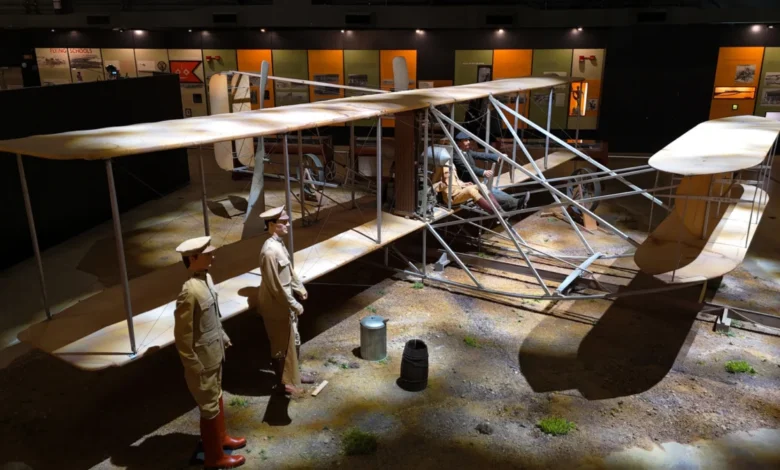
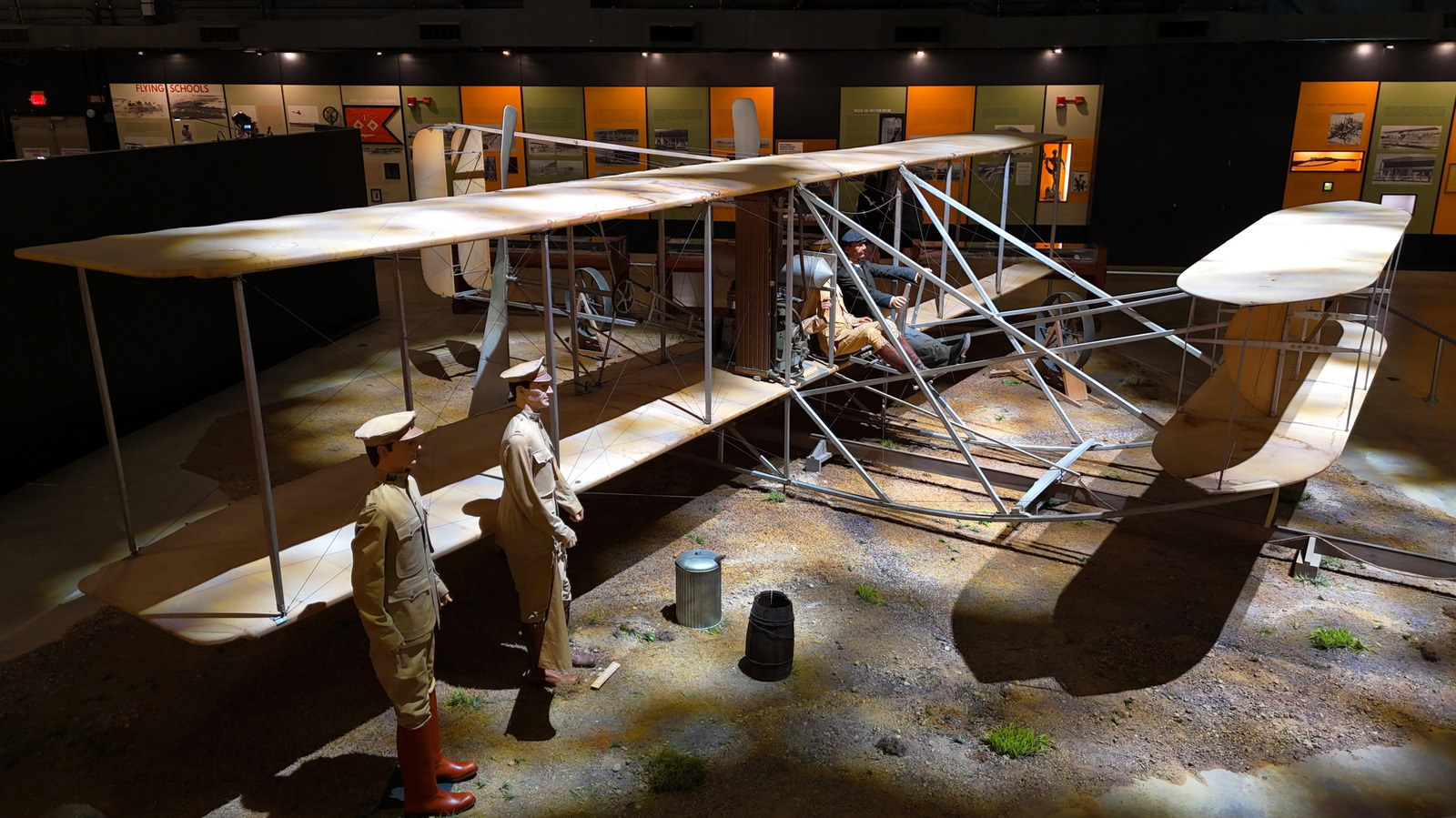
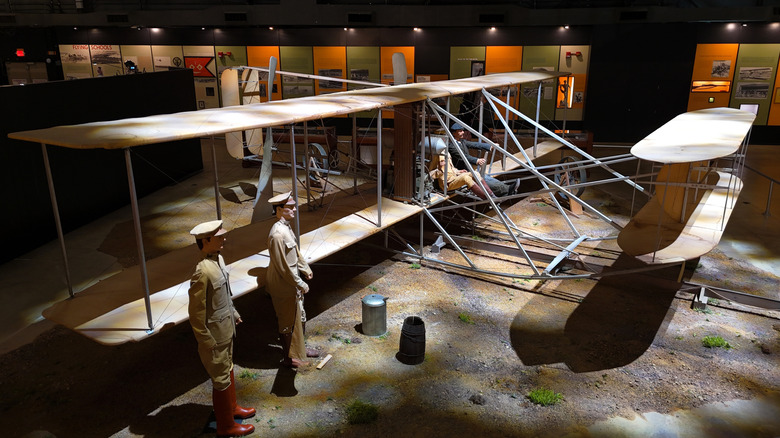
Undeterred by the tragedy, Orville Wright returned to Fort Myer in 1909 with a refined and upgraded version of the Flyer. The 1909 Wright Military Flyer featured several improvements, including a more powerful engine and reinforced structural components. On July 27, 1909, the aircraft successfully completed a one-hour endurance flight with Orville Wright and Lieutenant Benjamin Foulois aboard.
Following this success, the final qualifying flight took place on July 30, 1909. The aircraft reached an altitude of 400 feet and maintained an average speed of 42.5 miles per hour over a ten-mile course between Fort Myer and Alexandria, Virginia. The performance surpassed the Army’s requirements, and the Signal Corps officially accepted the aircraft on August 2, 1909. With this purchase, the United States became the first nation in the world to own and operate a military airplane.
Chronology of Early U.S. Military Aviation
- 1861–1863: The Union Army Balloon Corps operates during the Civil War, pioneering aerial observation.
- December 17, 1903: The Wright brothers achieve the first powered flight at Kitty Hawk.
- February 10, 1908: The U.S. Army Signal Corps issues Specification No. 486 for a heavier-than-air aircraft.
- September 17, 1908: The crash at Fort Myer kills Lieutenant Thomas Selfridge and injures Orville Wright.
- July 30, 1909: The Wright Military Flyer completes its final speed and endurance tests.
- August 2, 1909: The U.S. Army officially purchases the Flyer for $30,000.
- 1916: The U.S. Army begins experimenting with aerial "aerial torpedoes," the precursors to modern drones, in the lead-up to World War I.
Implications for Future Warfare
The acquisition of the Wright Military Flyer was a watershed moment that forced military leadership to reconsider the traditional definition of the "battlefield." While the 1909 Flyer was strictly an observation tool, its existence spurred a rapid cycle of innovation. Within a few short years, the military moved from simple reconnaissance to the integration of cameras, telegraphy, and eventually, defensive armaments.
The limitations of the 1909 model—most notably its low altitude and lack of protection—highlighted the vulnerability of early pilots. Ground fire remained a persistent threat, and the open-cockpit design left aviators exposed to the elements and enemy action. However, the lessons learned from these early experimental years were critical. By the time the United States entered World War I in 1917, the military had developed a nascent but functional aviation branch, which grew exponentially as the necessity of air superiority became undeniable.
Furthermore, the Army’s interest in early drones, beginning with the Kettering Bug in the 1910s, demonstrates that the service was thinking about autonomous or remote-operated aerial systems far earlier than the public often realizes. The transition from the 1909 Wright Flyer to the complex drone warfare of the 21st century is a direct, if long, lineage of experimentation that began with the Signal Corps’ initial investment.
Legacy and Historical Reflection
Today, the legacy of the Wright Military Flyer is preserved at the National Museum of the U.S. Air Force in Dayton, Ohio. The aircraft serves as a physical reminder of the humble beginnings of the world’s most advanced air force. It represents a period when the military had to balance the enthusiasm of innovation with the tragic reality of human loss.
The $30,000 investment in 1909 did not immediately create an invincible air power; rather, it created a laboratory for future officers, engineers, and strategists. The officers who flew these early machines—men like Benjamin Foulois—would go on to shape the Air Service during World War I and eventually advocate for the independent Air Force that was established in 1947.
In hindsight, the acquisition was an acknowledgment that the sky was no longer just an observation deck for balloons, but a domain that had to be conquered, defended, and utilized for national security. By embracing the Wright brothers’ technology, the U.S. Army moved from the era of horse-drawn logistics and terrestrial scouting into a new, faster, and more dangerous reality—one that would define the strategic landscape for the next century and beyond. The story of the 1909 Wright Military Flyer is not merely a chronicle of a machine; it is the story of the birth of modern air power, forged in the winds of Virginia and secured by the courage of the pioneers who dared to leave the ground.