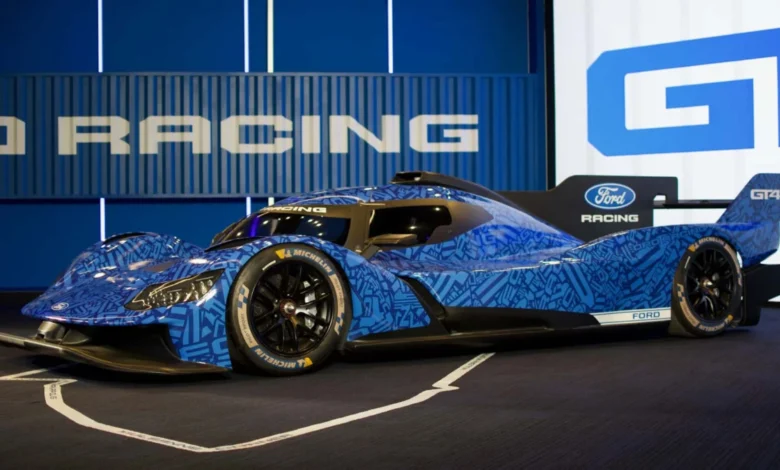
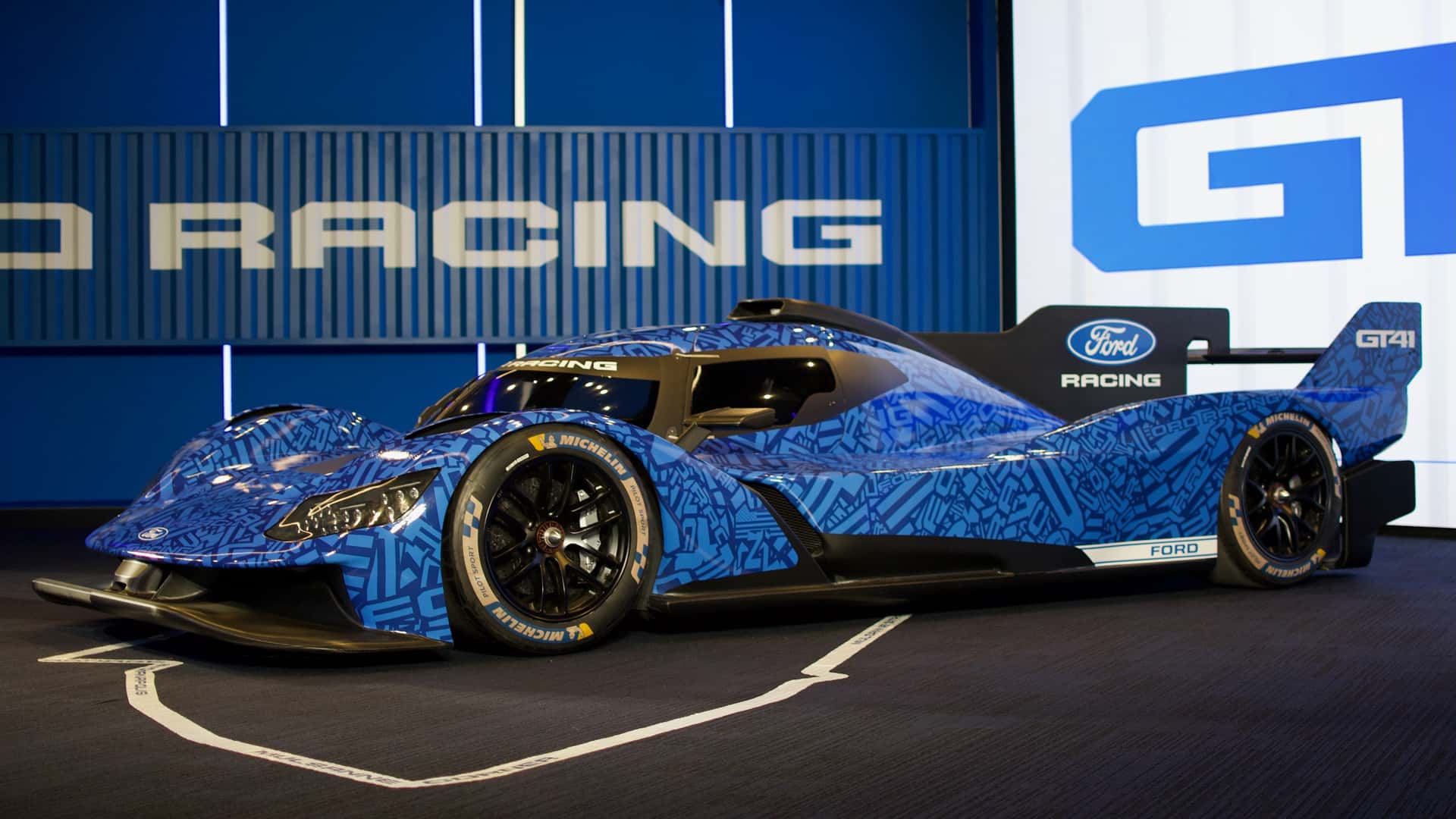
A New Era of In-House Engineering
The centerpiece of the GT41 is its naturally aspirated 5.4-liter hybrid V8 engine. Unlike previous programs where Ford relied heavily on external partnerships for powertrain development, the GT41 is a "wholly in-house endeavor." From the initial design phase and engine calibration to the development of software and low-voltage systems governing ancillary components like wipers and lighting, Ford Racing has retained full control.
Christian Hertrich, Ford Racing’s Powertrain Chief Engineer, emphasized the importance of this autonomy. "We can’t say that for a lot of programs," Hertrich noted during a press briefing. While Ford continues to collaborate with various entities for its GT3, NASCAR, and GT programs, the hypercar initiative is uniquely insulated. "There is only us," Hertrich added, acknowledging both the ambition and the inherent risks of such an approach: "We will succeed, but in the process to succeed, we will fail, and those failures are ours."
This philosophy of total ownership extends to the very origins of the powertrain. Each engine destined for the GT41 begins its life on the standard assembly line as a traditional Coyote block, mirroring those found in Ford’s mass-market performance vehicles. Once selected for race duty, these blocks are diverted to a specialized dynamometer facility in Dearborn, just a short distance from Ford’s global headquarters.
Inside the Development Labyrinth
The facility where the GT41’s heart is forged is a testament to Ford’s long-standing commitment to mechanical validation. The building, which traces its roots back to 1949, has evolved into a massive, interconnected labyrinth of over 100 test cells. These cells serve as the proving grounds for Ford’s global product line, ranging from consumer-grade engines to high-octane racing powerplants.
During a recent visit to this facility, observers were given a rare glimpse into the "rooms where it happens." Ford is currently putting the fourth iteration of the GT41’s engine through its paces. This specific unit is designated as a spare; if the team’s development and calibration efforts hold steady, this engine may never see the physical tarmac of Le Mans, existing only as a digital ghost in the telemetry data.
The significance of this specific test cell cannot be overstated. It was here that the 795-horsepower, supercharged 5.2-liter V8 engine of the Mustang Dark Horse SC received its validation—the first production engine to pass through this bay in over two decades. Now, the same cell is tasked with simulating the brutal, high-speed demands of the Mulsanne Straight. Through live monitoring, engineers watch as exhaust headers glow a brilliant, ominous red, simulating the intense thermal load the engine will endure during the grueling 24-hour race.
Infrastructure and Proximity
Perhaps the most notable change in Ford’s operational strategy is the physical proximity of its teams. The engine assembly area is located just a dozen feet from where the legendary engines of the 1960s were tested. This 800-square-foot assembly room, which did not exist 15 months ago, is a stark contrast to the high-tech, sterile environments often associated with modern Formula 1 or endurance racing.
The space is modest: a long counter, two engine stands, and carts holding meticulously organized components. Despite its humble appearance, the facility’s greatest asset is its integration. By housing the engine builders and the testing engineers in the same building, Ford has significantly compressed its development cycle. Queries that might have taken days to resolve via email or inter-departmental meetings are now handled in person, allowing for rapid iteration and troubleshooting.
Chronology and Competitive Roadmap
The journey of the GT41 is set to accelerate rapidly following its Thanksgiving reveal at Ford Field, which will feature a promotional short directed by Zack Snyder and starring Matt Damon—a nod to the enduring cultural legacy of the 1966 Ford-Ferrari rivalry.
The upcoming calendar is tightly packed:
- December 2026 – January 2027: Intense track testing phase to refine aerodynamics and hybrid energy deployment.
- March 2027: Competitive debut at the opening round of the World Endurance Championship (WEC) in Qatar.
- June 12, 2027: The primary objective—the 24 Hours of Le Mans.
- November 2027: Season finale in Bahrain.
The GT41 will compete in all nine rounds of the WEC, providing a grueling testing ground for the reliability of the in-house hybrid system.
Strategic Implications for the Blue Oval
The decision to bring the hypercar program fully in-house serves several strategic purposes. First, it reinforces Ford’s brand identity as a manufacturer capable of top-tier engineering innovation. By managing the low-voltage systems and software internally, Ford is building internal intellectual property that will likely trickle down into its future electric and hybrid production vehicles.
Furthermore, this program serves as a morale booster and a recruitment tool for Ford Racing. By fostering an environment where engineers own their successes and failures without the dilution of external consultants, the company is cultivating a culture of high-stakes accountability. The "failure is ours" mentality reflects a modern, agile approach to corporate motorsport, moving away from the bureaucratic structures that have historically hindered large automotive manufacturers.
However, the risks are substantial. The WEC Hypercar class is increasingly competitive, with established titans like Ferrari, Toyota, and Porsche leveraging decades of endurance racing experience. For Ford, the GT41 is not just about winning a trophy; it is a proof-of-concept for the company’s ability to remain relevant in a rapidly shifting automotive landscape. If the GT41 performs well, it validates the "Ford-only" development model. If it struggles, the company will face intense scrutiny regarding its decision to eschew traditional motorsport partnerships.
Conclusion
As the 2027 racing season approaches, the Ford GT41 stands as a symbol of the company’s dual focus: honoring its storied past while aggressively pursuing technological independence. By returning to the height of 41 inches, the designers have provided a visual link to the glory of the 1960s, but beneath the bodywork, the machine is a forward-looking experiment in vertical integration. Whether this gamble pays off on the track remains to be seen, but for the engineers in Dearborn, the race against the clock has already begun. With the debut at Ford Field, the world will finally see if this latest iteration of the Blue Oval’s racing ambition has the endurance to stand alongside the legends that came before it.
Related posts: