Beyond the Basics: Why Curiosity, Creativity, and Critical Thinking Must Define Early Childhood Education

For generations, the bedrock of early childhood education has been anchored to the "3 Rs": reading, writing, and arithmetic. These foundational skills are undeniably vital for navigating a complex world. However, as educational research evolves and the demands of a rapidly changing global workforce shift, experts are increasingly arguing that focusing solely on these technical proficiencies is an incomplete strategy. A growing coalition of educators, developmental psychologists, and policymakers are now advocating for the "3 Cs"—curiosity, creativity, and critical thinking—to be moved from the periphery of the classroom to the very center of the pedagogical experience.
The prevailing model of early education, often characterized by scripted curricula, rote memorization, and high-stakes testing, frequently prioritizes the acquisition of single-answer proficiency. While this "Pre-K push" aims to prepare students for the academic rigor of primary school, critics argue that it inadvertently stifles the natural cognitive development of four- and five-year-olds. By framing the 3 Cs as "nice-to-haves" to be addressed only after the 3 Rs are mastered, the current system may be missing the critical window where children learn how to learn.
The Developmental Case for the 3 Cs
The 3 Cs are not merely extracurricular enrichments; they are the primary drivers of cognitive retention. Curiosity serves as the catalyst, drawing a child toward new information. Creativity acts as the bridge, allowing the child to link disparate ideas in novel configurations. Critical thinking functions as the filter, enabling the child to assess the validity and coherence of those ideas.
Research suggests that this sequential approach—where the 3 Cs drive the 3 Rs—is more effective for long-term knowledge retention. For instance, when a child approaches a book out of genuine curiosity, their engagement levels are significantly higher than when they are reading for the sake of a drill. Creativity allows them to predict plot points or visualize scenes, and critical thinking encourages them to evaluate if the narrative logic holds up.
Data from the University of Chicago’s Behavioral Insights and Parenting Lab highlights a critical gap in current classroom practices. In an observational study of 17 pre-K and kindergarten classrooms, researchers found that teachers utilized closed-ended questions—those requiring a single, factual answer—nearly three times as often as open-ended, exploratory questions. While 100% of the surveyed teachers identified "rich conversation" as highly important to child development, most cited a lack of training, time constraints, or uncertainty regarding how to facilitate these complex discussions as primary barriers to implementation.
From Rote Instruction to Scientific Inquiry
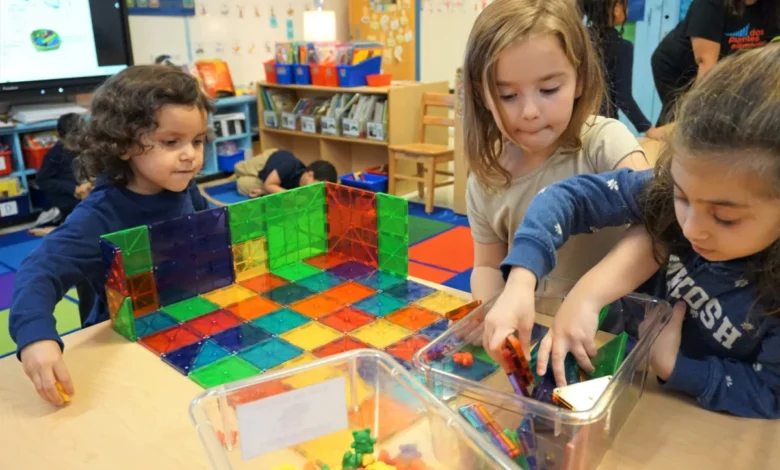
The distinction between traditional instruction and the proposed 3 Cs model can be observed in a simple classroom scenario involving block building. In a traditional setting, a teacher might point to two structures and ask, "Which tower is taller?" This requires only observation and a basic grasp of comparison. In contrast, an educator fostering the 3 Cs might ask, "Why did this tower fall while the other stayed upright?"
The latter question invites the child to engage in the scientific method: observation, hypothesis, testing, and reconsideration. This is the stage where executive-function skills—the ability to focus, persist, and organize behavior—are most effectively cultivated. As noted by researchers Kimberly Nesbitt and Dale Farran, classroom environments that prioritize goal-directed, social, and highly engaged activities are strongly associated with gains in executive function, particularly among students who enter preschool with lower baseline skills.
The Technological Imperative
The urgency of this pedagogical shift is compounded by the rise of artificial intelligence. In an era where AI can provide immediate answers to factual questions, the value of rote knowledge is diminishing. Conversely, the value of human judgment, questioning, and critical analysis is skyrocketing.

For a five-year-old in the early stages of development, building the capacity to discern quality information is a slow, iterative process. There is no software shortcut for developing the ability to evaluate a source or identify a logical fallacy. If students are trained only to output the "correct" answer, they remain vulnerable to the limitations of automated systems. By contrast, students trained to ask "why" and "how" are better equipped to navigate an information-dense landscape.
A Unified Front: Bridging the Home-School Divide
The implementation of the 3 Cs is not the sole responsibility of the school system; it requires a concerted partnership between educators and parents. Currently, most communication between schools and families is logistical—updates on schedules, permission slips, or discipline reports. A paradigm shift toward cognitive development requires a different mode of engagement.
When teachers share a concept being explored in the classroom, they can provide parents with simple, open-ended prompts to reinforce that learning at home. For example, if a class is discussing the physics of light, a teacher might encourage parents to observe shadows with their children during a walk. When the child returns to school and reports their findings—such as noticing that shadows lengthen at certain times of the day—the teacher can integrate that observation into the formal lesson plan. This cycle creates a "feedback loop" where the child’s personal experience validates the academic theory.
Overcoming Structural Barriers
Despite the consensus on the importance of these skills, the transition faces significant headwinds. The "Pre-K push," which has gained momentum over the last decade, has often prioritized school readiness metrics that are easily quantifiable. Shifting toward a model that emphasizes curiosity and critical thinking requires a departure from traditional assessment methods.
Educational authorities are beginning to recognize the need for better training. Programs like "Chat2Learn" are emerging to provide adults with the tools necessary to foster these conversations, emphasizing that the barrier is rarely a lack of interest, but rather a lack of structured guidance. Providing teachers with the vocabulary and the question-prompts to lead these interactions is a cost-effective intervention that does not require an overhaul of the entire curriculum, but rather a shift in daily practice.
Implications for Future Policy
The implications of this shift are profound, particularly for closing the achievement gap. Children who enter school with fewer opportunities for language-rich interactions at home benefit the most from environments that prioritize inquiry. If public education is to serve as a true engine of social mobility, it must provide the tools for intellectual autonomy, not just the tools for standardized compliance.
As policymakers and school boards look to the future of early childhood funding, the focus should expand beyond simply increasing seat capacity. It must also encompass the quality of the interaction within those seats. Investing in teacher training, curriculum development that favors open-ended inquiry, and family-engagement infrastructure is essential to ensuring that the next generation is not merely capable of retrieving information, but capable of deep, original thought.
The 3 Cs are the "real work" of early childhood. While reading, writing, and arithmetic provide the framework, curiosity, creativity, and critical thinking provide the substance of a resilient and well-adjusted mind. By weaving these threads together, educators and parents can ensure that children are prepared not only for the next grade level but for the complexities of the world they will eventually inherit. The path forward lies in recognizing that every question a child asks is a bridge to a new understanding, and every answer provided by an adult should be a prompt for another, deeper question.