Global Leaders Convene for Landmark One Health Summit in France, Announcing Concrete Actions to Fortify Defenses Against Future Health Crises

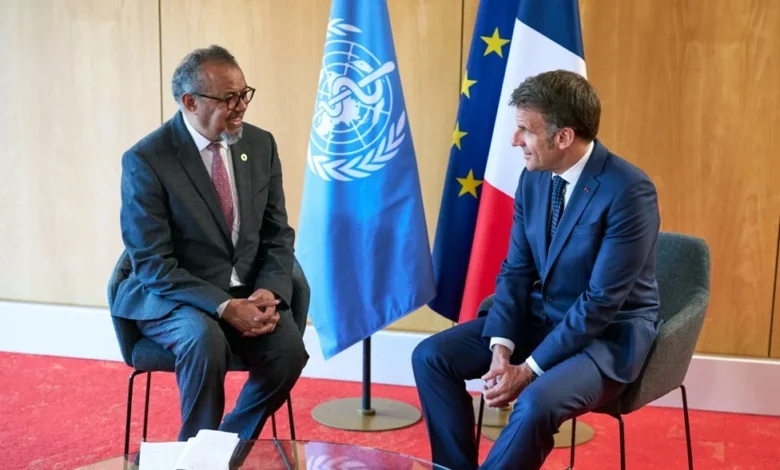
On World Health Day, a pivotal gathering of global leaders took place in France, marking a significant milestone with the convening of the "One Health Summit." During this crucial assembly, the World Health Organization (WHO) and its partners unveiled a robust new series of concrete actions designed to enhance the collective protection of people, animals, and the planet from the escalating threat of future health crises. The Summit, hosted by France, represents a monumental stride in translating the overarching One Health approach – a philosophy recognizing the profound interconnectedness of human health, animal health, and environmental well-being – into tangible, real-world initiatives. This year’s World Health Day theme, "Together for health. Stand with science," powerfully set the stage for the ambitious declarations made at the event.
The urgency underpinning this global initiative is undeniable. A confluence of critical challenges, including the accelerating impacts of climate change, widespread environmental degradation, the prevalence of unsafe food and water contamination, and the alarming rate of biodiversity loss, coupled with stark inequalities in healthcare access, collectively pose the most pressing threats to the world today. Scientific evidence underscores the deep-seated links between human and animal health, with approximately 60% of known infectious diseases in humans originating in animals. Furthermore, an estimated 75% of emerging infectious diseases are zoonotic in nature, meaning they can be transmitted from animals to humans. The devastating repercussions of the COVID-19 pandemic serve as a stark reminder, having resulted in an estimated 15 million deaths globally and inflicting trillions of dollars in economic losses during the 2020-2021 period alone.
In a proactive effort to preempt and mitigate the emergence of future pandemics, the WHO and its international collaborators are intensifying their commitment to the One Health approach. This strategy emphasizes fostering cross-sectoral collaboration, bringing together leading experts from the fields of human health, animal health, agriculture, environmental science, and broader scientific research. The overarching aim is to improve the early detection of emerging health risks and to enable more rapid and effective responses when threats do arise.
Dr. Tedros Adhanom Ghebreyesus, Director-General of the WHO, articulated the fundamental principle driving this initiative: "The health of people, animals, and the environment we share are inextricably interwoven, and we cannot protect one without protecting all three. The One Health approach brings together expertise to work across silos and sectors to prevent and respond to threats more effectively. WHO thanks France for hosting this Summit, and we remain committed to working with partners and countries to turn commitment into action and accelerate global progress for humans, animals, and our planet."
As the host nation, France reaffirmed its steadfast leadership and dedication to advancing the One Health agenda on the global stage. The country has actively championed international cooperation, fostered global scientific partnerships, and played a pivotal role in catalyzing the development of practical, implementable solutions.
President Emmanuel Macron of the Republic of France underscored the holistic nature of the One Health philosophy, stating, "One Health is not just about protecting health, it is about recognizing that we live as one system, where the well-being of humans, animals, and the environment is inseparable. France is determined to move One Health from ambition to implementation, working with the World Health Organization and our global partners to prevent the next crisis before it begins. Science must guide our action, and cooperation must be our strength."
The One Health Summit served as a critical platform, convening Heads of State, ministers, eminent experts, and policymakers from across the globe. The discussions highlighted the profound impact of coordinated international efforts in strengthening global dialogue and effectively mobilizing both public and private sector partners towards a shared objective of enhanced health security. The outcomes and commitments stemming from the Summit are poised to significantly inform ongoing international deliberations, including those within the G7 framework, concerning pandemic preparedness and the development of coordinated responses to health threats that emerge at the complex interface of human, animal, and ecosystem health.
WHO Announces Four Pillars of Action for Enhanced One Health Strategy
In a significant development, the WHO, in conjunction with its global partners, has delineated four critical and actionable initiatives designed to bolster the global One Health framework. These strategic pillars aim to translate the overarching principles of One Health into concrete, measurable progress.
1. Establishment of a New Global Network of Institutions on One Health
A cornerstone of the new strategy is the planned launch of a Global Network of One Health Institutions. This ambitious initiative is designed to operationalize the objectives outlined in the One Health Joint Plan of Action. The WHO will extend an invitation to its Quadripartite partners – the Food and Agriculture Organization of the United Nations (FAO), the World Organisation for Animal Health (WOAH), and the United Nations Environment Programme (UNEP) – to join this collaborative network.
The primary objective of this network is to harness and mobilize multidisciplinary expertise from a diverse range of institutions worldwide. By fostering a more cohesive and coordinated approach, the network will provide enhanced support to countries in their One Health endeavors. It aims to bridge the gap between global guidance and practical, on-the-ground implementation. Through mechanisms such as the WHO Academy and other relevant institutions, the network will facilitate strengthened training programs, promote peer learning, and cultivate a more streamlined, country-focused model for the effective implementation of One Health principles. This will ensure that global strategies are translated into tangible benefits at the national and local levels.
2. Bolstering Scientific Evidence for Global Action
Recognizing the indispensable role of robust scientific evidence in guiding policy and action, the WHO and its Quadripartite partners have announced the extension and expansion of the One Health High-Level Expert Panel (OHHLEP). OHHLEP is globally recognized as the foremost scientific advisory body dedicated to the One Health approach. Its mandate has now been extended through 2027, with plans for a subsequent phase encompassing the period from 2027 to 2029.
This extension reinforces OHHLEP’s critical function in three priority areas: shaping the global research agenda to address emerging health threats, providing scientific support for the implementation of the One Health Joint Plan of Action, and driving high-level advocacy grounded in rigorous scientific findings and evidence-based analysis. The continued operation and expanded scope of OHHLEP will ensure that global health strategies remain informed by the latest scientific understanding, thereby enhancing their efficacy and impact.
3. Renewed Push to Eliminate Rabies by 2030
In a targeted initiative with significant public health implications, the WHO, WOAH, and the Institut Pasteur have jointly launched a renewed global effort to eliminate human rabies deaths transmitted by dogs by the year 2030. This zoonotic disease continues to claim the lives of nearly 60,000 people annually, with a disproportionate number of victims being children.
This initiative, with endemic countries at its forefront, seeks to enhance and strengthen political commitment at all levels, alongside bolstering community-based surveillance and research efforts. By utilizing the elimination of rabies as a strategic model, the project aims to concurrently strengthen broader One Health surveillance and preparedness systems for a range of infectious diseases. This focused effort demonstrates the tangible benefits of applying a One Health approach to specific, high-impact health challenges.
4. A Unified Strategy to Address Avian Influenza Threats
Acknowledging the persistent and evolving threat posed by avian influenza, the WHO and its Quadripartite partners have introduced a new Strategic Framework for Collaboration on avian influenza. This framework is designed to harmonize and strengthen coordination across various critical areas, including surveillance, risk assessment, preparedness, and response mechanisms.
The overarching goal is to facilitate a transition for countries from fragmented, ad-hoc actions to a cohesive and unified One Health strategy. This integrated approach will address the multifaceted impacts of avian influenza, which extend beyond direct public health concerns to encompass food security, the livelihoods of communities, and the preservation of biodiversity. By fostering a comprehensive response, the framework aims to mitigate the broader socio-economic and ecological consequences of avian influenza outbreaks.
WHO Assumes Leadership of Quadripartite Collaboration for Enhanced Global Coordination
In a move signifying strengthened global leadership, the WHO is set to assume the Chairmanship of the Quadripartite collaboration. This enhanced leadership role will bolster coordinated global action among the WHO, FAO, WOAH, and UNEP. Under the WHO’s Chairmanship, the Quadripartite partnership will prioritize the delivery of measurable impact at the country level.
Key objectives include streamlining governance structures, aligning efforts around a focused set of high-impact priorities, and further strengthening advocacy, norm-setting, and the generation of robust evidence. This consolidated leadership is expected to drive greater coherence and effectiveness in global efforts to address interconnected health challenges.
Inaugural Global Forum of WHO Collaborating Centres Opens
Concurrent with the One Health Summit, the WHO is hosting its inaugural Global Forum of WHO Collaborating Centres (CCs), taking place from April 7th to 9th. This significant gathering convenes high-level representatives, including the Minister of Health of France, alongside ministers from Germany, Indonesia, and South Africa. More than 800 representatives from WHO Collaborating Centres across over 80 countries are participating in the forum.
The Global Forum serves as a forward-looking platform designed to deepen collaboration among leading academic and research institutions worldwide. The forum aims to accelerate scientific innovation, promote the sharing of critical data, foster coordinated research endeavors, and enhance capacity-building initiatives. By bringing together these key scientific institutions, the forum is expected to generate new insights and drive progress in addressing global health challenges.
Both the One Health Summit and the Global Forum of WHO Collaborating Centres collectively send an unequivocal message: effectively tackling today’s complex health challenges necessitates strengthened multilateral cooperation, increased investment in scientific research and innovation, and sustained, concerted efforts to translate the One Health approach from principle into concrete, impactful action at both global and local levels. The commitments made and the initiatives launched at these events signal a renewed global resolve to build a more resilient and healthier future for all.