
What Makes Pluto Intriguing
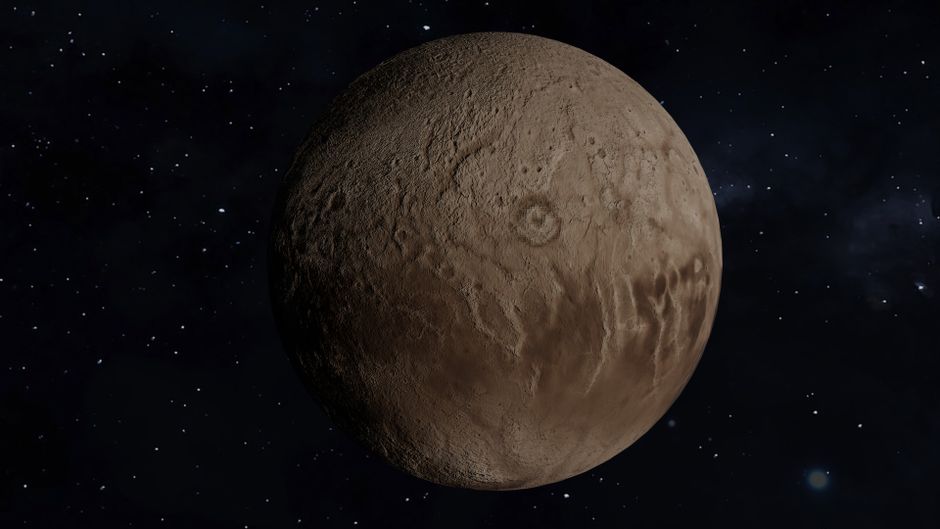
Pluto: A Dwarf Planet’s Enduring Fascination
Pluto, once the ninth planet from the Sun, now classified as a dwarf planet, continues to capture the human imagination with a unique blend of scientific enigma and historical significance. Its demotion in 2006 by the International Astronomical Union (IAU) was not an end to its intrigue, but rather a catalyst for renewed scientific inquiry and public fascination. This reclassification, based on the definition of a planet requiring it to have cleared its orbital neighborhood of other debris, sparked debate and solidified Pluto’s distinct identity within the Kuiper Belt. The sheer remoteness and the extreme conditions that characterize this celestial body contribute significantly to its captivating nature. Located in the Kuiper Belt, a vast ring of icy bodies beyond Neptune, Pluto orbits the Sun at an average distance of about 39.5 astronomical units (AU), meaning it is roughly 3.6 billion miles from Earth. This immense distance, coupled with its small size – roughly one-sixth the diameter of Earth – means direct observation is challenging, fostering a sense of mystery and fueling scientific curiosity.
The geological complexity revealed by the New Horizons mission in 2015 fundamentally altered our perception of Pluto. Before the flyby, Pluto was largely envisioned as a cold, inert, and geologically dead world. However, New Horizons delivered breathtaking images and a wealth of data showcasing a surprisingly dynamic and diverse landscape. One of the most striking features is Sputnik Planitia, a vast, heart-shaped plain of nitrogen ice. This massive expanse, remarkably smooth and nearly devoid of craters, suggests ongoing geological activity. Scientists theorize that convection currents within the nitrogen ice, driven by heat from Pluto’s interior, are responsible for the resurfacing processes that erase older, cratered terrain. The presence of floating icebergs, made of water ice, within Sputnik Planitia further indicates that this region is not static but is subject to dynamic processes, challenging previous assumptions about the thermal evolution of dwarf planets. The smooth terrain also suggests relatively recent geological activity, meaning Pluto is not the ancient, unchanging body it was once thought to be.
The varied terrains across Pluto’s surface speak to a complex geological history. Beyond Sputnik Planitia, the dwarf planet exhibits a striking array of features, including rugged mountains composed of water ice, vast plains, and impact craters. The presence of towering mountains, some reaching heights comparable to Earth’s Rocky Mountains, is particularly intriguing. These mountains are primarily composed of water ice, which is incredibly hard at Pluto’s frigid temperatures, acting like bedrock. Their formation is likely linked to tectonic activity and the upwelling of subsurface ice. Furthermore, the discovery of what appear to be cryovolcanoes, volcanic-like structures that erupt icy, not molten, material, hints at internal processes that could still be active. These cryovolcanic features, if confirmed, would point to a subsurface ocean or a significant internal heat source, providing a dramatic counterpoint to the seemingly inert surface. The diverse geological tapestry, from the smooth plains of Sputnik Planitia to the craggy highlands and potential cryovolcanoes, paints a picture of a world far more active and complex than initially anticipated, deepening its scientific allure.
Pluto’s atmospheric composition and dynamics offer another layer of intrigue. Despite its incredibly low temperatures, Pluto possesses a thin atmosphere, primarily composed of nitrogen, with trace amounts of methane and carbon monoxide. This tenuous atmosphere is not static; it freezes out onto the surface during Pluto’s highly elliptical orbit, when it is farthest from the Sun, and sublimates back into the atmosphere as Pluto approaches the Sun. This cyclical process of atmospheric freezing and sublimation creates a dynamic atmospheric system that expands and contracts. The presence of haze layers in the atmosphere, formed by the interaction of sunlight with methane, contributes to its reddish hue. Studying Pluto’s atmosphere provides valuable insights into atmospheric processes on other icy bodies and the potential for atmospheric evolution in extreme cold environments. The interplay between the surface and the atmosphere, the seasonal variations in atmospheric density, and the formation of hazes are all active areas of scientific research driven by the unique conditions on Pluto.
The discovery of Pluto’s five moons – Charon, Styx, Nix, Kerberos, and Hydra – adds another compelling dimension to its fascination, particularly the relationship between Pluto and its largest moon, Charon. Charon is exceptionally large relative to Pluto, approximately half its diameter. Their barycenter, the center of mass around which both bodies orbit, lies outside of Pluto itself, leading some to suggest they be considered a binary system. This close gravitational dance has profound implications for both celestial bodies. The tidal locking between Pluto and Charon means they always present the same face to each other, a phenomenon also observed in Earth’s moon. The surface of Charon is surprisingly diverse, with a large canyon system and a possible equatorial bulge, suggesting past geological activity. The mutual gravitational influence has also shaped the surfaces of the smaller moons, which are irregularly shaped and appear to tumble randomly in their orbits, likely due to gravitational interactions with Pluto and Charon. The study of the Pluto-Charon system serves as a unique laboratory for understanding binary celestial bodies and the complex gravitational dynamics at play.
Pluto’s "dwarf planet" status, while scientifically defined, carries a profound historical and emotional weight. Its discovery in 1930 by Clyde Tombaugh was a monumental achievement in astronomical exploration, filling a perceived gap in the solar system’s planetary order. For generations, Pluto held the position of the ninth planet, a familiar celestial neighbor embedded in educational curricula and popular culture. Its reclassification sparked a global conversation about definitions in science, the evolving nature of knowledge, and the sentimental attachment humans develop towards celestial bodies. This debate highlighted the subjective element in scientific classification and the enduring human desire for order and completeness in our understanding of the cosmos. The very act of reclassifying Pluto, while based on rigorous scientific criteria, invited introspection about how we categorize and relate to the universe around us, making its story more than just a scientific one.
The Kuiper Belt, Pluto’s home, is itself a frontier of immense scientific interest, and Pluto is its most prominent resident. This region is thought to be a remnant of the early solar system, a reservoir of icy bodies that failed to coalesce into larger planets. Studying Pluto and its surroundings provides crucial clues about the formation and evolution of our solar system. The composition of Pluto, its orbit, and its relationship with other Kuiper Belt Objects (KBOs) help scientists piece together the primordial conditions of the protoplanetary disk. The presence of Pluto in the Kuiper Belt also has implications for our understanding of planetary migration and the dynamics of the outer solar system. As a representative of a vast population of icy worlds, Pluto acts as a Rosetta Stone, unlocking secrets about the universe’s origins and the processes that shaped the planets we know.
The potential for subsurface oceans on Pluto, while speculative, is a significant driver of its current intrigue. The New Horizons mission data suggests that the large amount of water ice in Sputnik Planitia could be acting as an insulator, trapping heat from radioactive decay within Pluto’s core. This heat could, in theory, maintain a liquid water ocean beneath the icy crust. The presence of a subsurface ocean would dramatically increase the potential for past or even present-day habitability, a concept that transcends mere scientific curiosity and touches upon fundamental questions about life beyond Earth. While direct evidence of such an ocean is yet to be found, the geological features observed lend credence to the possibility, making Pluto a compelling target in the search for habitable environments in the solar system. The very idea of a hidden ocean within such a frigid world amplifies its enigmatic appeal.
Pluto’s extreme orbit and its implications for solar system dynamics are also subjects of ongoing fascination. Pluto’s orbit is highly eccentric and inclined relative to the plane of the other planets. At its closest approach to the Sun (perihelion), Pluto is actually closer to the Sun than Neptune. This unusual orbital behavior has long intrigued astronomers and is thought to be a consequence of gravitational interactions with Neptune in the early solar system. Studying Pluto’s orbit helps refine models of planetary migration and the long-term stability of the solar system. Its eccentric path also means that the conditions on Pluto, including its atmospheric density and surface temperature, experience significant variations over its long orbital period, adding another layer of complexity to its study.
In conclusion, Pluto’s intrigue stems from a multifaceted combination of scientific discoveries, historical context, and profound implications for our understanding of the cosmos. Its reclassification, far from diminishing its allure, has propelled it into a new era of scientific exploration. The geological dynamism revealed by New Horizons, the complex interplay of its atmosphere, the unique binary relationship with Charon, and the tantalizing possibility of a subsurface ocean all contribute to its enduring fascination. Pluto stands as a testament to the ever-evolving nature of scientific knowledge and the boundless curiosity that drives humanity to explore the most remote and enigmatic corners of our solar system, solidifying its place as an object of perpetual scientific and public interest.
